

Those who are familiar with the popular 1995 movie How to make an American quilt will remember the scenes that feature a group of women working on a quilt. While piecing together the fabric squares, they share their personal stories of love, failed relationships, disappointment and remorse. The completed quilt becomes a metaphor for the women’s lives; each square represents a unique life story. Comparably, women from the Portuguese island of Madeira have for centuries combined embroidery and storytelling to create exquisite hand-embroidered articles. The art of Bordado da Madeira (‘Madeira Embroidery’) developed in the mountainous villages of Madeira where the island’s lush vegetation served as inspiration for the embroiderers (bordadeiras).
Madeira Embroidery dates to the 15th century when noblewomen and Catholic nuns started embroidering household linens and church robes as a hobby. However, it was only during the second half of the 19th century that the familiar Madeira-style embroidery became a distinguished craft. At the time, Madeira was a popular destination for English merchants and tourists. English women, notably Elizabeth (Bella) Phelps (1820–1893), introduced local needleworkers to English techniques and styles such as broderie anglaise. In 1854, Bella opened an embroidery school in her own home in Funchal, the capital of Madeira. As a result, local women blended British influences with their own embroidery traditions to create a unique style influenced by Madeira’s plants, flowers and fruit. Bella was also a philanthropist who felt urged to lift the women out of poverty by exporting their handwork to England, where it became popular among high society.
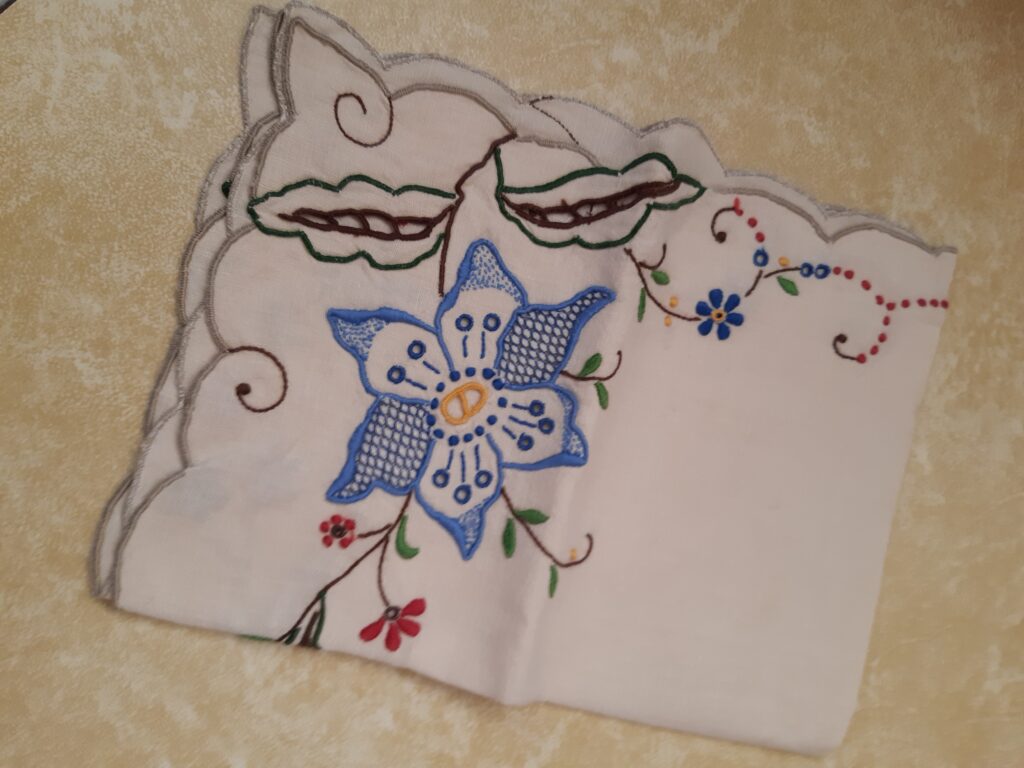
Thanks to Bella’s efforts but also due to the amalgamation of influences, tastes and trends, Madeira’s unique embroidery style evolved into an art form that dazzled the world. The island’s embroiderers became known for their exquisite whitework and cutwork, examples of which found their way to London’s Great Exhibition of 1851. As a result of this exposure, Madeira’s embroidery was established as a luxury item that became sought after among the moneyed classes of Europa and America. Consequently, the number of women on the island that did embroidery for a living increased substantially, thereby establishing the home-based production model that is still in existence today. Due to the high overseas demand for embroidered bed linen and table linen sets, thousands of Madeiran families were lifted out of poverty during the early 1900s. An island pastime that had been turned into a cottage industry became a luxury export business.
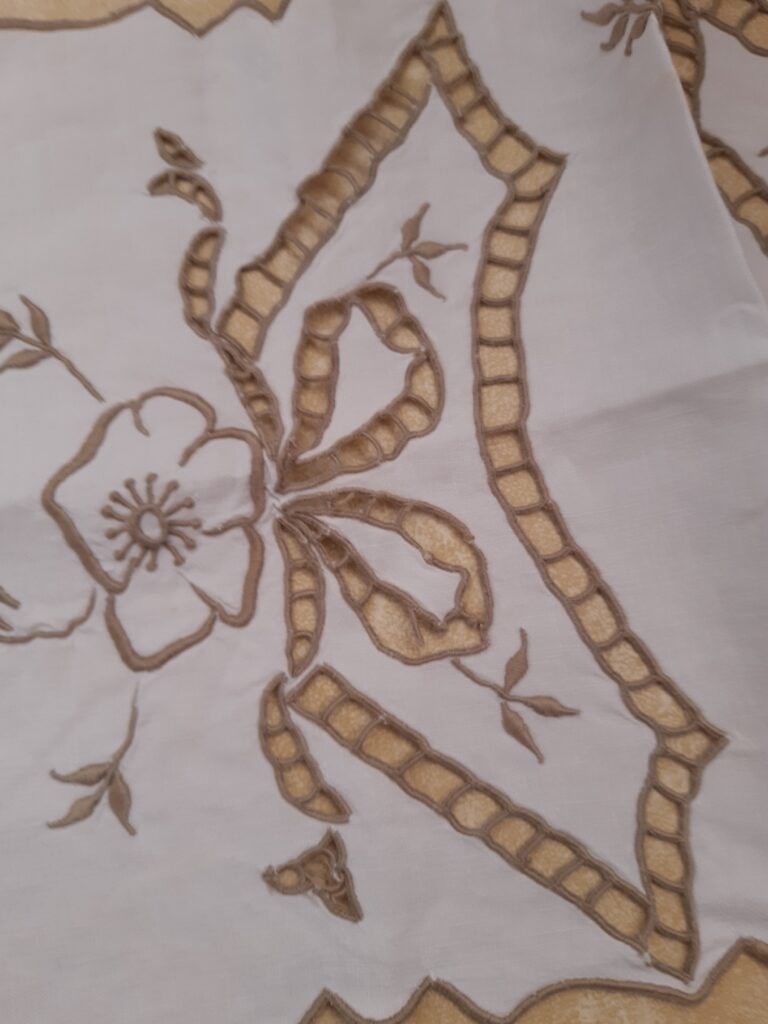
Ana Achadinha from Bloemfontein explained that Madeiran women and girls typically worked in groups to finish articles on time. Sometimes up to three generations worked side by side – often outdoors – on one article. Large pieces such as tablecloths took weeks and even months to complete. As a child, Ana and her parents visited Madeira every year to see family members. During these visits she and her mother watched the women in the villages doing the embroidery. Ana noticed that while the women were busy with needlecraft, they told stories and sang traditional Madeiran songs. It turned out the older women not only shared their life experiences, wisdom and economic survival strategies with the younger ones but also taught them the different stitches. Storytelling became a vehicle for passing down life skills and embroidery mastery through generations.
During the times of economic hardship that plagued Madeira during the 20th century, women took up embroidery to make ends meet. After the Second World War (1939–1945), thousands of Madeiran men left the island in search of better opportunities. Ana said many women “didn’t have the support of their husbands financially because they had all emigrated to the four corners of the world for a better future”. The women embroidered a variety of articles that were sold to visiting tourists, many of them British arriving at Madeira on cruise ships. After the war, handmade Madeira Embroidery continued to be in high demand not only for the quality of the fabric and yarn but because of the skill involved. Items ranging from handkerchiefs to garments were made in the villages and then taken to Funchal from where they were either exported or sold in local tourist shops.

During the 1950s, Madeira became the global leader in embroidery threads. Thanks to innovation and advances in the industry, the ‘Madeira No. 40’ high-quality rayon thread renowned for its lustre and softness became widely sought after. Yet, the new technology also benefited other countries, notably China, whose machine-embroidered articles flooded the Western markets. Such items are sold at a fraction of the cost of hand-embroidered masterpieces, which may contain more than 70,000 unique stitches! The difference between traditional articles and mass-produced items is also clearly noticeable in the overall quality of the embroidery and the materials used.
According to Ana, the completion of a piece of authentic Madeira Embroidery “takes a lot of focus, a lot of fine work, especially when they do the cutting”. The cutting away of certain sections of fabric with very sharp scissors is only one of many steps in the laborious manual process that starts in a factory in Funchal. First, the design is drawn on wax paper, which is then perforated along the lines of the design. The design is transferred onto a piece of cloth by using a sponge soaked in blue ink. Next, the pieces of fabric are dispatched from the factory to embroiderers all over the island to complete the work according to the blue markings. The finished items are returned to the factory where they are trimmed, washed and ironed. Each piece is inspected by members of the Institute of Wine, Embroidery and Handicrafts of Madeira (IVBAM) before the guarantee seal (Grêmio) and label of authenticity are attached to it.
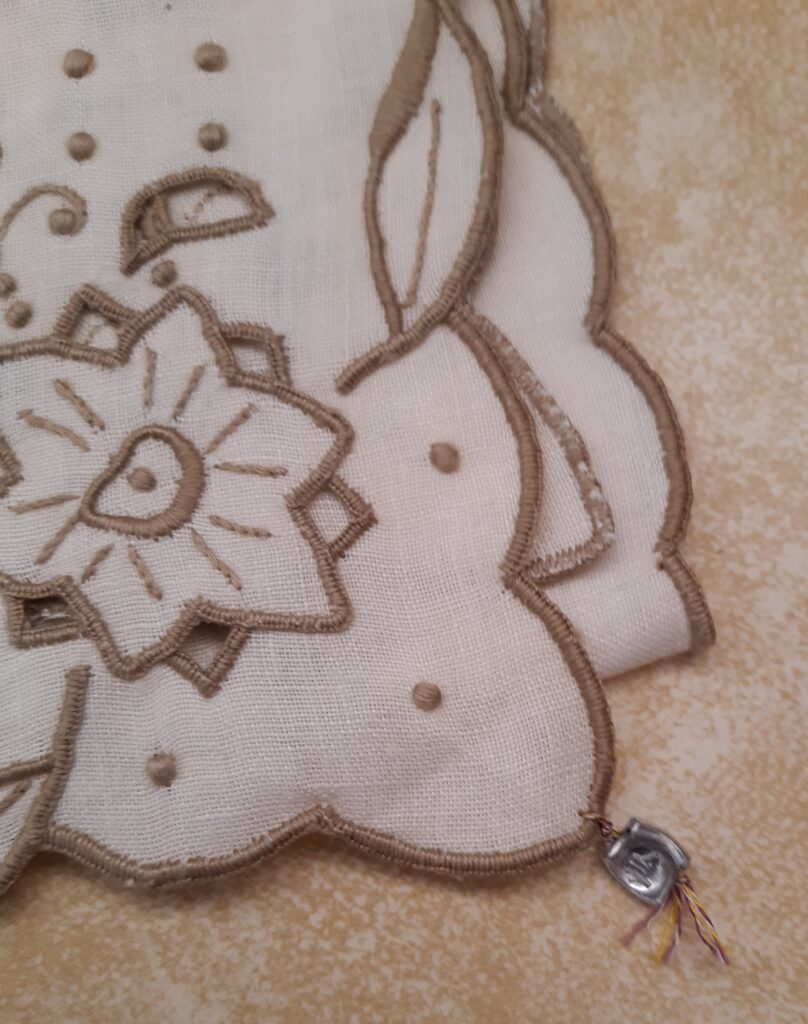
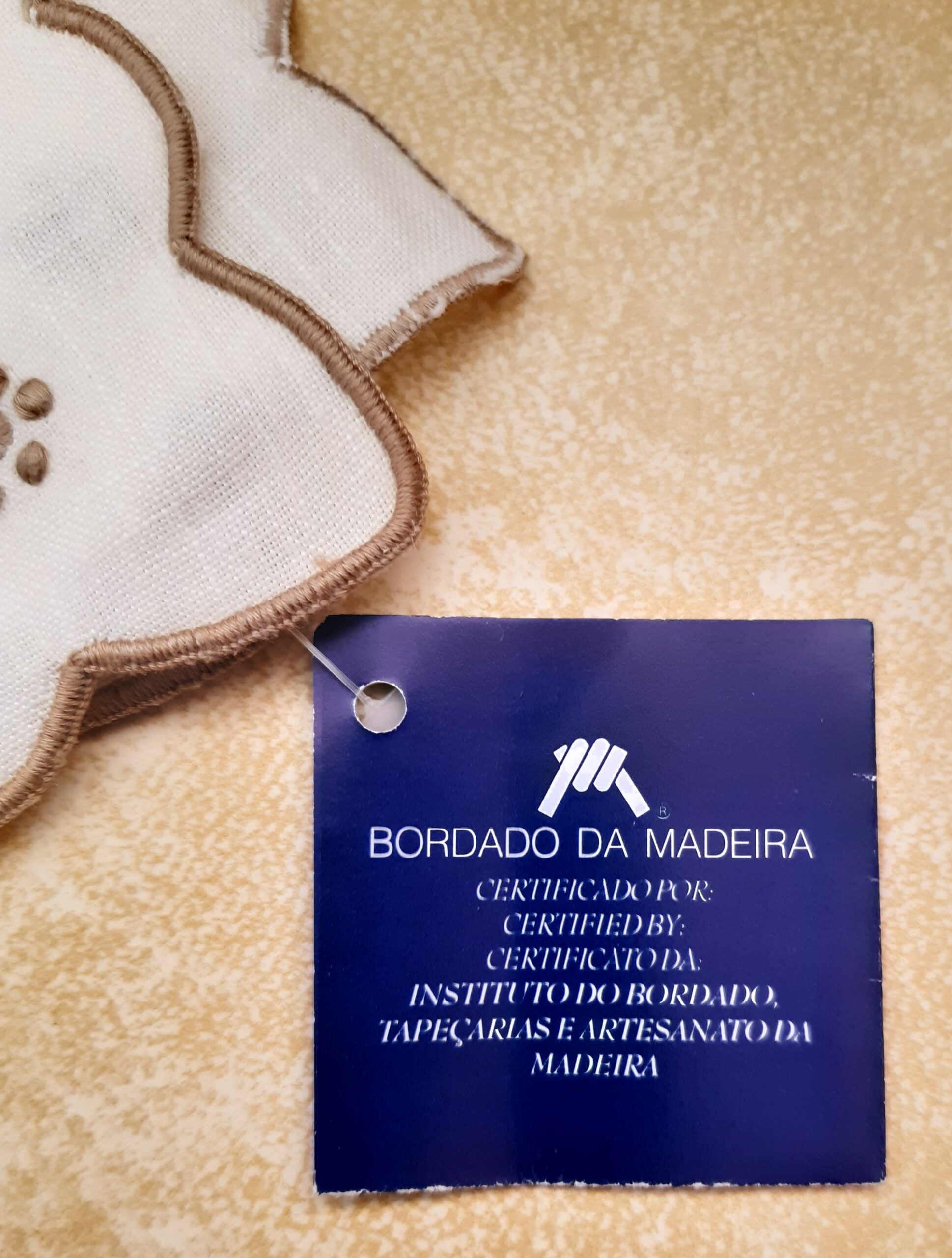
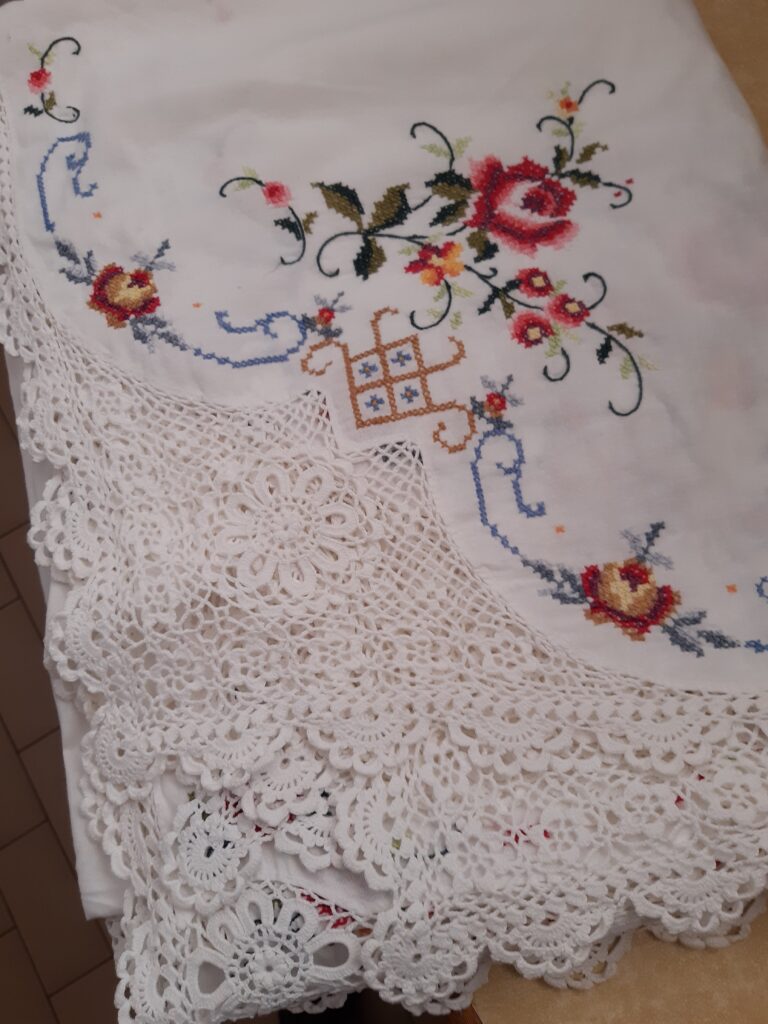
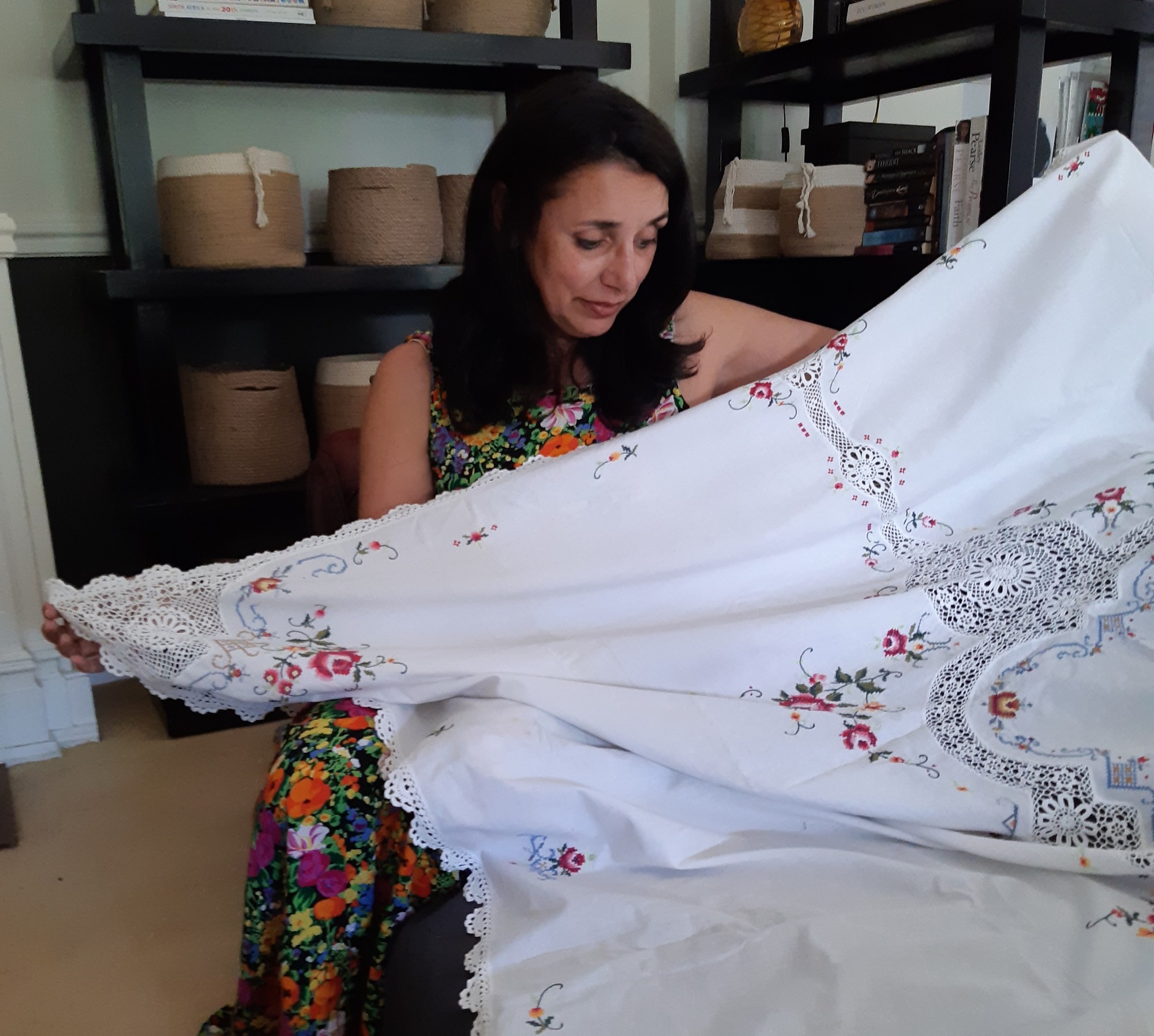
For Bloemfontein’s Portuguese women who still have ties with Madeira, such as Ana Achadinha and Izabel Frade, their personal collections of embroidery are tangible tokens of their connections with the island. Over the years Izabel has built an extensive collection of authentic Madeira Embroidery, most of which are certified. Pieces of authentic Madeira Embroidery have become prized possessions and family heirlooms. They are indeed works of art because “each stitch tells a story of tradition, artistry, and a deep love for the island”. Presently, fewer than a thousand Madeiran artisans are still doing the traditional Madeira Embroidery. For them it is a labour of love; they cherish the historical roots of their craft and are committed to preserve their “time-honoured techniques and patterns”. Authentic Madeira Embroidery has a three-dimensional appearance, featuring ladder stitch, satin stich, lace stitch, long and short stitches, shadow work, cutwork, and many more. Looking closely at these masterpieces, the stories of the bordadeiras become almost audible in the intricate and colourful designs.
Sources
Anonymous. Madeira Embroidery. https://linoandaraujo.com/pages/about-madeira-embroidery/ (accessed 24 October 2024)
Anonymous. Madeira Embroidery. https://visitmadeira.com/en/what-to-do/culture-passionates/madeira-embroidery/ (accessed 6 May 2025)
Anonymous. The fascinating story of Madeira’s hand-embroidery art. https://fabventura.com/madeira/the-fascinating-story-of-madeiras-hand-embroidery-art/ (accessed 6 May 2025)
Chen, C. Madeira brand: Comprehensive guide to history, applications, and quality. https://www.maggieframes.com/blogs/embroidery-blogs/madeira-brand-comprehensive-guide-to-history-applications-and-quality/ (accessed 29 July 2026)
Drahos, P. & Frankel, S. (Eds). 2012. Indigenous peoples’ innovation: Intellectual property pathways to development. Canberra: ANU E Press.
Glaser, C. 2010. Portuguese immigrant history in twentieth century South Africa: A preliminary overview. African Historical Review 42(2): 61–83. https://doi.org/10.1080/17532523.2010.517398
Izabel Frade Private Collection of Madeira Embroidery.
Leuckert, S., Neumaier, T. & Yurchenko, A. 2023. English in Madeira: History and features of a lesser-known variety in the Atlantic. English Today 39(1): 2– 11. https://doi.org/10.1017/S0266078421000328
National Museum Oral History Collection: A.M. Achadinha, 29 January 2025.
Sullivan, T. Madeira Embroidery: Stories embroidered in time. https://visitmadeira.com/en/blog/andy-tracy-sullivan/madeira-embroidery-stories-embroidered-in-time/ (accessed 6 May 2025)


Comments are closed.