

For most South Africans who were born after 1994 apartheid is synonymous with a host of discriminatory laws that regulated society along racial lines. Behind these laws was a vast apartheid bureaucracy that rigorously enforced the notorious apartheid regulations, decrees and prescripts. Yet, this bureaucracy could only function because people – the so-called “authorised officers” that included policemen, councillors, officials, clerks, school principals, teachers, spies and informers – enabled it. In racially segregated townships the public “face of apartheid” was black, to quote historian Jacob Dlamini. Black policemen demanded to see passbooks, black councillors enforced apartheid regulations in ‘locations’, black officials issued permits at pass offices, and black police informants spied on struggle activists. Most of these black “apartheid bureaucrats” participated and collaborated reluctantly. Often resistance and collaboration were two sides of the same coin because some bureaucrats were resisting and collaborating at the same time. They functioned in the shadowlands between the system and the struggle against it.
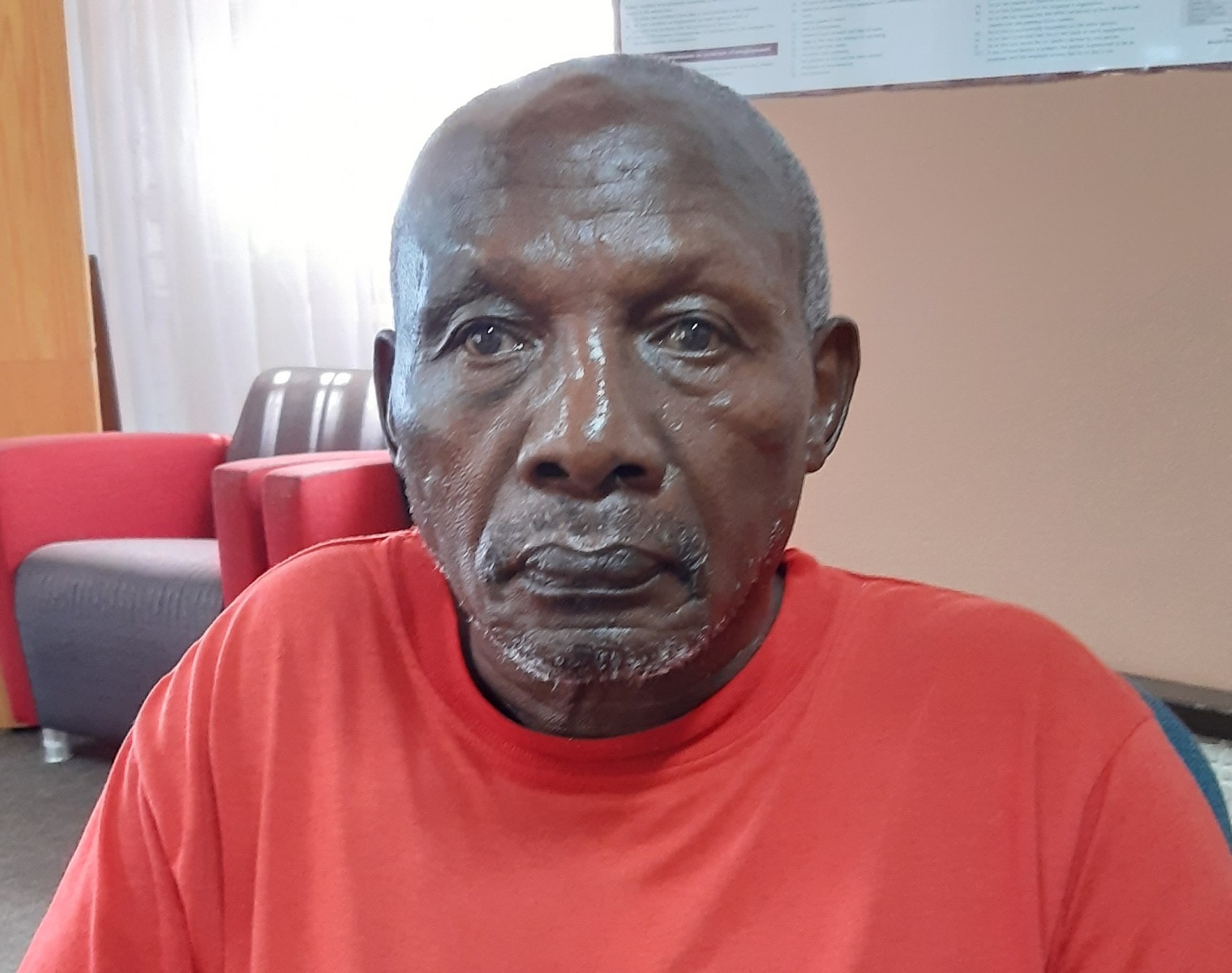
Among the thousands of black people that were employed to ensure the smooth functioning of the apartheid state and, ironically, to serve its interests, was Motshane Elias Nakedi (b. 1950). During the late 1960s and early 1970s – the heydays of apartheid – Elias was a policeman in Bloemfontein. For eleven years (1965–1976) he not only ‘enforced’ apartheid laws but also witnessed and experienced the worst of it. Elias was born on a farm near the village of Sannaspos approximately 30 kilometres east of Bloemfontein. During the 20th century, Sannaspos functioned as an important railway junction of the Orange Free State railway system. The station building, which dates from 1899, still stands today. The farm where Elias spent his childhood and early teens belonged to a Mr Van Tonder. Elias’s parents, Daniel and Martha Nakedi, were people of modest means who worked as farm workers for Van Tonder and his wife.
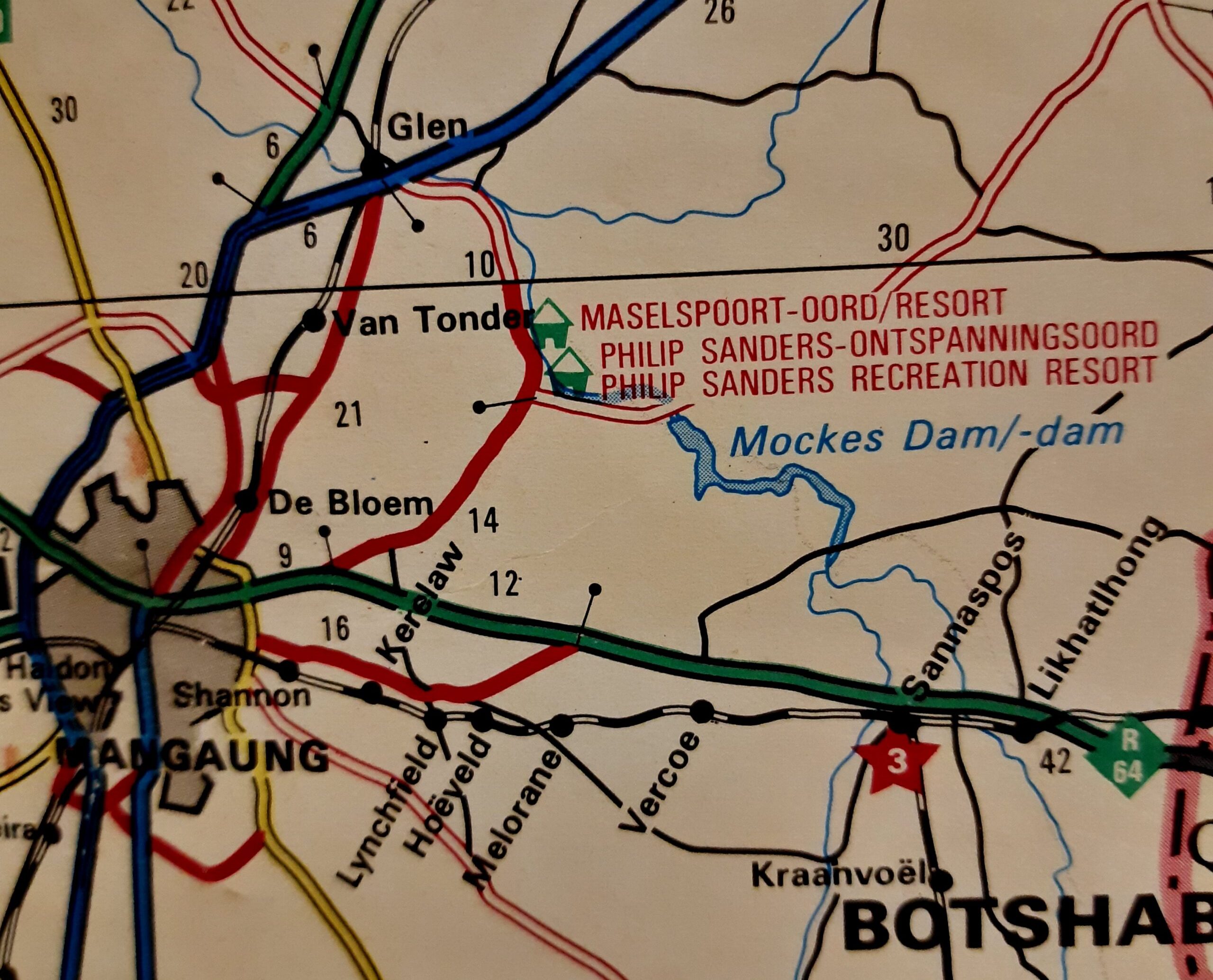
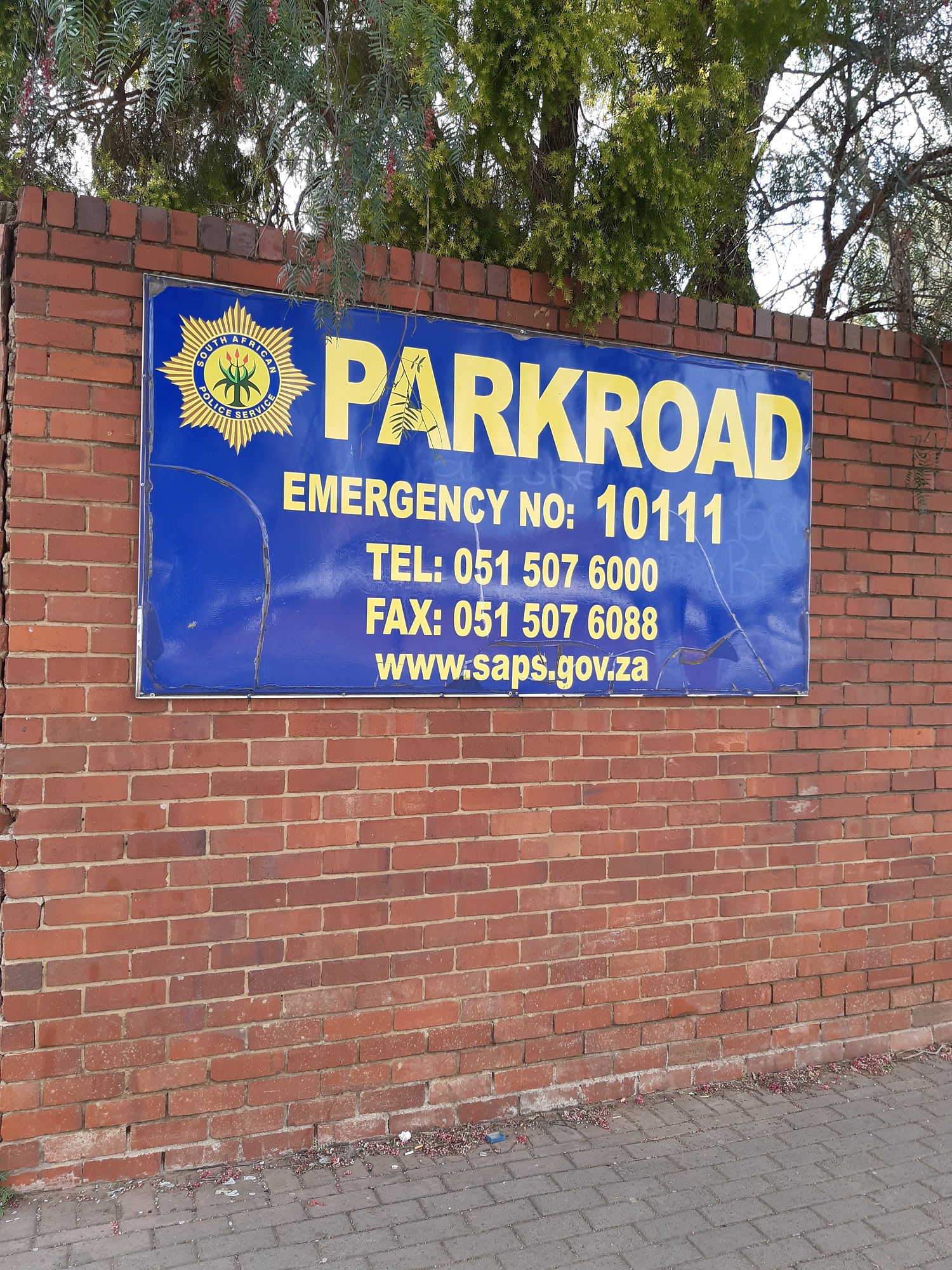
Elias attended Eden farm school that was situated near Sannaspos in the vicinity of the Bloemfontein-Thaba Nchu Road (N8). After completing Standard Four (Grade Six), he left school to work with his father on the farm. Elias did typical farmwork: cleaning the yard, tending the soil, planting seeds, working in the vegetable garden, and looking after Van Tonder’s Fries cattle. Because of the lowly wages, Daniel encouraged his son to find a job in Bloemfontein. Elias heard about opportunities offered by the South African Police for black men. He applied and was appointed; the year was 1965 and he was only fifteen years old. Together with other black recruits, Elias was placed at Park Road (also spelt Parkroad) Police Station in Willows. In those days everyone referred to the police station in Afrikaans as Parkweg. To qualify for the rank of constable, Elias and the other recruits had to complete a six-months training course at Hammanskraal Police Training College outside Pretoria. At the time, Hammanskraal was a racially segregated training facility for black policemen.
Elias was assigned to Park Road’s charge office (then known as the aanklagkantoor) where he served members of the public who laid criminal charges and reported crimes. He served all races but mostly white Afrikaners who insisted on being serviced in Afrikaans. Needless to say, Elias had to master the language in a very short time. Most whites treated him well, especially after they learned that he could speak and write their language. In addition to serving in the charge office, Elias fed and looked after offenders who were kept overnight in the holding cells. Moreover, black policemen were also expected to conduct street patrols during which black people were requested to show their passbooks. Elias had to check if a passbook was valid and whether the bearer was legally employed. Being in the full-time employment of a white baas (boss) meant that a black person could legally reside in a township.
Stops and searches for passbooks, typically done by lower-ranking policemen nicknamed ‘blackjacks’ and ‘platkeps’ (municipal constables), was an effective tool to enforce the apartheid system. Elias explained that people whose passbooks were not in order were apprehended and then taken to Park Road or the nearby Batho Police Station where they were locked up. Only after paying a fine “from R10.00 up to R20.00” depending on the offence, they were released. Enforcing the passbook system and other petty apartheid measures that regulated relations between blank en nie-blank (white and non-white) caused widespread distress and discontent, to put it mildly, among black people. How did this make Elias feel? “I did not feel anything … nothing”, he said. At face value, this remark may seem indifferent, even heartless, yet it must be contextualised. For Elias and other black ‘foot soldiers’ of apartheid to function and survive as black ‘insiders’ of the apartheid system, they had to develop their own set of survival skills. At home those apartheid ‘insiders’ became ‘outsiders’ who lived in townships among the victims of the system.
Scorned by their white superiors and belittled by the communities they ‘served’, black policemen were caught between a rock and a hard place. The fact that they wore uniforms not only made them highly visible but also vulnerable targets. Elias explained that black constables were poorly paid. Consequently, he did not have enough money for public transport to get to work; instead, he walked from his house in Rocklands to Park Road. He remembered how school children heckled and insulted him on his way to work. It was especially bad during the time of the school unrests of 1976 when the Soweto troubles spread to schools all over the country, including Mangaung. Elias remembered how learners from Sehunelo Secondary School in Batho accused him and his black colleagues of being “the [police] station commander’s impimpis”. They were accused of being “sell-outs” and “collaborators” who betrayed the struggle against apartheid.
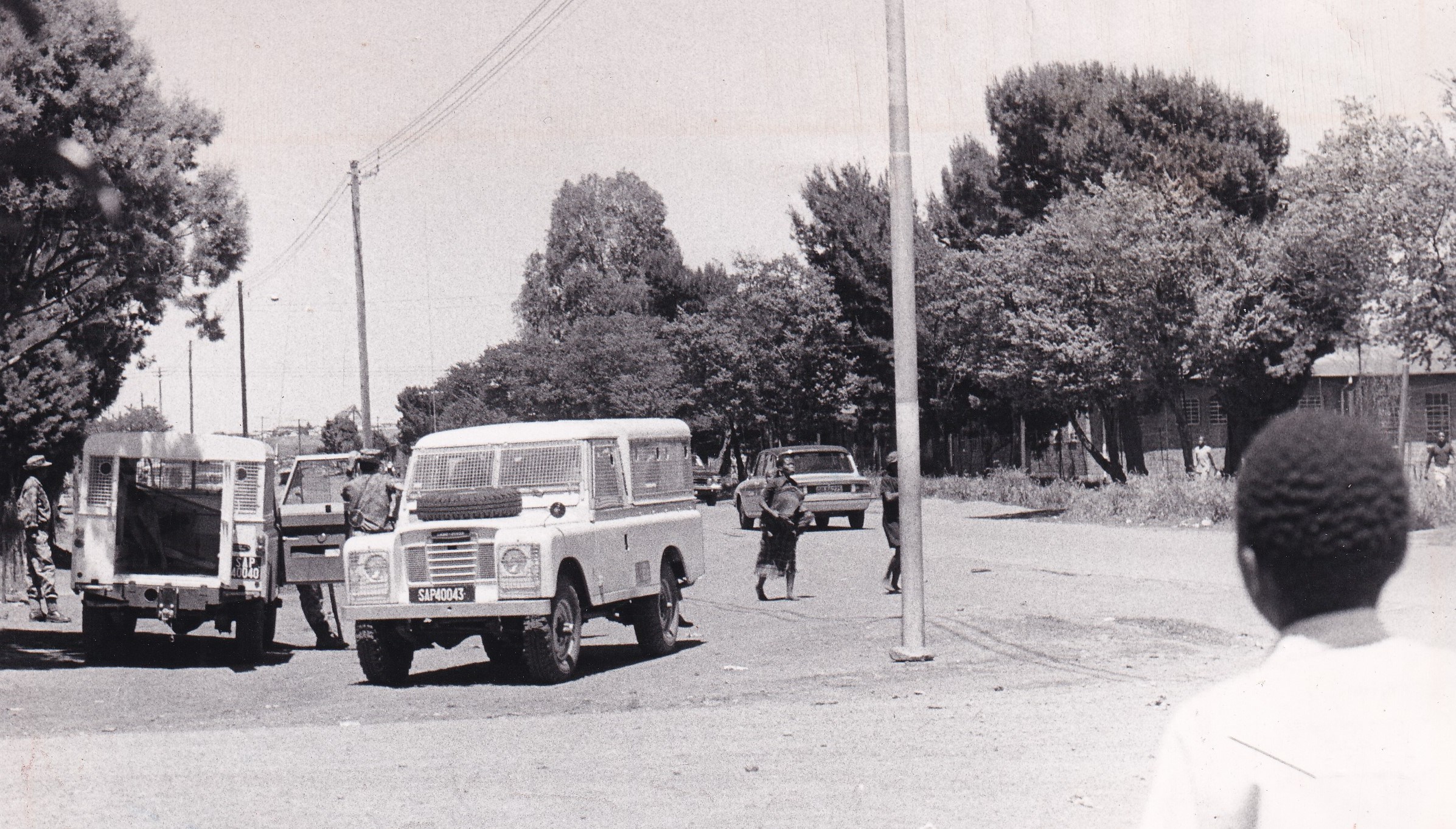
Repeated ridicule, disrespect and scolding took a toll on Elias. He wanted to be a policeman but without the baggage that came with it and the labels that were attached to it. “Sometimes you go to work feeling ‘all right’ and other days you cannot cope that day”, Elias explained. It was during the time of the school unrest that Elias became aware of the blatant racial discrimination within the police. He remembered how he and other black constables were ordered to leave their normal duties to confront angry stone-throwing groups of learners. While white riot police were issued with pistols and rifles, the black policemen had to defend themselves with knuppels (batons).
It was at the time of the riots that Elias’s career as a policeman was abruptly cut short. He recalled the incident as if it happened yesterday: “A vice-captain or major – I cannot remember the name – told me that I drove around with his car”. Elias explained to the white officer that it wasn’t him who drove the car but another sergeant who was on duty that day. The officer did not believe Elias, who was unceremoniously discharged after eleven years of service. The emotional impact of the incident was such that Elias never worked again. “I just stayed at home”, he said. Elias’s wife Selma looked after him until she became too weak to do so.

Today, Elias lives at an old age facility, but he wants “to go home”. Unable to explain exactly what he means by ‘home’, Elias looks vulnerable and tired. Eleven years of service in the South African Police during a time when policemen – black and white – epitomised apartheid, crushed him. For black South Africans who suffered the worst of the system at the hands of black policemen, the ‘blackjacks’ and ‘platkeps’ still symbolise the dreaded ‘face of apartheid’. Yet, behind this ‘face’ were men and women who not only served apartheid, but who were also victims of it. Making sense of their individual choices requires novel ways of looking at South Africa’s apartheid period (1948–1994). To understand the complexities of the apartheid past one must ‘read between the lines’ and ‘go against the grain’ of conventional historiography.
Sources
Brewer, J.D. 1994. Black and blue: Policing in South Africa. Oxford: Clarendon Press. https://doi.org/10.1093/oso/9780198273820.002.0001
Dippenaar, M. de W. 1985. Die SA Polisie – die geskiedenis van die ‘Dun blou lyn’ (Part II). Lantern 34(4): 68–78.
Dlamini, J. 2009. Native nostalgia. Auckland Park: Jacana Media.
Dlamini, J. 2017. Askari: A story of collaboration and betrayal in the anti-apartheid struggle. Auckland Park: Jacana Media.
Dlamini, J. 2020. The terrorist album: Apartheid’s insurgents, collaborators, and the security police. Cambridge: Harvard University Press.
Du Bruyn, D. 2024. Memories and testimonies of passbooks, permits and platkeps in apartheid-era Batho, Mangaung. New Contree 91: 1–19. https://doi.org/10.4102/nc.v91.254
Le Roux, C. 2003. The role of the South African Police and supportive local authorities in crime prevention in Mangaung, Bloemfontein, 1945–1976. Journal for Contemporary History 28(3): 198–215. https://hdl.handle.net/10520/EJC28290
National Museum Oral History Collection: M.E. Nakedi, 6 February 2026.




Comments are closed.