

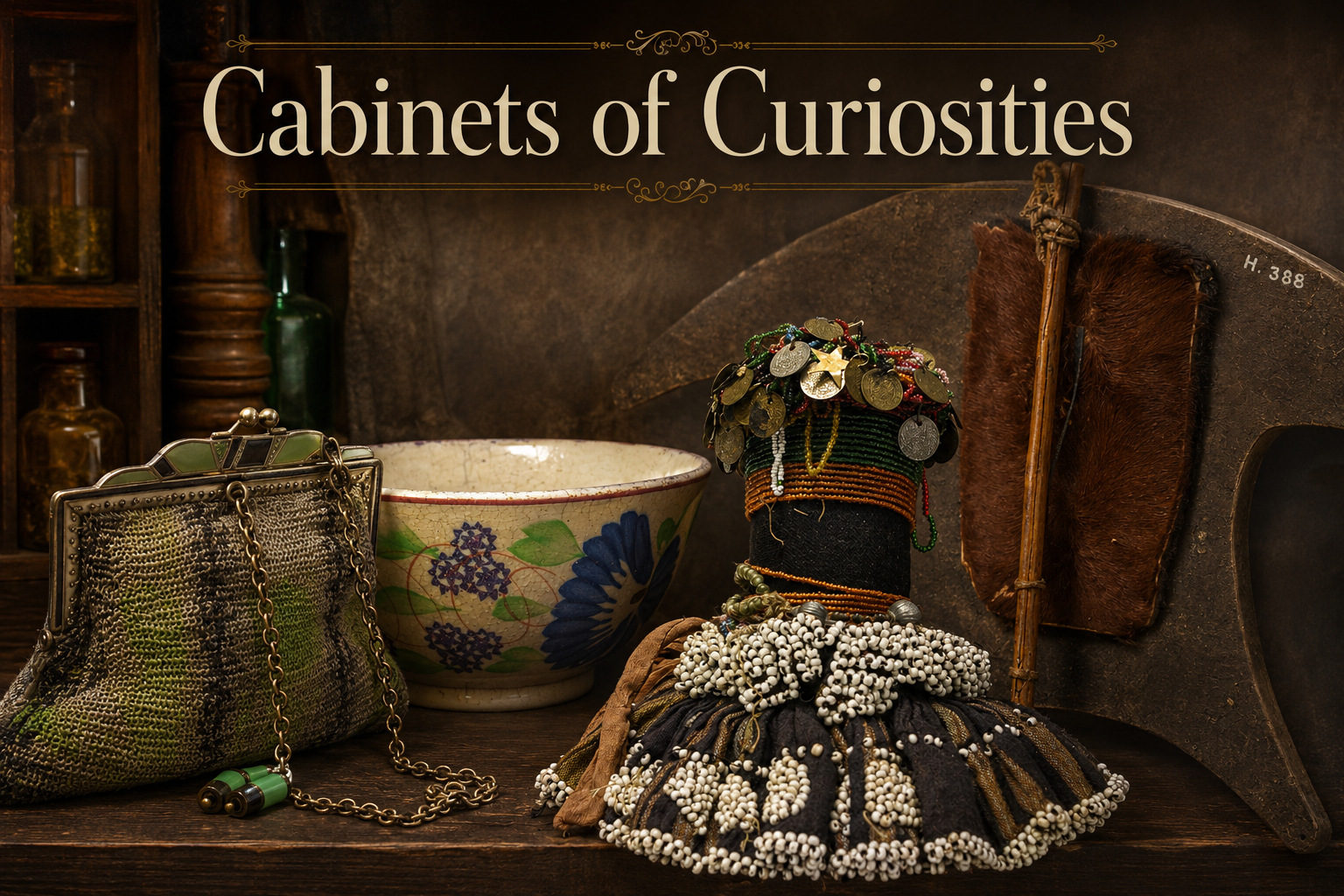
Exploring N’wana
“Ku veleka vukosi…” “To bear children is wealth.”
Among the Tsonga-Shangaan people, n’wana means “child”. Although often called a fertility doll, it is better understood as a child figure – a powerful symbol of womanhood, marriage and motherhood rather than a toy.
Unlike the simple xipopana, dolls made by children from rags, clay or maize cobs, a n’wana was presented to a young woman after initiation or at marriage. Richly decorated with colourful beadwork and dressed in a miniature traditional skirt, it announced her new social status and her readiness to begin adult life.
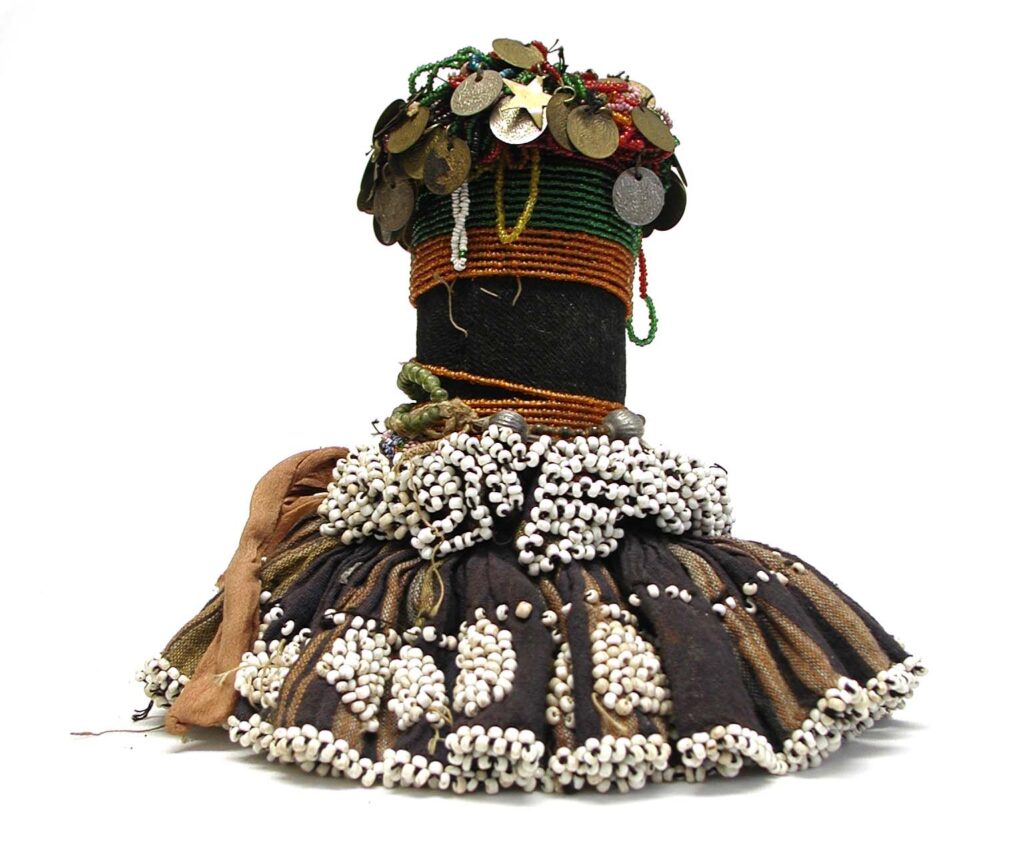
The doll accompanied its owner through courtship, marriage and pregnancy. Newly married couples even named and cared for the figure until the birth of their first child. If the baby was a boy, some of the beads from the n’wana could be used on his arms, waist and ankles. If it was a girl, the doll was kept intact so that she could play with it when she got older.
The figure embodies values central to the Tsonga-Shangaan society: respect, honour, discipline, modesty, courage and joy. It represents the journey from girlhood to motherhood and celebrates the importance of family and community.
The National Museum houses an exceptional n’wana acquired in 1930 by Dr Van Hoepen, the museum’s first director. Dating to the early twentieth century, it is one of the oldest known examples in South Africa. Its most striking feature is a headdress decorated with Ottoman Turkish coins, a rare detail not seen on later figures, hinting at long-distance trade and cultural exchange.
The enduring mystery of spongeware
 Spongeware takes its name from the decorating technique itself. Natural sea sponges have been dipped into coloured slip or glaze and pressed onto the surface of the pottery, creating distinctive floral motifs, stars, leaves and abstract patterns. No two pieces are exactly alike. Even when potters work from the same stencil or sponge, every impression produce subtle variations, making each piece unique.
Between 1830 and 1920, spongeware was produced in enormous quantities across Britain, Scotland and the Netherlands, before finding its way into homes around the world, including South Africa.
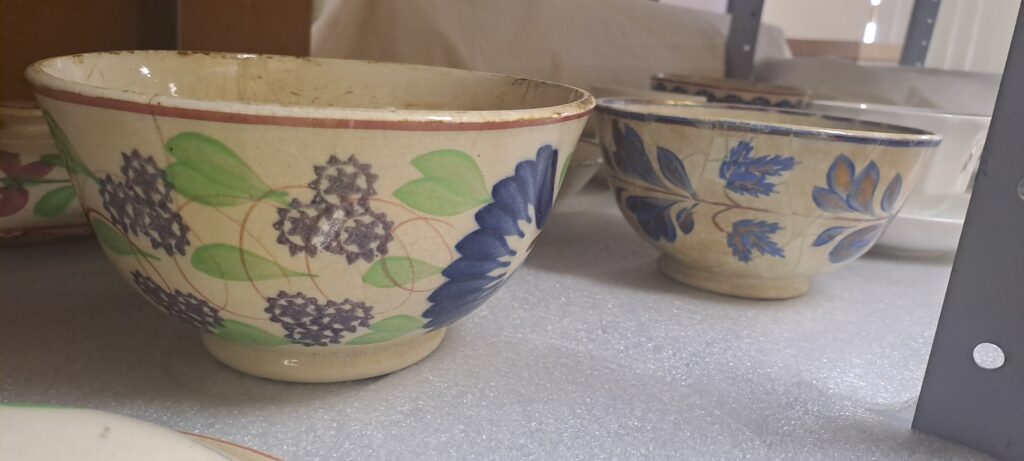 Dating and identifying spongeware is notoriously difficult because it has seldom been marked. As inexpensive household pottery, manufacturers saw little reason to add factory backstamps, and some well-known potteries preferred not to associate their prestigious names with these everyday wares. To make matters even more challenging, popular sponge patterns have remained in production for decades, often changing hands between potteries or being copied by competitors. Two almost identical pieces may therefore have been made in different factories, sometimes many years apart.
Closely related is the Dutch boerenbont tradition, recognised for its colourful hand-painted floral patterns, which often appear alongside sponge decoration on practical everyday tableware.
Today, these modest ceramics have become treasured reminders that history is not only found in grand palaces and priceless porcelain.
The swallow-shaped shield of the South Sotho
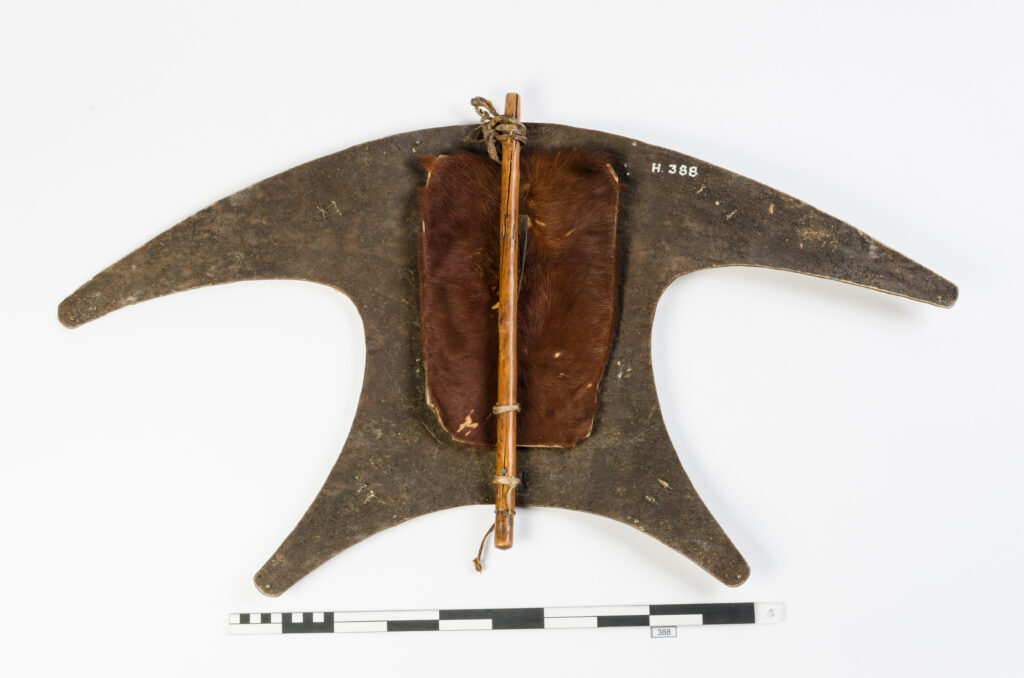 The swallow-shaped shield of the South Sotho was more than a weapon of war; it was a practical response to the rugged mountain landscapes of southern Africa. Smaller and lighter than the large oval shields associated with Nguni peoples such as the amaZulu, it allowed Sotho warriors to move swiftly across rocky terrain and steep passes. Its distinctive winged form, resembling the spread shape of a swallow in flight, reflected a military tradition built on speed, agility and endurance rather than close combat.
In battle, Sotho warriors typically fought at a distance, relying on throwing spears instead of the stabbing techniques favoured by King Shaka’s impis. The shield, therefore, functioned less as a wall of defence and more as a tool for mobility and protection against incoming projectiles. Carefully crafted from hide and wood, it embodied both the resourcefulness of the Basotho and the demands of warfare in the highlands.
The glittering story of the mesh handbag
 Long before the designer handbag became a status symbol, another accessory was captivating fashionable women around the world: the shimmering metal mesh handbag.
These elegant, finely woven bags had been turning heads since the late eighteenth century, but it was during the 1890s when they truly entered the fashion spotlight. American jewellery makers Whiting & Davis perfected the art of creating delicate metal mesh handbags, transforming them into must-have accessories for the stylish elite.
Back then, every bag was an astonishing feat of craftsmanship. Each tiny metal ring had to be linked together by hand, one by one. A single handbag could contain as many as 100,000 individual metal links, making each piece incredibly labour-intensive and expensive.
Everything changed in 1909, when inventor A.C. Pratt patented the automatic mesh-making machine. What had once taken countless hours of painstaking handwork could now be produced efficiently, making these dazzling accessories affordable and widely available. Almost overnight, the mesh handbag became a fashion sensation.
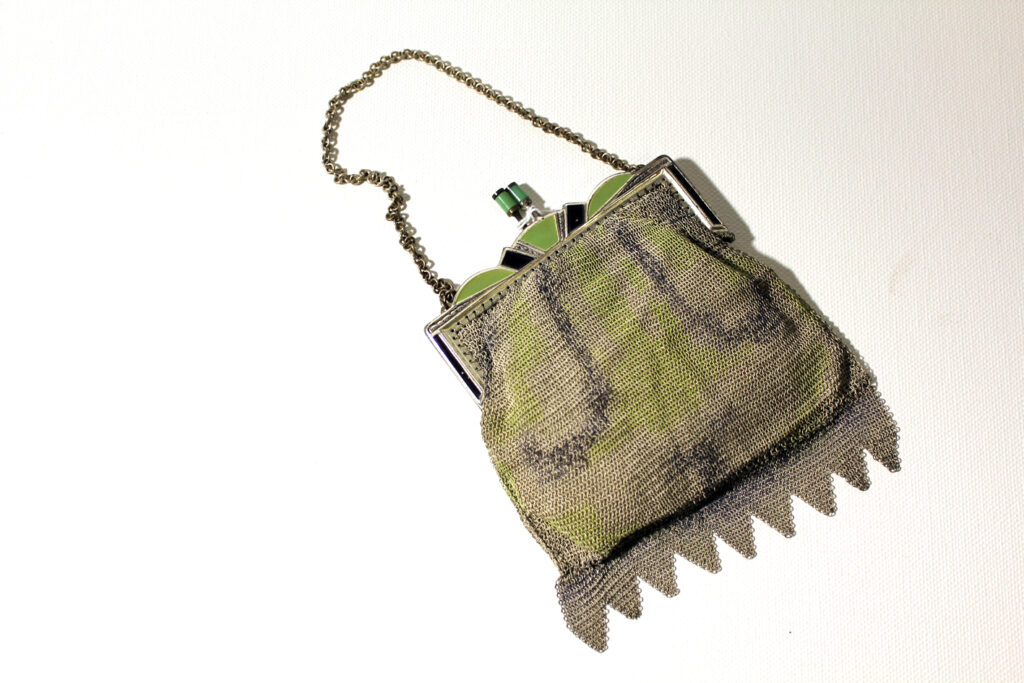 Their golden age arrived during the glamorous Art Deco era of the 1920s and 1930s. The most sought-after examples were the beautifully painted mesh bags, decorated with vibrant floral motifs, romantic landscapes, geometric patterns and exotic scenes. Perfectly complementing the flowing chiffon and net dresses of the flapper generation, these petite handbags reflected the sleek elegance of the Jazz Age. They were only just large enough to hold the essentials – a packet of cigarettes, a lipstick or a few coins, yet adding a flair of style.
Today, vintage mesh handbags remain highly collectible, admired not only for their timeless beauty but also for the remarkable craftsmanship hidden within every shimmering link.
Sources:
Atmore, A. & Sanders, P. 1971. Sotho arms and ammunition in the nineteenth century. The Journal of African History 12(4): 535–544.
Becker, R. Tsonga figures in Dell, E., Shoolman, S. & Burroughs, E. (eds.). 1998. Evocations of the child: Fertility figures of the southern African region. Cape Town: Human & Rossouw.
Dederen, J. Toy or treasure? Expoloring n’wana, the Tsonga ‘doll’ in Liebhammer, N. (ed.) 2007. Dungamanzi: stirring waters. Johannesburg: Wits University Press.
Hammand-Tooke, W.D. (Ed.) 1974. The Bantu-speaking peoples of Southern Africa. London: Routledge & K. Paul.
McConnell, K. 2001. Spongeware & Spatterware. Atglen: Schiffer Publishing Ltd.
Miller, Sherry and Mike. 2026. The mysteries of mesh. http://pursecollector.com/mesh-purse-info



Comments are closed.