Submit an article to Indago - a peer reviewed journal
Category

Collections Management – Humanities

Category

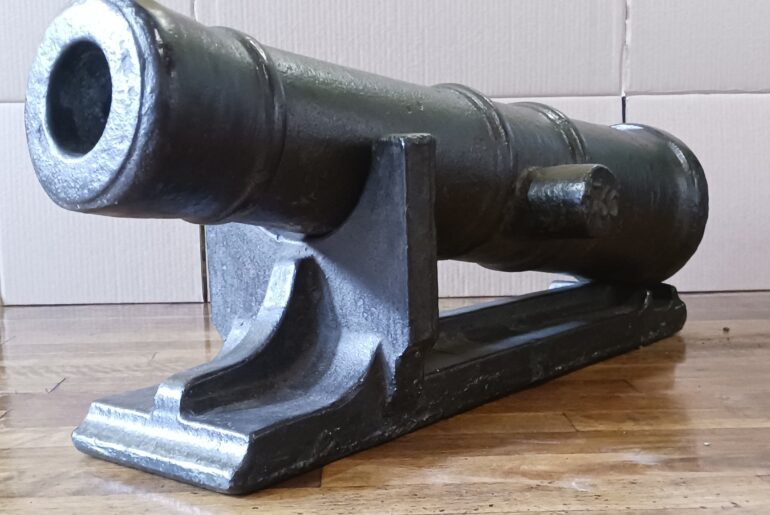
Among the many fascinating objects displayed in the First Raadsaal Museum in Bloemfontein is a small iron cannon that quietly invites more questions than it answers. It is not the largest or most imposing exhibit, yet a closer look reveals two intriguing clues cast into its barrel: the initials JEC and the date 1760.
Exploring N’wana

“Ku veleka vukosi…” “To bear children is wealth.”

Among the Tsonga-Shangaan people, n’wana means “child”. Although often called a fertility doll, it is better understood as a child figure – a powerful symbol of womanhood, marriage and motherhood rather than a toy.

Unlike the simple xipopana, dolls made by children from rags, clay or maize cobs, a n’wana was presented to a young woman after initiation or at marriage.

Could this be a bubble off?

In the Museum’s collection is a dry razor that resembles a modern bubble off or fluff shaver.

The Thorens Riviera is a gents’ dry razor manufactured in Switzerland in the 1950s. What makes this razor unique is its clockwork mechanism. The mechanism is wound up by turning the large chrome handle on the back similar to winding up a clock. This means no batteries or electricity is needed to power the shaver. In 1971, a similar razor was on board the Apollo 14 Moon mission.