Submit an article to Indago - a peer reviewed journal
Author

Sudre Havenga

Browsing

Exploring N’wana

“Ku veleka vukosi…” “To bear children is wealth.”

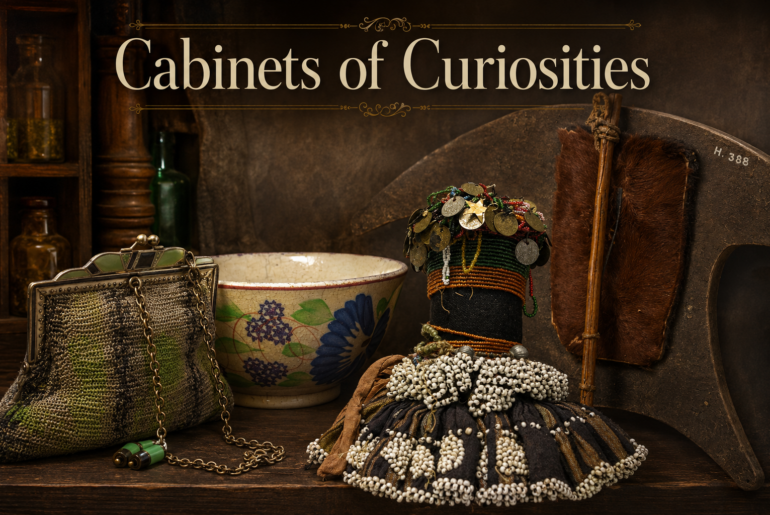
Among the Tsonga-Shangaan people, n’wana means “child”. Although often called a fertility doll, it is better understood as a child figure – a powerful symbol of womanhood, marriage and motherhood rather than a toy.

Unlike the simple xipopana, dolls made by children from rags, clay or maize cobs, a n’wana was presented to a young woman after initiation or at marriage.

The tender illusion of wax

Did you know that wax has been a prized material in doll-making since the Middle Ages?! Its plasticity and ability to maintain shape made it perfect for crafting lifelike figures, especially during the 18th century. From imitation fruits to religious figures, wax was used in many art forms before becoming a favorite medium for creating stunning, realistic doll heads.

Could this be a bubble off?

In the Museum’s collection is a dry razor that resembles a modern bubble off or fluff shaver.

The Thorens Riviera is a gents’ dry razor manufactured in Switzerland in the 1950s. What makes this razor unique is its clockwork mechanism. The mechanism is wound up by turning the large chrome handle on the back similar to winding up a clock. This means no batteries or electricity is needed to power the shaver. In 1971, a similar razor was on board the Apollo 14 Moon mission.

What do Emily Hobhouse and Charlotte Newman have in common?

In July 2019 the National Museum in collaboration with the Leeds Becket University (England) hosted a satellite exhibition on Emily Hobhouse and the home industries as part of the War Without Glamour: the Life and Legacy of Emily Hobhouse exhibition presented at the Free State Arts Festival in Bloemfontein.

In South Africa the month of August is synonymous with honoring women: their courage, strength and endurance. Celebrated on the 9th of August, the day reminds us of the courageous march in 1956 by approximately 20 000 women who protested against legislation aimed at tightening the apartheid government’s control over the movement of black women in urban areas.