

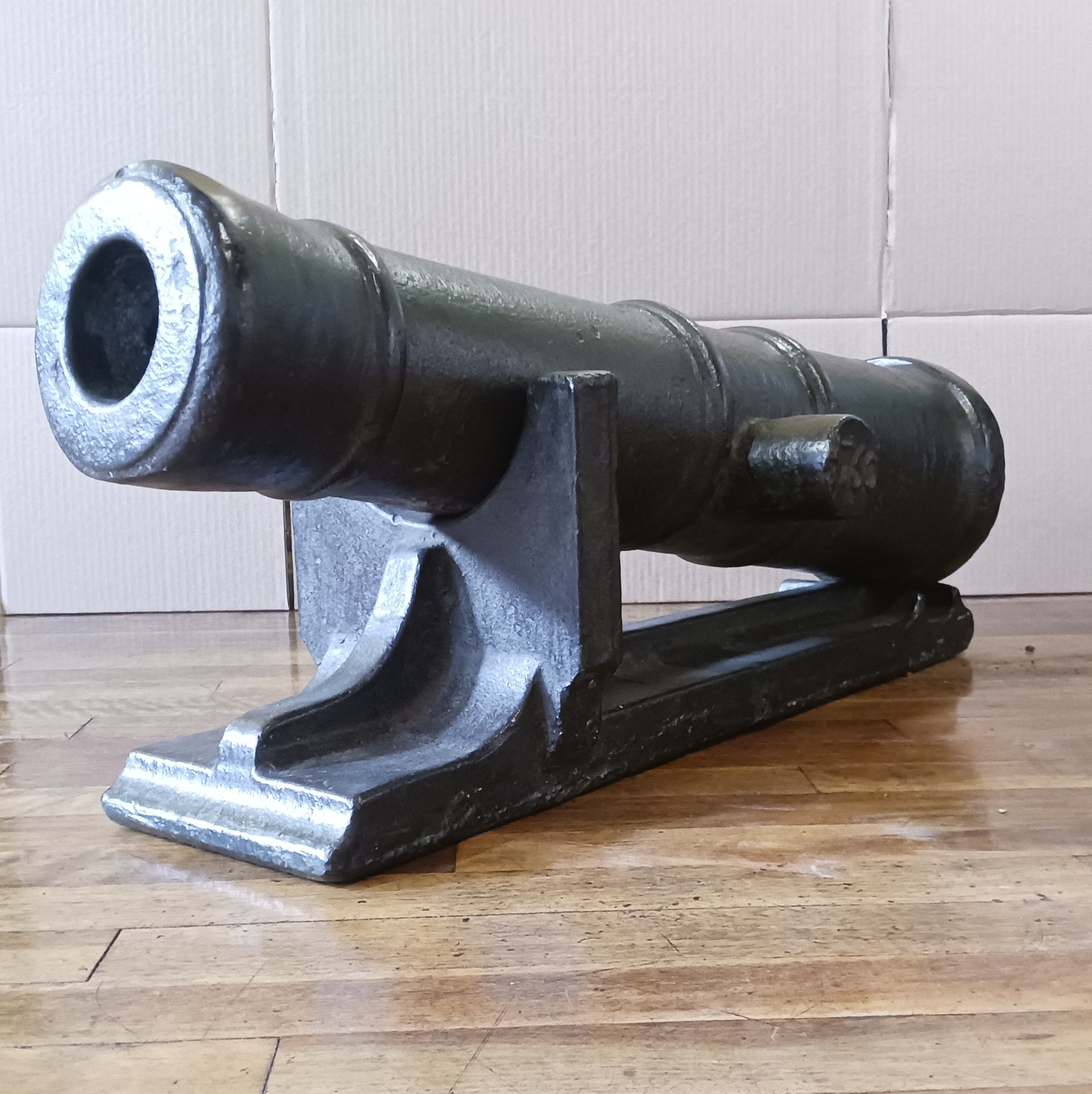
Among the many fascinating objects displayed in the First Raadsaal Museum in Bloemfontein is a small iron cannon that quietly invites more questions than it answers. It is not the largest or most imposing exhibit, yet a closer look reveals two intriguing clues cast into its barrel: the initials JEC and the date 1760. These simple markings open the door to a remarkable story that stretches across continents and centuries, linking the Free State with Sweden, the great sailing ships of Europe, global trade, colonial expansion and even the world of pirates.
The cannon’s story almost certainly begins in Sweden, which during the 17th and 18th centuries was one of leading producers of iron in Europe. Rich deposits of exceptionally pure iron ore, combined with skilled craftsmen and well-organised foundries, enabled the country to manufacture some of the finest cast-iron products of the time. Among its most valued exports were cannons, prized for their strength, reliability and quality. As European powers expanded their overseas empires and competed for control of trade routes, Swedish-made artillery found its way onto warships, merchant vessels and colonial fortifications around the world.
One of the most important Swedish cannon foundries was Ehrendal in Södermanland, established by the industrial entrepreneur Jesper Elieson Ehrencreutz. Born in Avesta in 1648, Jesper came from a family involved in mining and trade. After building a successful career as a merchant and industrialist, he received permission from the Swedish Crown in 1685 to cast cannons. Under his leadership, Ehrendal became an important part of Sweden’s growing military industry, supplying artillery for both domestic use and export.
Like many foundries in those days, Ehrendal marked its products with the initials of the master founder. Jesper’s earliest cannons carried the letters IE for Jesper Elieson. After he was ennobled, the mark changed to IEC, reflecting his new surname, Ehrencreutz. Following his death in 1722, the foundry remained in family hands. Jesper’s son Olof used the initials OEC, while Olof’s son Johan Ehrencreutz managed the foundry between about 1745 and 1763, branding its products with the initials JEC. The initials and date on the Bloemfontein cannon correspond precisely to Johan’s period of production, providing convincing evidence that the gun was cast at Ehrendal.
The Bloemfontein cannon is relatively small, suggesting that it was intended for service aboard a ship rather than in a major fortress. Such weapons were commonly one- to three-pounder naval guns, named after the weight of the iron cannonballs they fired. Mounted on compact wooden carriages, those cannons could easily be moved around ship decks and were designed for close-range combat, smashing masts, cutting rigging and punching holes through the wooden hulls of enemy vessels. Though modest in size, they could inflict considerable damage during naval engagements.
Once a cannon left the foundry, however, its journey had only just begun. During the 17th and 18th centuries, ocean routes formed an immense network connecting Europe, Africa, Asia and the Americas. Ships carried not only goods and passengers but also weapons, and artillery frequently changed owners. A cannon might begin its career aboard a naval ship, later be sold to a merchant vessel, captured in battle or even seized by pirates. The history of an individual cannon often became as adventurous as the ships that carried it.
Archaeological discoveries demonstrate just how widely Swedish-made cannons travelled. Excavations of Queen Anne’s Revenge, the flagship of the notorious pirate Blackbeard, have uncovered several iron cannons believed to have been manufactured in Sweden, including examples linked to the Ehrendal foundry. There is no evidence that the Bloemfontein cannon ever served aboard a pirate vessel, but these discoveries show that Swedish artillery reached far beyond official navies and became part of a wider maritime world of commerce, warfare, privateering and piracy.
How this particular cannon reached South African shores remains uncertain, but historians can reconstruct a highly plausible route. For centuries, the Cape of Good Hope was one of the world’s busiest maritime crossroads. Dutch and later British authorities maintained military installations there, while countless ships called to replenish supplies and undergo repairs before continuing their voyages between Europe and Asia. Cannons were regularly transferred between ships and shore, mounted in coastal fortifications or issued to colonial forces. As newer artillery replaced older guns, many remained in service for secondary duties rather than being discarded. Some continued to guard forts and settlements for decades, while others were redistributed to more remote military posts.
As European settlement expanded into the interior of southern Africa during the 18th and 19th centuries, military equipment gradually moved inland. Cannons that had once defended ships or coastal fortifications found new roles far from the sea. It is, therefore, perfectly possible that the Bloemfontein cannon followed such a route, travelling from the Ehrendal foundry to a European vessel, then to the Cape, and eventually into the interior as colonial settlements expanded.
The cannon itself also hints at this long and changing history. Although the barrel dates back to 1760, it appears to have rested on a carriage that was probably not its original naval mounting. Instead, it might have been fitted to a later carriage associated with British garrison artillery. Such adaptations were common because cannon barrels often outlasted the original wooden carriages. Over many decades, guns were repeatedly repaired, remounted and reused as military requirements changed. A weapon built for the deck of a sailing ship could later serve in a coastal fort, a colonial garrison or an inland military post.
Exactly when this cannon arrived in the Free State remains unknown, but its markings provide valuable clues to its remarkable journey. Cast at the Ehrendal foundry during Johan Ehrencreutz’s time as master founder, it probably began its life as a Swedish naval gun before entering a broad world of European shipping. From there it might have passed through several owners before reaching the Cape, where surplus artillery was regularly redistributed to forts, settlements and colonial authorities.
By the middle of the 19th century, artillery played an important role in the Basotho Wars that shaped the history of the Orange Free State. Whether this particular cannon was ever present during those conflicts cannot be determined, and there is no evidence linking it directly to the wars. Nevertheless, guns of similar age often remained in service for many decades in forts and colonial garrisons, making it reasonable to suggest that this cannon reached the interior by that period, even if it never saw action.
Today, the little cannon displayed in the First Raadsaal Museum is far more than an old weapon. Its JEC mark and the date 1760 link it directly to one of Sweden’s most important cannon foundries and to the era when European trade, naval warfare and colonial expansion connected distant parts of the world as never before. Although much of its individual journey has been lost to history, the cannon remains a powerful reminder that even a modest museum object can tell an extraordinary story. Cast in Sweden, carried across the oceans during the age of sail and eventually brought to the heart of the Free State, it stands as a tangible link between local history and a wider global past, connecting Bloemfontein with the foundries, ships and sea routes that shaped the 18th-century world.
Sources:
AIA Site Preservation Projects. n.d. Queen Anne’s Revenge, North Carolina. Archaeological Institute of America. https://www.archaeological.org/project/queen-annes-revenge-north-carolina/ (accessed 9 July 2026)
Ehrendalskvarn. n.d. Historia. https://ehrendalskvarn.se/historia (accessed 9 July 2026)
Farrell, E. 2024. Artifact of the month: Swedish 1-pounder cannon. Queen Anne’s Revenge Project. State of North carolina, USA. https://www.qaronline.org/blog/2024-01-03/artifact-month-swedish-cannon (accessed 9 July 2026)
Guilmartin, J.F., Jr. 1972. The guns of the Santíssimo Sacramento. Technology and Culture 13(4): 559–601. https://doi.org/10.2307/3104249
Hammarskiöld, L. n.d. Jesper Elieson Ehrencreutz. Dictionary of Swedish National Biography. https://sok.riksarkivet.se/sbl/artikel/16668 (accessed 9 July 2026)
Henry, N. 2009. Analysis of armaments from Shipwreck 31CR314: Queen Anne’s Revenge site. Queen Anne’s Revenge Shipwreck Project Research Report and Bulletin Series, QAR-B-09-01, North Carolina Department of Cultural Resources, Raleigh, NC, USA, pp. 1–18. https://www.qaronline.org/analysis-armament-shipwreck-31cr314-queen-annes-revenge-site/
Kanoner.nu. n.d. Ehrendals bruk. http://www.kanoner.nu/index.php/ehrendals-bruk/ (accessed 9 July 2026)
Tekniska museet. 2019. Ehrendal (Bruk). DigitaltMuseum, 3 July 2026. https://digitaltmuseum.org/42c1ce86-d69e-490d-b3ad-d135797d47cd
The Shipwreck Project. n.d. Archeology: Methods, Artifacts, and Interpretation of the Queen Anne’s Revenge. https://shipwrecks.hist.sites.carleton.edu/queen-annes-revenge/qar-p-3/ (accessed 9 July 2026)
Venter, M. 2026. Personal correspondence with the author. Chairman and Master Gunner, Cannon Association of South Africa.
Images:
-
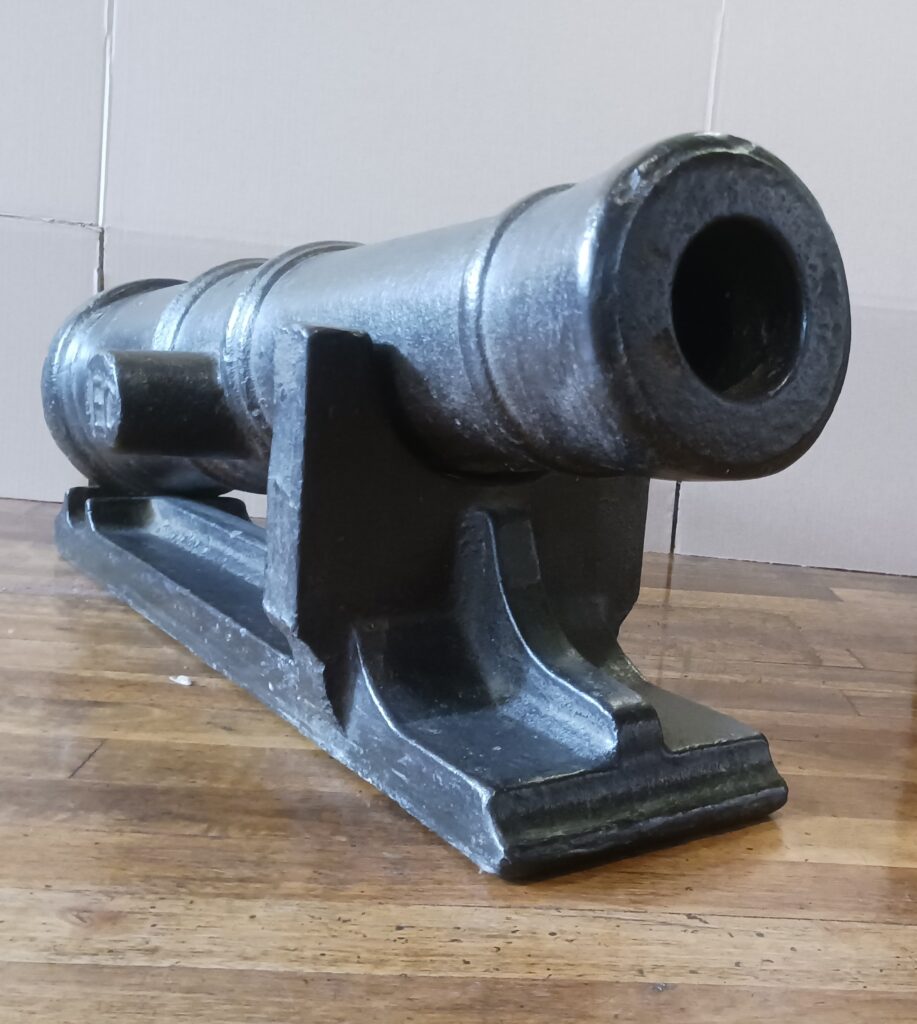
The 1760 Swedish cannon at the First Raadsaal Museum -
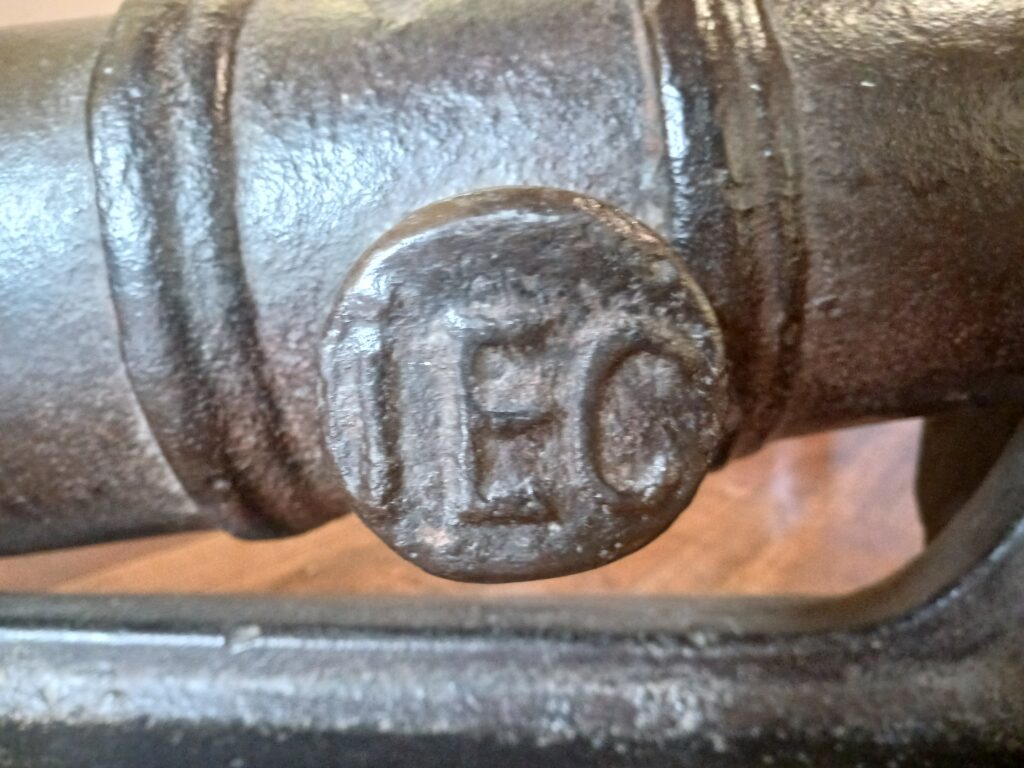
JEC maker’s mark on the cannon trunnion -
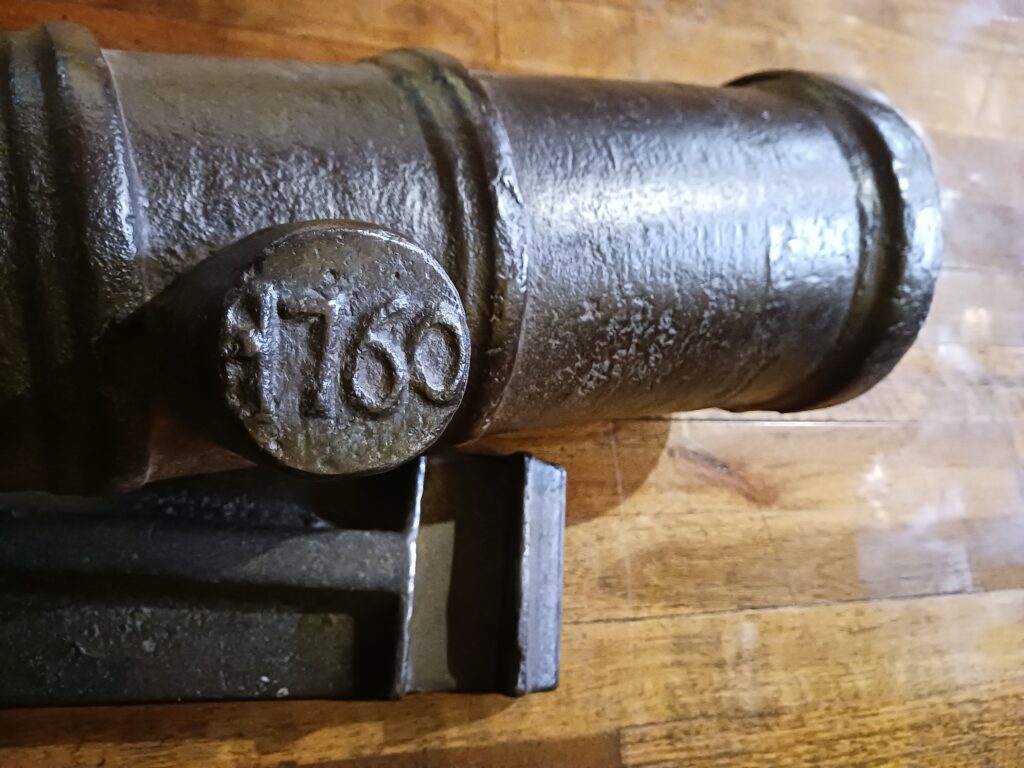
1760 date marking on the cannon trunnion 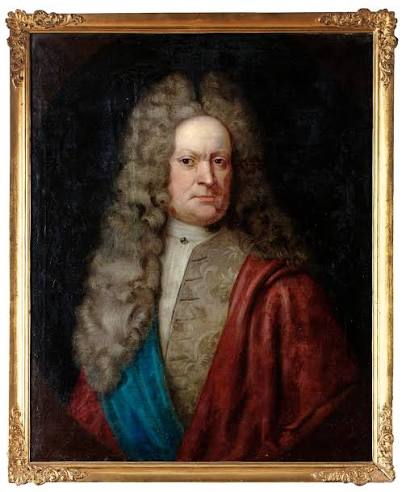
Jesper Elieson Ehrencreutz, founder of Ehrendal foundry [image: www.wikipedia.org] 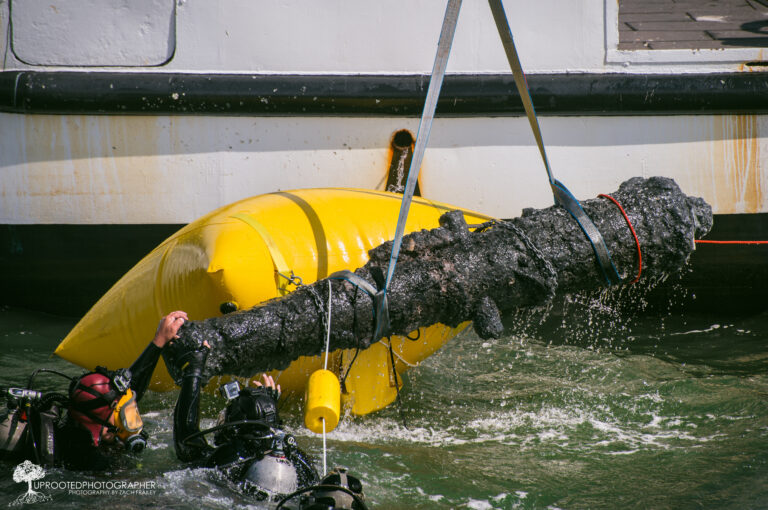
Cannon recovered from Queen Anne’s Revenge shipwreck [image: The Shipwreck Project] 
Ehrendal maker’s mark on a Queen Anne’s Revenge cannon [image: The Shipwreck Project] 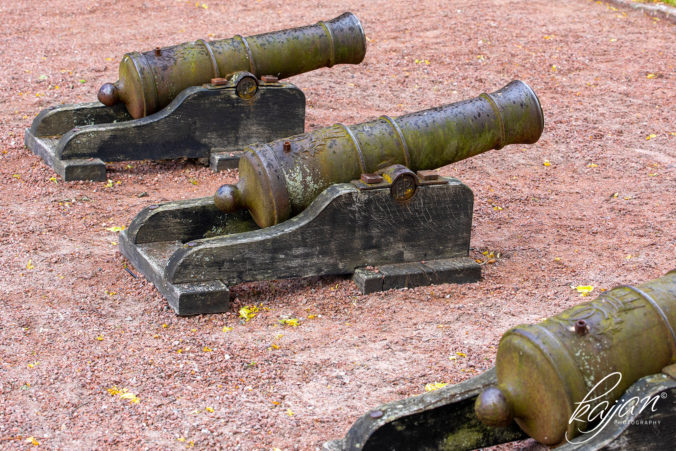
Ehrendal cannons at Bäckaskog Castle, Sweden, on the correct naval mountings. [image: www.kanoner.nu]



Comments are closed.