

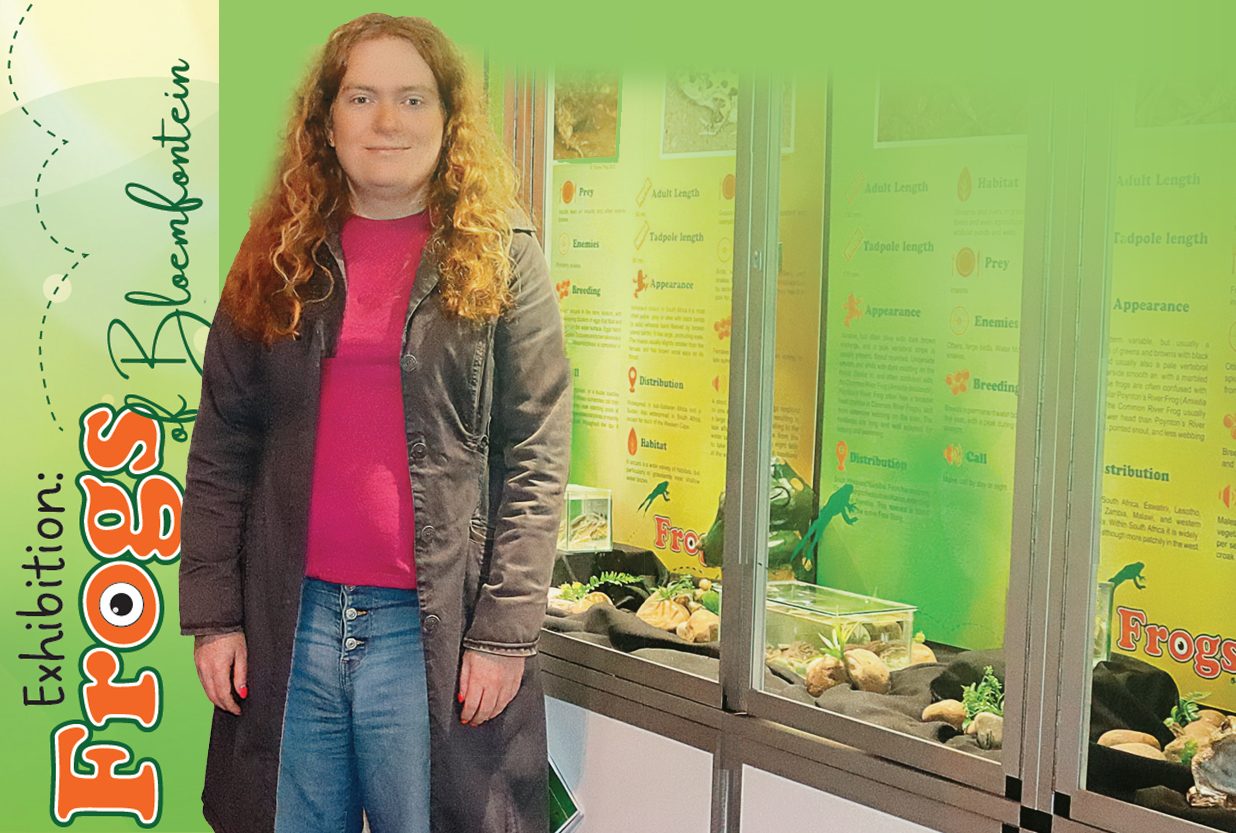
A new temporary frog exhibition went on display at the National Museum in July 2025. Visitors could find out more about the 12 species of frogs found in the Bloemfontein area and listen to audio of each species calls. The exhibition was curated by Dr Cora Stobie (Herpetologist) and designed by Ms Carien van Eck (Graphic Designer).
Frogs are amazing creatures with fascinating reproductive cycles. Typically, frogs lay strings of sticky eggs in ponds which mature into tadpoles. These tadpoles grow and develop legs, lose their tails, and ultimately resemble miniature adult frogs. In central South Africa, different factors act on our frogs. Much of this area is characterised by short, intense periods of summer rainfall, resulting in ephemeral pans that rapidly evaporate. This is where we find the largest frog in the region, the Giant Bullfrog (Pyxicephalus adspersus), which must breed hurriedly in these pans before they dry up. The tadpoles need to grow quickly and change into froglets that can leave the water body as soon as possible.
- Giant Bullfrog
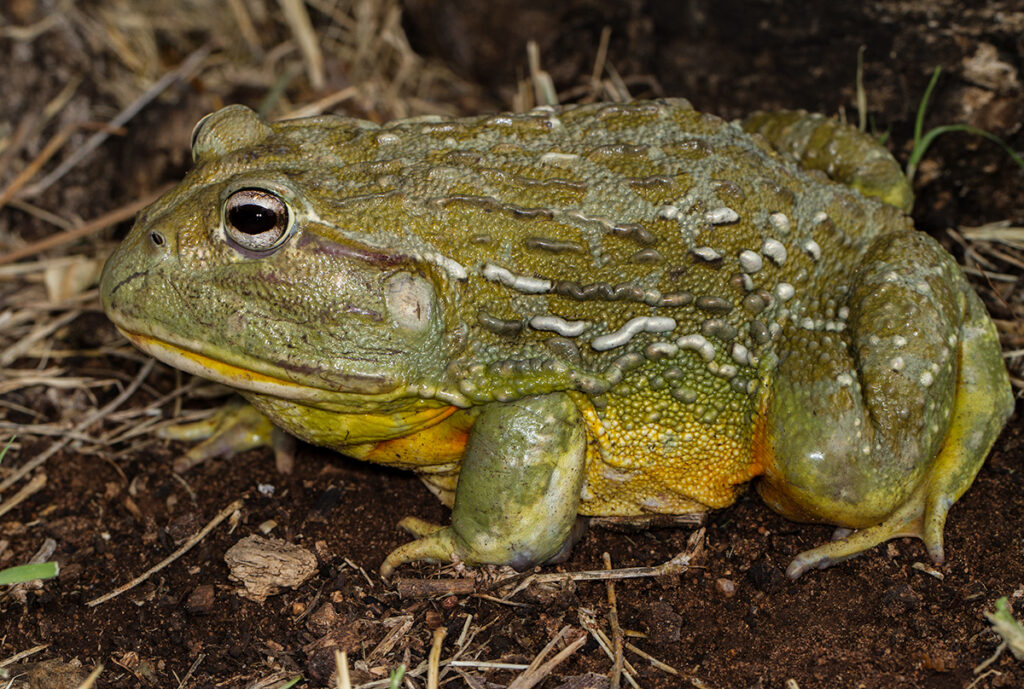
Common name: Giant Bullfrog
Scientific name: Pyxicephalus adspersus
Afrikaans: Reusebrulpadda
SeSotho: Letlametlu le leholo
Adult length and weight: Largest frog in southern Africa at 245 mm, up to 1.4 kg
Tadpole length: 71 mm
Appearance: Adults are dark green above, while juveniles are characterised by a pale vertebral stripe and are a much brighter green. The underside of the frog is cream-yellow, and the base of the forelimbs of breeding males are bright yellow. These frogs have a spade-like tubercle on each heel, used for digging.
Distribution: Giant Bullfrogs are widespread in southern and eastern Africa as far north as Kenya. They have been extirpated (become locally extinct) in Eswatini and parts of Gauteng. In Bloemfontein, the Giant Bullfrogs are common, especially in the outer parts of the city where breeding habitat remains. They appear after heavy rains in summer.
Habitat: Grassland and wooded savanna where temporary pools form following heavy rains.
Prey: Giant Bullfrogs eat just about everything that they can fit in their mouths, including insects, small rodents, birds, fish, snakes and other frogs, even smaller bullfrogs. They have two large bony processes on their lower jaw which resemble fangs, and will bite if provoked.
Preyed on by: Giant Bullfrogs are themselves eaten by water birds such as egrets, herons and ibises, as well as terrapins, monitor lizards, snakes and mammalian predators like the Honey Badger and Black-footed Cat.
Breeding behaviour: Breeds in temporary water bodies in grasslands, also in dams and ponds. During the breeding season, adults congregate together to form leks, or breeding arenas, normally in areas of shallow water following a rainstorm. Males fight, sometimes to the death, for the right to mate. Eggs develop into blackish tadpoles after only 2–3 days. The female leaves after the eggs are laid but the male often remains behind until the tadpoles have matured into froglets. Males will defend eggs and act aggressively towards intruders. They may occasionally dig in the mud to form a canal to connect a drying water body to the main water source. Tadpoles metamorphose after 18 to 33 days. Adults spend much of the year in a state of torpor underground.
Call: A loud, long ‘whoop’ that lasts about two seconds.
- Boettger’s Dainty Frog
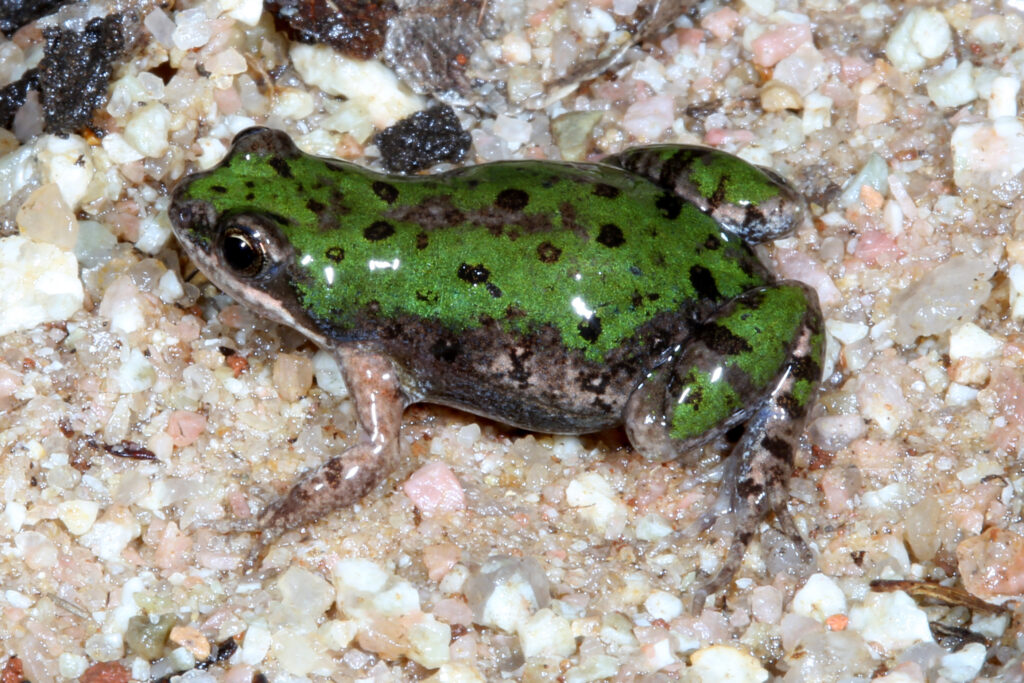
Common name: Boettger’s Dainty Frog
Scientific name: Cacosternum boettgeri
Afrikaans: Gewone Blikslanertjie
SeSotho: Lenkolane le tlwaelehileng
Adult length: 23 mm
Tadpole length: 28 mm
Appearance: Variable, from shades of brown and green to pale yellow, as well as combinations thereof. It may have spots, stripes, or no patterning at all, although there are often dark patches on the back. There is usually a pale white line from below the nostril to below the eye, extending to the upper arm, with a dark band above it. Skin is generally smooth with small, scattered warts. Underside is smooth with several grey or black spots. Males have a plain orange-brown throat. Fingers and toes lack distinct webbing.
Distribution: Found in much of southern Africa. This species is absent from a few areas in South Africa, such as Namaqualand and most of the Mpumalanga escarpment.
Habitat: This species is found in a variety of habitats, and is abundant in grasslands. In drier months, it hides under stones, logs, in the burrows of other animals, or in abandoned termite mounds.
Prey: Adults feed on insects (e.g., termites).
Preyed on by: Several animals have been recorded preying on this frog, including the Spotted Grass Snake, Yellow-billed Egret and Giant Bullfrog.
Breeding behaviour: Eggs are laid in clutches of about 250 at a time, hatching within two days. Metamorphosis takes only two weeks.
Call: A series of high-pitched clicks, often heard after rain. In the breeding season, males call from the afternoon until late at night.
- Common Platanna
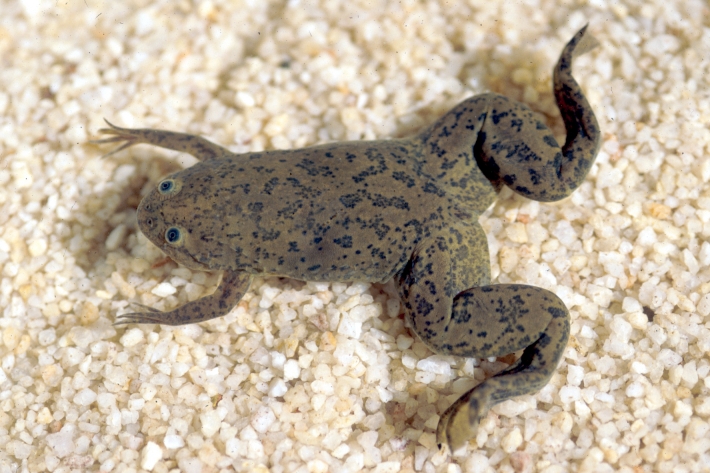
Common name: Common Platanna, African Clawed Frog
Scientific name: Xenopus laevis
Afrikaans: Gewone Platanna
SeSotho: Lentsweta la tlwaelehileng
Adult length: 150 mm
Tadpole length: 80 mm
Appearance: Backs are patterned in brown and grey blotches, underparts cream-yellow. Skin is smooth (‘laevis’ means ‘smooth’).
Distribution: Widespread in southern Africa, but absent from most of Mozambique. The Common Platanna has been introduced to North and South America, Europe and Asia, and is classified as an invasive pest in some countries.
Habitat: Found in permanent or semi-permanent water bodies, including rivers, dams and ponds. Aquatic, but may cross land at night in rainy weather and when water bodies overflow.
Prey: These frogs scavenge for carrion, but also eat living or dead insects, crustaceans, tadpoles, fish and occasionally small frogs. They use their front legs to shove food into their mouths, and rely mainly on smell and their lateral lines (‘mechanosensory system’ used to sense changes in the water) to locate food. The genus name ‘Xenopus’ means ‘strange foot’, presumably in reference to the clawed toes used to tear prey apart.
Preyed on by: Many species of water birds and raptors, and snakes.
Breeding behaviour: Breeds in stagnant water all year round, up to four times a year. Hundreds of eggs are laid over 3–4 hours and attached to nearby solid objects. Common Platanna tadpoles metamorphose into small frogs over a period of about six weeks.
Call: Males make a trilling mating call (a repeating series of clicks) which is only audible in water and which females answer with a rapping sound (acceptance) or a slow ticking (rejection).
- Southern Tremolo Sand Frog
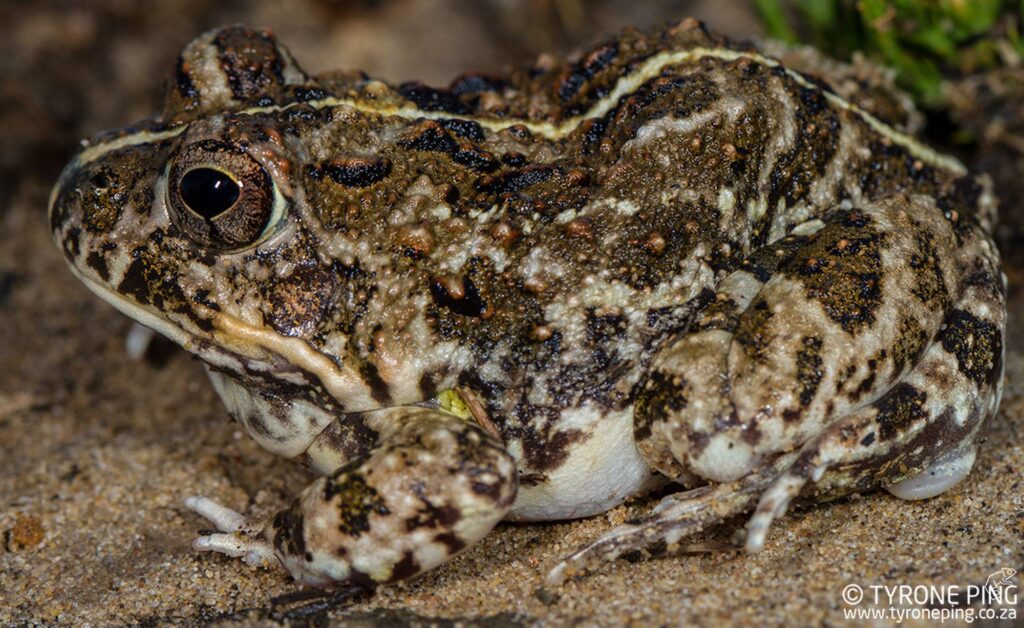
Common name: Southern Tremolo Sand Frog
Scientific name: Tomopterna adiastola
Afrikaans: Suidelike triller sandpadda
SeSotho: Senqanqana sa lehlabathe sa Tremolo sa Borwa
Adult length: 50 mm
Tadpole length: 37 mm
Appearance: Colouration is highly variable but usually light grey-brown to olive green with a narrow white line down the middle of the back, and sometimes also on each flank, and asymmetrical dark blotches. The skin is warty and not smooth like in some other species of the genus, but the belly is smooth and white. Males have dark colouration along the jawline.
Distribution: Widely distributed in Southern Africa including South Africa, Lesotho, Eswatini, Mozambique, Zimbabwe, Botswana, north-eastern Namibia and the southern tips of Angola and Zambia. In South Africa, this species is found in the northern parts of the country, and in the Free State it is found throughout the province except in the south-west. A similar species, Tandy’s Sand Frog, also occurs widely throughout the Free State, although more commonly in the south of the province.
Habitat: Grassland and savannah. Common after rain, otherwise spend much of the year buried in soil. They are known to enter a state of torpor at least 50 cm underground.
Prey: Adults feed on arthropods such as beetles, termites, caterpillars and ants.
Preyed on by: Snakes and birds.
Breeding behaviour: Females lay 2000–3000 eggs (each approximately 1.5 mm in diameter) in shallow water, which hatch after 2–3 days.
Call: A series of fast ‘ki-ki-ki-ki’ notes is heard from under vegetation in sandy soils, often near dams or temporary pools.
- Bubbling Kassina
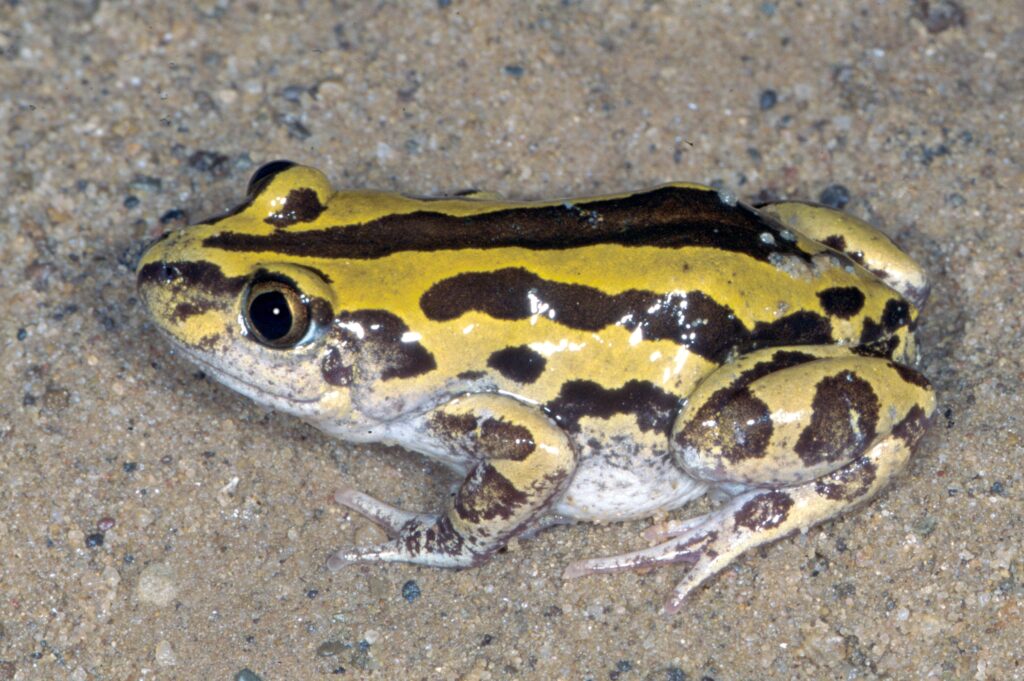
Common name: Bubbling Kassina, Senegal Running Frog
Scientific name: Kassina senegalensis
Afrikaans: Borrel Vleipadda
SeSotho: Senqanqanasekopitsane
Adult length: 50 mm
Tadpole length: 80 mm
Appearance: Variable in colour. In South Africa, it is most often yellow, grey or olive with black bands (a solid vertebral band flanked by broken lateral bands). It has large, protruding eyes. The male is usually slightly smaller than the female, and has brown vocal sacs on its throat.
Distribution: Widespread in sub-Saharan Africa and in Sudan. This species is also widespread in South Africa, except for much of the Western Cape.
Habitat: It occurs in a wide variety of habitats, including savannahs and shrublands, but particularly in grasslands near shallow water bodies.
Prey: Adults feed on grasshoppers, termites, ants, spiders and caterpillars.
Preyed on by: Birds, water bugs (Belostomatidae), and snakes. This frog protects itself by secreting a potent histamine-releasing peptide, which induces pain in potential predators.
Breeding behaviour: Females lay 100–500 eggs from spring to late summer. These eggs hatch within 6 days. The emergent tadpoles develop over 52–90 days to become small frogs.
Call: A short, loud ‘boip’. Male frogs respond to one another’s calls, often resulting in a large chorus. They begin calling in the late afternoon some distance from the water body, moving closer as night falls to take up partially-concealed positions at the water’s edge.
- Common River Frog
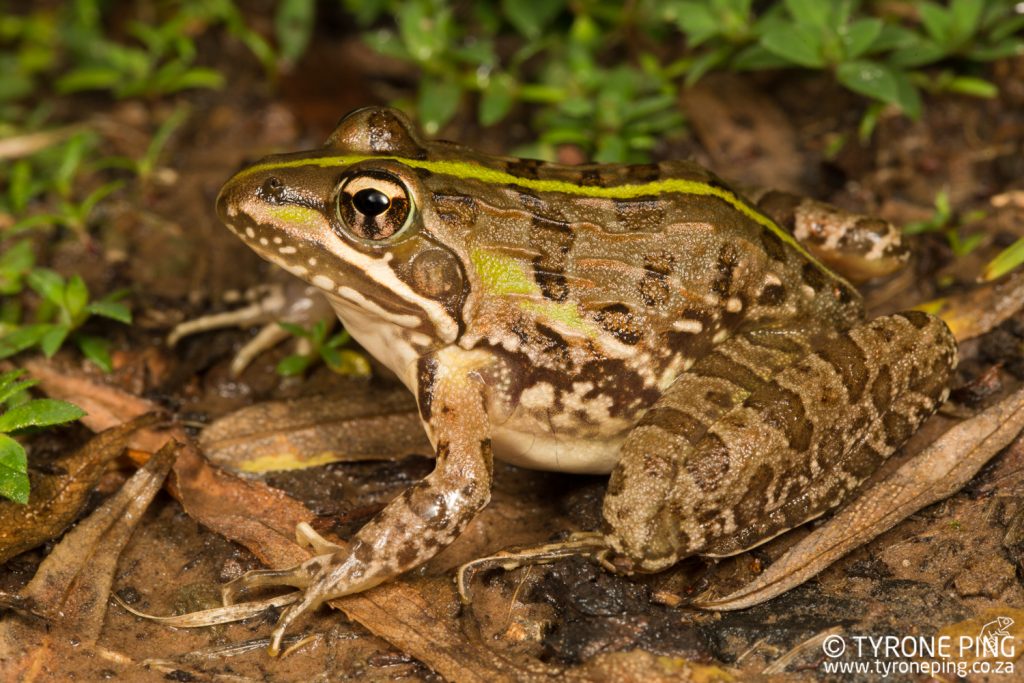
Common name: Common River Frog
Scientific name: Amietia delalandii
Afrikaans: Gewone Rivierpadda
SeSotho: Marokolo ya tlwaelehiileng
Adult length: 90 mm
Tadpole length: 80 mm
Appearance: Colour pattern is variable, but usually a combination of greens and browns with black patches and usually also a pale vertebral stripe. Underside is smooth and white with a marbled throat. These frogs are often confused with the very similar Poynton’s River Frog (Amietia poyntoni). The Common River Frog usually has a narrower head than Poynton’s River Frog, a more pointed snout and less webbing on its feet.
Distribution: Occurs in South Africa, Eswatini, Lesotho, Zimbabwe, Zambia, Malawi and western Mozambique. Within South Africa, the species is widely distributed, although more patchily in the west.
Habitat: Large and small rivers, dams and ponds. It favours grassland, savannah and forests.
Prey: Frogs feed mainly on flying and crawling insects.
Preyed on by: Otters, large birds, snakes, and even large spiders (Nilus sp.). When disturbed, the frog jumps from its hiding place into water to hide in mud.
Breeding behaviour: Breeds all year round, with a peak in spring and winter. As many as 500 eggs may be laid in shallow, slow-moving or standing water. The tadpoles metamorphose into small frogs over 9–12months.
Call: Males call from shallow water or from floating vegetation. The call consists of 3–16 clicks per second, followed by a brief pause and a short croak lasting half a second.
- Poynton’s River Frog
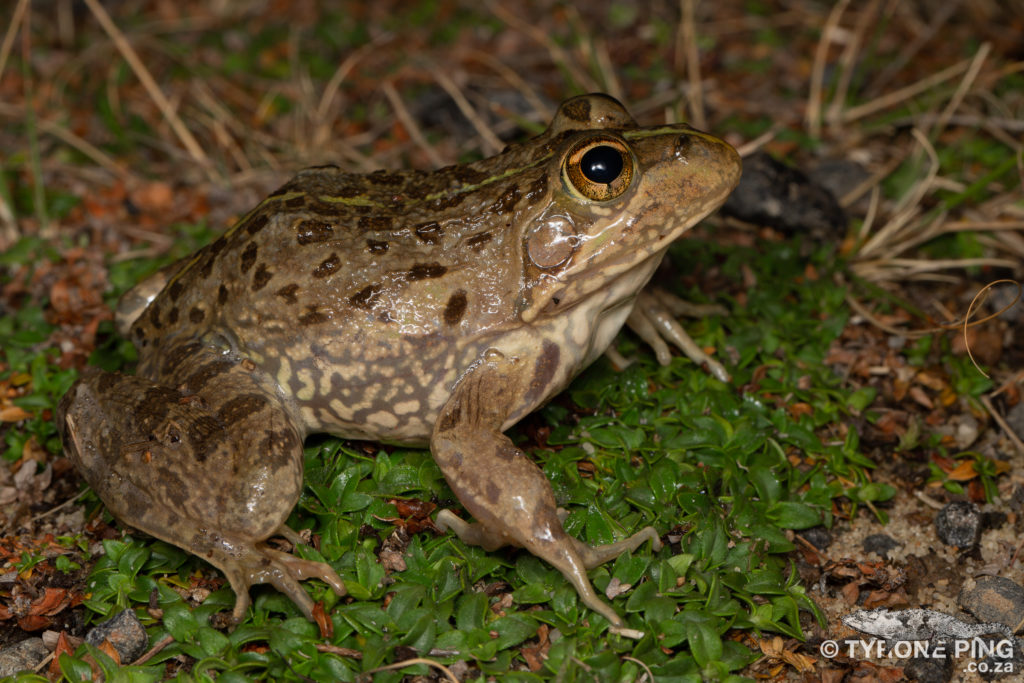
Common name: Poynton’s River Frog
Scientific name: Amietia poyntoni
Afrikaans: Poynton se Rivierpadda
SeSotho: Marokolo wa Poynton
Adult length: 130 mm
Tadpole length: 170 mm
Appearance: Variable, but often olive with dark brown markings, and a pale vertebral stripe is usually present. Snout is rounded. Underside is smooth and white with dark mottling on the throat. Similar to, and often confused with, the Common River Frog (Amietia delalandii). Poynton’s River Frog often has a broader head (narrow in the Common River Frog), and more extensive webbing on the toes. The hind limbs are long and well adapted for leaping and swimming.
Distribution: South Africa and Namibia. In South Africa, from the southern Drakensberg to the southern Karoo, extending to central Namibia. This species is found throughout the entire Free State.
Habitat: Streams and rivers in grassland, savannah, forest and even agricultural land. Also dams, artificial ponds and wells.
Prey: Adults feed on insects.
Preyed on by: Otters, large birds, Water Monitor and snakes.
Breeding behaviour: Breeds in permanent water bodies throughout the year, with a peak during the rainy season. These frogs have tadpoles that grow larger than adult frogs. Tadpoles usually complete metamorphosis to become small frogs after 9–12 months.
Call: Males call by day or night. The call six or seven rapid ‘kik-kik-kik-kik’ clicks which are then followed by a ‘keroip’ croak.
- Snoring Puddle Frog
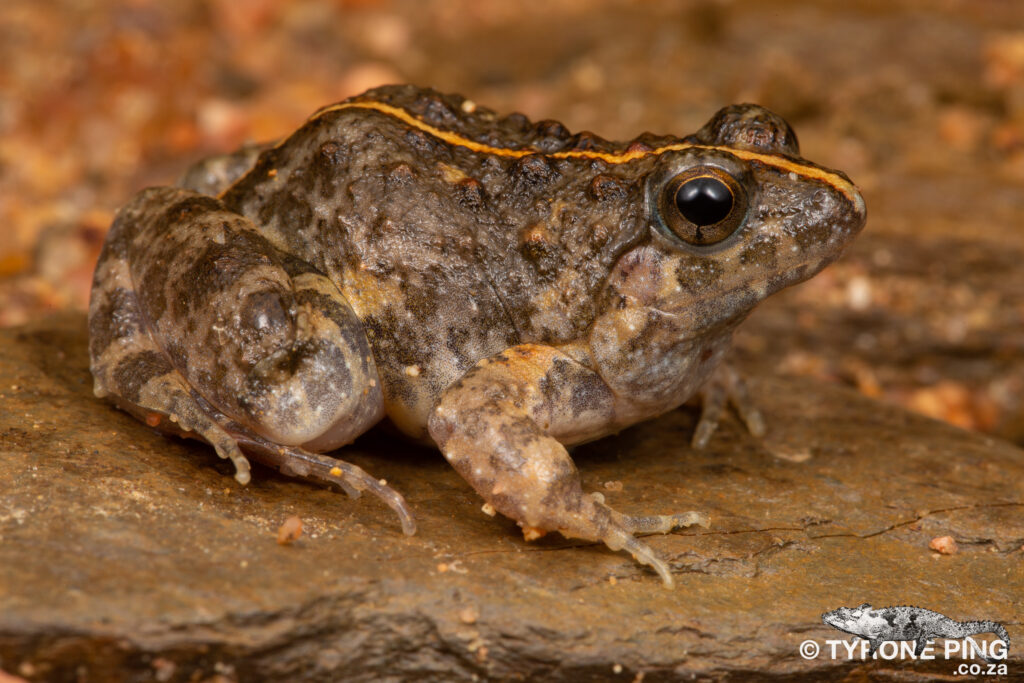
Common name: Snoring Puddle Frog
Scientific name: Phrynobatrachus natalensis
Afrikaans: Snork Modderpadda
SeSotho: Senqanqana sa diqanthana se kgonang
Adult length: 40 mm
Tadpole length: 35 mm
Appearance: A ‘chubby’ grey or brown frog with a light green or tan vertebral stripe, and two large warts near its shoulders. The underside is cream and smooth, with occasional dark flecks. Thighs usually have three to four dark bands, and there is moderate webbing on the toes. Males have a dark grey throat.
Distribution: Widespread in sub-Saharan Africa, including large parts of southern Africa. In South Africa, it is found in all provinces except the Western Cape, and only narrowly enters the Northern Cape. In the Free State, it occurs widely except in the south-west.
Habitat: Near permanent or temporary water bodies, or in semi-desert scrub, shrubland, savannah, a wide variety of forest types, dry lowland grassland, and even urban areas and agricultural land. The species is commonest in arid savannahs.
Prey: Adults feed on insects and other invertebrates.
Preyed on by: Primarily snakes.
Breeding behaviour: Breeding occurs in the rainy season, with females laying clusters of eggs that float and form a raft on the water surface. Eggs hatch four days later. Tadpoles are brown above and white below. Metamorphosis is completed in 4–6 weeks.
Call: A slow, snoring noise, or a louder toad-like ‘grrr-oooo’ croak. Males sometimes call from exposed positions near standing pools of water or in shallow seasonal ponds or marshy patches. May call throughout the day if overcast.
- Raucous Toad
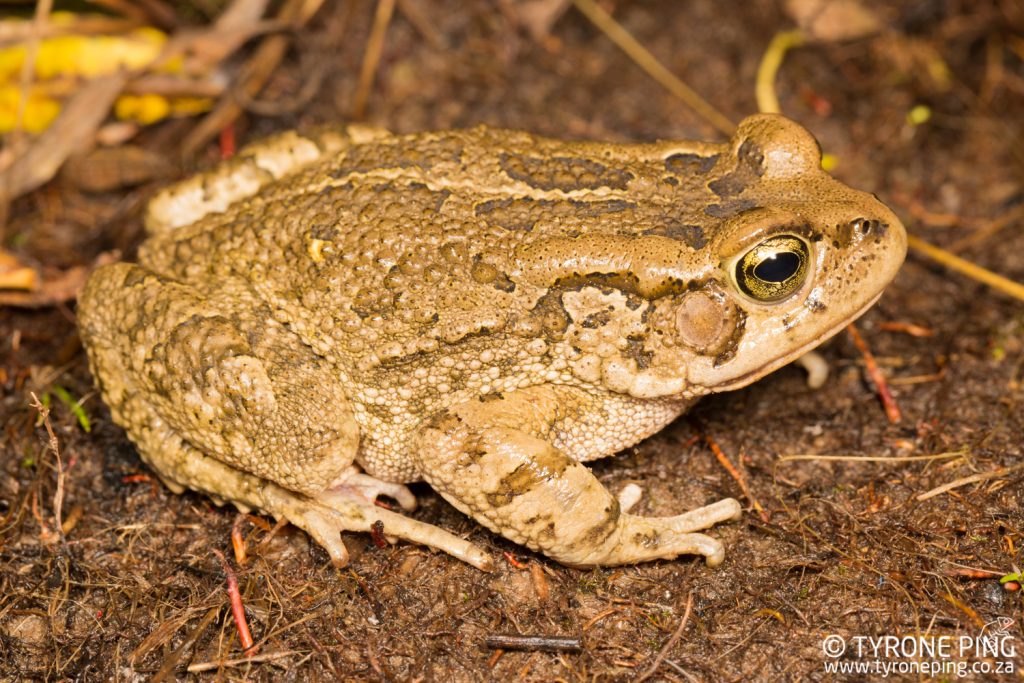
Common name: Raucous Toad
Scientific name: Sclerophrys capensis
Afrikaans: Lawaaiskurwepadda
SeSotho: Sehoho se hoeletsang
Adult length: 115 mm
Tadpole length: 25 mm
Appearance: Large, robust, brown to olive-grey with dark, irregular markings in pairs along the middle of the back. Distinguished from other toads by the presence of an (usually) unbroken band between the eyes on top of the head, and the absence of reddish colouration on the back of the thighs.
Distribution: Widespread in South Africa, Lesotho and Eswatini. Found almost throughout the Free State, including Bloemfontein.
Habitat: Rivers, streams and ponds. The frog is commonly found in gardens and seen crossing trails or roads at any time of the year, although much rarer in winter.
Prey: Adults feed on mostly small insects.
Preyed on by: Snakes, birds, and even freshwater crabs.
Breeding behaviour: Females lay sticky strings of thousands of eggs. Eggs are laid in deeper water than a related species, the Guttural Toad. Eggs hatch after 3–4 days.
Call: Males produce a loud, rasping, duck-like ‘quack’ from the water’s edge. This is repeated continuously and may have earned them the name ‘raucous’. Calls start in spring and continue into January.
- Southern Pygmy Toad
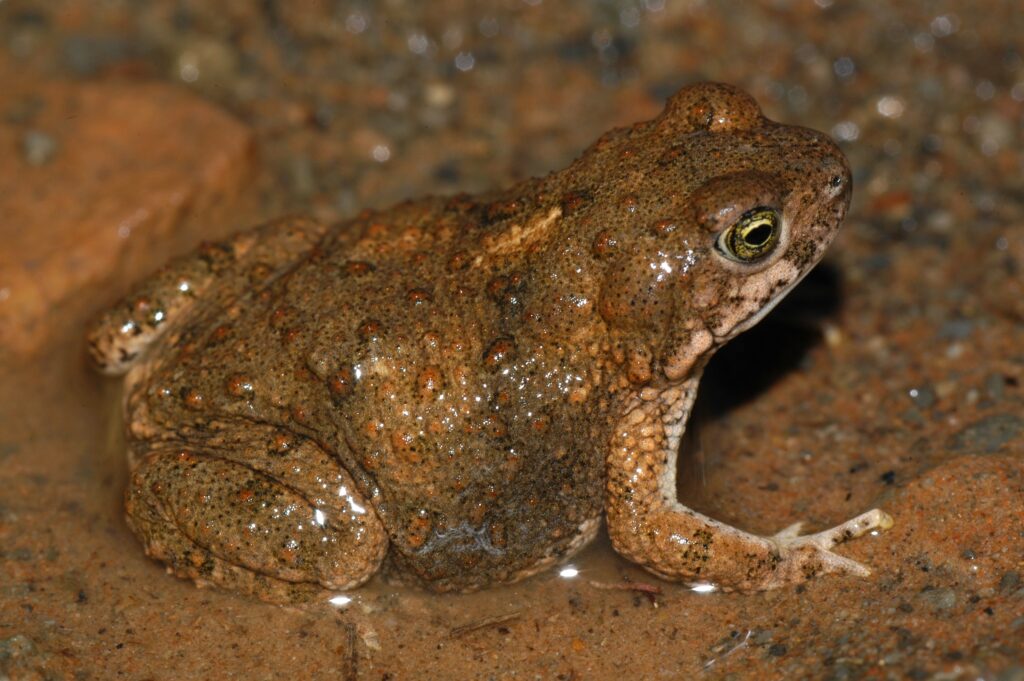
Common name: Southern Pygmy Toad
Scientific name: Poyntonophrynus vertebralis
Afrikaans: Suidelike Dwergskurwepaddas
SeSotho: Sehoho-qokofana sa botjhabela
Adult length: 40 mm
Tadpole length: 20 mm
Appearance: A light to dark brown frog with leather-like skin covered in warts, which are widely spaced apart. It has symmetrical orange or reddish markings on its back, as well as a distinctive pale triangular patch between the shoulders. Its toes have very little webbing.
Distribution: Arid central parts of South Africa and adjacent western Lesotho. The species may also extend peripherally into southern Botswana. Occurs in the southern Free State, including the outskirts of Bloemfontein.
Habitat: Dry, rocky areas near temporary rain pools.
Prey: Adults prey on small invertebrates such as beetles, flies, ants, termites, aphids and mites.
Preyed on by: When large numbers of these frogs emerge they may be killed by Suricates and Black Crows, as well as by road traffic.
Breeding behaviour: Eggs are laid in summer following heavy rains, in strands in temporary pools. Tadpoles are black with a dense arrangement of gold speckles, giving them a golden appearance, and they feed on plant material and mature into adult toads in a mere three weeks.
Call: A continuous chirping ‘kē–kē–kē–kē’, similar to that of a cricket.
- Western Olive Toad
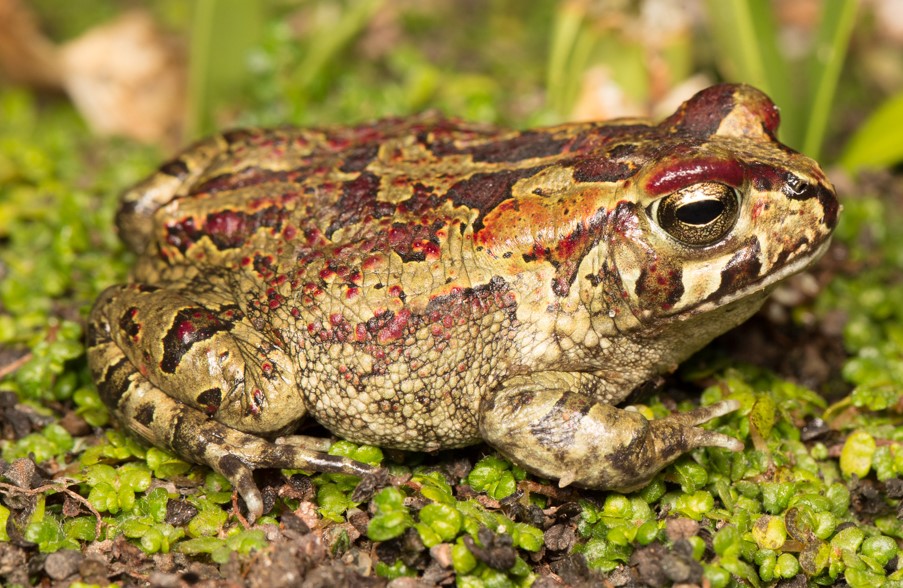
Common name: Western Olive Toad
Scientific name: Sclerophrys poweri
Afrikaans: Power se Skurwepadda
SeSotho: Sehoho sa mohlware wa bophirima
Adult length: 100 mm
Tadpole length: 36 mm
Appearance: Tan to green-brown back, large paired brown to chestnut markings strongly edged in black, foot less than 40% of body length, distinctive warts on the back and sides that culminate in small black spines. There is no continuous bar between the eyes, and the back of the thighs have red patches.
Distribution: South-western parts of southern Africa. In the Free State, it is found in the western and north-western parts of the province.
Habitat: Wooded and open savannah, but also urban areas and farmland. Shelters under rocks or logs, emerging after rains to hunt. Juveniles may also shelter in abandoned (vacant) termite heaps.
Prey: Adults feed on beetles and other invertebrates.
Preyed on by: Enemies probably similar to those of the Raucous Toad.
Breeding behaviour: Breeds in dams, seasonal wetlands and pans. Breeding occurs in mid-September following spring rains. Females lay about 2 000 eggs in a single strand that attaches to vegetation. Hatching occurs within 24 hours while metamorphosis to a small frog takes 73 days.
Call: A loud ‘kwaak’ lasting one second. It is repeated frequently following rain.
- Karoo Toad
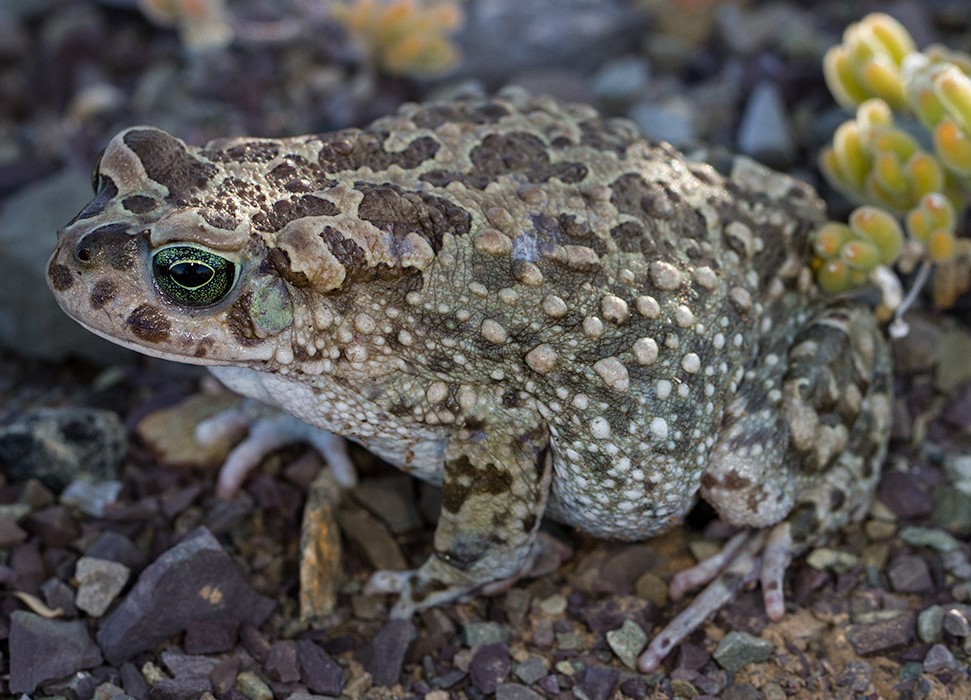
Common name: Karoo Toad
Scientific name: Vandijkophrynus gariepensis
Afrikaans: Karoo Skurwepadda
SeSotho: Sehoho sa Mathole
Adult length: 95 mm
Tadpole length: 23 mm
Appearance: It has lumpy skin and a pair of large parotoid glands behind the eyes. Typically, uniform khaki to olive-brown or tan, with asymmetrical dark blotches. The underside is dirty white, usually with small black spots. Fingers and toes have little to no webbing. Males have a darker throat than females.
Distribution: South Africa, Lesotho, Eswatini and Namibia. As a consequence of its adaptation to cold and dry conditions, this species is found in both summer and winter rainfall zones. Occurs in the eastern and southern Free State, possibly including the periphery of Bloemfontein.
Habitat: In the Free State and Lesotho, it is most often found under rocks, in burrows or in disused termite mounds in rocky areas. Found in the Nama Karoo, Succulent Karoo, Fynbos, Thicket and Grassland biomes.
Prey: Adults feed on small arthropods.
Preyed on by: Mongooses, snakes and birds.
Breeding behaviour: Temporary or permanent water bodies of all kinds, laying strands of 100 or more eggs at a time. Metamorphosis is complete from a tadpole to a small frog after just 20 days.
Call: The male’s call sounds like a sequence of squawks, followed by a pause, then the call is repeated. Males may alternate their calls to create a chorus.



Comments are closed.