


A new permanent exhibition of Firearms is now on display at the First Raadsaal and Wagon Museum. The exhibition tells the story of the history of firearms. The exhibition was opened by Sharon Snell, CEO of the National Museum, on 3 October 2025.
The discovery of gunpowder – an accident that changed the world
The story of firearms did not begin on a battlefield. It started with curiosity, experiments, and a surprising mistake.
More than a thousand years ago, Chinese alchemists were in search of an elixir of life, hoping to unlock the secret to immortality. Instead, through a series of experiments with charcoal, sulphur and saltpetre, they accidentally created something far more powerful: a combustible mixture that could ignite and explode with astonishing force. This mixture came to be known as “fire medicine”. At first, it was not seen as a weapon. Instead, it was celebrated for its spectacular displays in fireworks, religious ceremonies and cultural festivities. Few could have imagined the profound impact it would ultimately have on the course of history.
Over time, people began to recognise the potential of this flammable substance. Curiosity quickly turned into experimentation, and fire medicine began to appear in military applications. Early examples included fire arrows, rockets and simple explosive devices designed to surprise and intimidate enemies. Through trade routes and the inevitable conflicts of the era, knowledge of gunpowder spread slowly westward, reaching the Middle East and eventually Europe. Its arrival in Europe marked the beginning of a technological revolution that would forever change warfare and human society.
By the 12th century, Europe was aware of the gunpowder’s potential. Around 1320, a legend tells, a German monk, Berthold Schwarz, discovered that gunpowder could be used not only for fireworks but also to propel a projectile. This idea sparked a technological revolution. The earliest European firearms, called handgonnes, or hand cannons, were simple metal tubes mounted on wooden poles. To fire them, soldiers touched a burning match directly to the powder. The weapons were heavy, inaccurate and dangerous – but they worked.
Inventors quickly sought improvements. The matchlock introduced a trigger mechanism that allowed more controlled firing, while the wheel-lock produced sparks mechanically by spinning a serrated steel wheel against a piece of iron pyrite (commonly known as “fool’s gold”). As the wheel rotated under tension, it scraped the pyrite to generate hot sparks that ignited the priming powder. Though complex and costly, the wheel-lock was a major leap forward in the firearm technology. From accidental discovery to controlled power, gunpowder laid the foundation for every firearm that would follow, forever altering the trajectory of human history and warfare.
The flintlock – the spark that changed everything
 The flintlock marks the moment when firearms truly came of age.
By the early 1600s, centuries of curiosity, experimentation and mechanical problem-solving finally came together in a design that worked simply and reliably. The genius of the flintlock lay in its elegance: a piece of flint held in a steel hammer struck a hardened steel plate, sending sparks into a small flash pan. In an instant, the powder ignited and the shot was fired. One small spark transformed firearms forever.
Earlier systems like the matchlock and wheel-lock had proven that guns were possible, but they were far from ideal. Matchlocks relied on a constantly burning cord, while wheel-locks were complex and expensive to produce. The flintlock solved both problems. It was durable, relatively easy to maintain, and—most importantly—cheap enough to manufacture in large numbers.
This reliability changed the world. Armies could now equip thousands of soldiers with standardized weapons, train them in uniform drills, and rely on coordinated firepower rather than depending solely on archers, spearmen or cavalry. Over time, flintlock muskets gradually replaced bows, pikes, swords and spears, reshaping warfare across Europe and beyond.
The flintlock’s influence extended far beyond the battlefield. Hunters, settlers, explorers and travellers relied on it for survival in unforgiving environments. In southern Africa during the 18th and early 19th centuries, flintlock firearms were widely used by settlers, indigenous communities and hunters alike. Dependable firearms could mean the difference between life and death. Remarkably, the flintlock remained dominant for more than 200 years, a testament to the simplicity, durability and effectiveness of its design.
Flintlocks were also deeply personal objects. Each firearm was handcrafted, tuned and often decorated. Wear marks told stories of use, repair and reliance. These were not disposable tools but rather trusted companions. Through careful craftsmanship and mechanical ingenuity, the flintlock bridged centuries of firearm evolution, laying the groundwork for all modern small arms.
How a flintlock works – precision before power
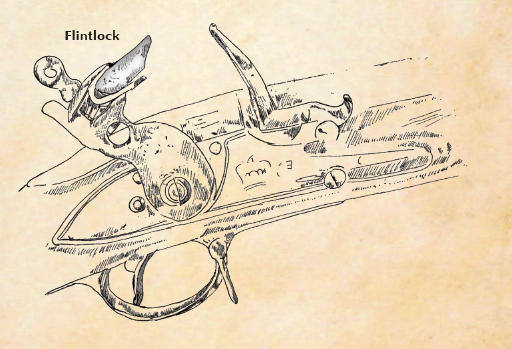 At first glance, a flintlock firearm can appear almost modest – wood, steel, and a few moving parts. But beneath that simplicity lies a finely balanced sequence of actions, perfected long before electricity or modern engineering.
Before a shot could be fired, the user had to prepare the firearm meticulously. Powder was measured, poured and packed down the barrel, followed by a lead ball. The hammer was drawn back, compressing a powerful spring and locking the mechanism into place. The flint had to be shaped properly, and the flash pan primed. Nothing happened by accident – every step mattered.
When the trigger was pulled, the process unfolded in a blink. The flint snapped forward, scraping sparks from steel as the frizzen flipped open. Those sparks ignited the powder in the flash pan, sending the flame through a tiny touch hole into the main charge and propelling the projectile downrange. It was not brute force that made the flintlock effective, but timing, precision and balance.
This system demanded skill and discipline. Flintlocks had to be kept clean and dry; flints wore down and needed reshaping; powder could get spoiled if handled improperly. Misfires, delays or accidents were always a risk. Mastery required repetition, patience and careful attention to detail.
For its time, however, the flintlock offered unprecedented control. It freed users from burning cords and awkward mechanisms, allowing steadier aim and more confidence with every shot. This reliability encouraged formal training and drill, helping to shape the rise of organised, professional armies. Hunters relied on its accuracy, and explorers could trust their firearm even in adverse conditions.
By combining simplicity with precision, the flintlock bridged the gap between rudimentary firepower and reliable firearms, shaping both military tactics and daily survival for centuries.
Caplocks – when reliability became the priority
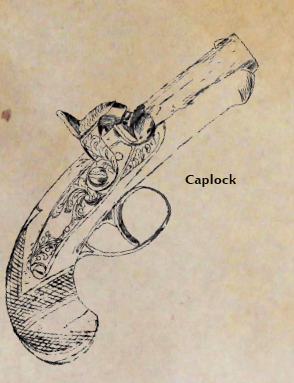 For all their ingenuity, flintlocks shared a frustrating weakness: they were vulnerable to the elements. A sudden rain shower, a strong wind, or damp powder could turn a carefully aimed shot into a dangerous silence. In the early 19th century, firearms designers sought a solution – not more power, but reliability.
The breakthrough came from Scottish clergyman Alexander Forsyth, who discovered that certain chemical compounds ignited instantly when struck. This led to the invention of the percussion cap: a tiny copper cup filled with shock-sensitive primer. When the hammer fell, the cap detonated, sending a jet of flame directly into the barrel and igniting the main charge. Unlike the exposed spark of the flintlock, the ignition was now controlled and protected.
Caplock firearms were faster to fire, safer to use, and far more dependable in poor weather. Exposed flash pans and loose priming powder disappeared. Soldiers could fire while lying down, on horseback, or in rain-soaked conditions. Hunters could trust their weapons to work when survival depended on it. Reliability became the defining feature of firearm design.
Importantly, the caplock did not abandon the past. Many flintlocks were converted rather than discarded, replacing the frizzen and flash pan with a nipple and percussion cap. This period reflects practical innovation: improvement mattered more than novelty. The converted firearms-maintained familiarity while embracing new technology, bridging the gap between old and new.
Throughout much of the 19th century, caplock firearms dominated military service, hunting and daily frontier life in harsh environments. In southern Africa, for example, trustworthy caplock firearms were crucial tools for survival. Beyond the battlefield, they symbolised reliability, craftsmanship and adaptability.
Rifled muskets – when accuracy entered the battlefield
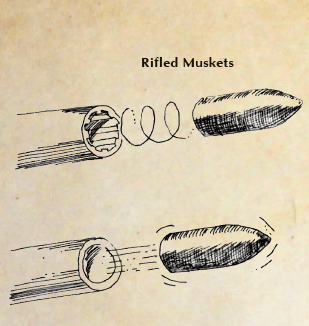 For centuries, firearms were designed for power rather than precision. Most early guns were smoothbore – simple metal tubes that sent their projectiles forward with force, but with little control. At close range, they were effective; beyond that, hitting a target often relied on luck.
The breakthrough came from a simple but transformative idea: spin.
Gunsmiths discovered that by cutting slow, spiral grooves inside a barrel—process known as rifling—they could make a bullet rotate along its lengthwise axis as it travelled through the air. This spinning motion stabilised the projectile, dramatically improving both accuracy and range. While rifled barrels existed before, their impact became significant during the caplock era. Combined with reliable ignition, this technique produced the rifled musket: a weapon capable of reaching targets at distances unimaginable only a century earlier.
Rifled muskets reshaped the battlefield. Soldiers could no longer rely on tight formations without risk, and individual skill and marksmanship suddenly grew in importance. The combination of accurate firearms and disciplined drills made professional soldiers more effective than their sheer numbers. Armies adapted tactics to emphasize precision and control rather than massed volleys of fire alone.
Hunters and explorers also benefited. Rifled firearms allowed longer-range shots with greater confidence and cleaner and faster kills. Accuracy was no longer a luxury, it was essential for both survival and effectiveness.
The psychological impact was equally profound. Firearms were no longer mere instruments of force; they became tools of precision. Careful aim, steady hands and training became critical, elevating firearms from simple weapons to skill-demanding instruments. Rifling marked a turning point in the philosophy of warfare, emphasizing fine skill over brute force and setting the stage for future innovations in firearm design.
Breechloading begins – Westley Richards “Monkey Tail” rifle
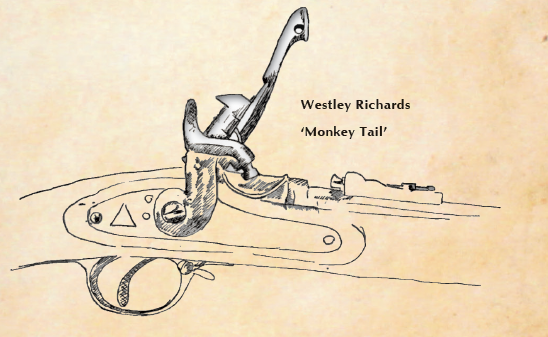 For centuries, soldiers and hunters relied on muzzleloading firearms – guns that had to be loaded from the front of the barrel. While powerful, these weapons were slow and cumbersome, especially in battle or under pressure. Reloading could take precious seconds when every moment counted. The mid-19th century brought a clever solution: breechloading.
One of the most innovative early breechloaders was the Westley Richards “Monkey Tail” rifle. This unique firearm combined the trusted percussion cap system with a hinged breech at the rear of the barrel. Paper cartridges, containing both bullet and powder, could be loaded quickly into the breech, allowing faster, more efficient firing. Yet if cartridges were unavailable, the rifle could still be loaded from the muzzle like traditional firearms.
The curved operating lever at the back of the action gave the rifle its nickname, the “Monkey Tail”. But the charm of this lever belies its brilliance, it allowed soldiers to open and close the breech smoothly, blending simplicity with practically.
This rifle represents a crucial moment in firearm history – a bridge between the old and new. It shows a period when designers improved on proven technology rather than abandoning it entirely. The “Monkey Tail” was widely used in Britain and southern Africa, both as a sporting rifle and on the battlefield, including the Basotho Wars and the Transvaal War of Independence (1880–1881).
By combining breechloading with the trusted percussion cap, the “Monkey Tail” paved the way for modern repeating rifles, proving that careful adaptation, clever design and practical thinking can transform both warfare and daily survival. In the hands of soldiers, hunters and explorers, it became a versatile, reliable and revolutionary tool.
The Snider rifle: conversion and innovation
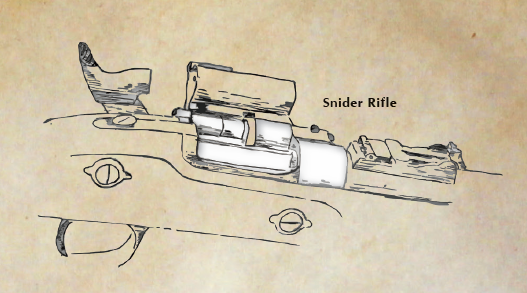 The story of modern firearms is not only about bold new inventions, it is also about smart adaptation.
In 1866, the British Army adopted the Snider rifle, named after American inventor Jacob Snider. Instead of discarding thousands of existing muzzleloading rifles, the Snider system offered a practical solution of converting them. This approach prioritized efficiency and practicality over starting from scratch, demonstrating that innovation could be as much about clever adaptation as radical invention.
The transformation was simple yet revolutionary. A hinged breechblock was fitted to the rear of the barrel, allowing soldiers to load a cartridge directly into the chamber. This cartridge contained the bullet, gunpowder and primer all in a single metallic unit. No loose powder, no separate caps, no ramrod.
The result was a dramatic increase in speed, safety and reliability. Soldiers could reload far more quickly, whether standing, kneeling or lying down. Firing became more consistent, even under the pressure of battle, and precious seconds could mean the difference between life and death.
The Snider rifle represents one of the first practical military uses of self-contained metallic cartridges – a concept that would soon become universal. It marked a clear shift away from the traditions of muzzleloading toward the firearms we recognise today.
Like many turning points in history, the Snider was not about replacing everything at once. It was about bridging the gap between old and new technology. By combining proven rifle designs with modern ammunition, the Snider allowed armies to modernise rapidly and economically.
Through the Snider, the principles of speed, efficiency and safety became increasingly central to firearm development.
The Martini-Henry: strength, speed, simplicity
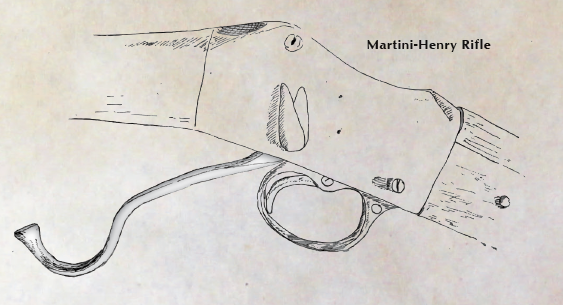 In 1871, the British Army adopted a rifle that would become legendary: the Martini-Henry. Combining clever engineering with raw power, it replaced the Snider as the Empire’s primary service rifle, and its influence was felt across battlefields and hunting grounds alike.
At its heart was the falling-block action, designed by Friedrich von Martini. Operated by the trigger guard, lowering it opened the breech, cocked the firing pin, and allowed a cartridge to be loaded. Raising the block locked the round securely in place. The mechanism was simple, fast, and incredibly strong – ideal for soldiers under pressure and hunters in challenging circumstances.
The rifle’s barrel, crafted by Scottish gunmaker Alexander Henry, featured precision rifling that made the Martini-Henry both accurate and reliable. Paired with a potent cartridge, the rifle became famous for its stopping power, whether in battle or in the pursuit of large game.
The Martini-Henry saw extensive use throughout the British Empire, including southern Africa, where it was used by British troops and Boer forces alike during the Transvaal War of Independence (1880–1881) and the South African (Boer) War (1899–1902). Its combination of speed, strength and simplicity made it effective in combat and highly prized for large venery. In fact, more elephants and large game were hunted with the Martini-Henry than any other rifle in the region.
This rifle shows how innovation does not always mean complexity. By combining a practical lever-action breech with a precision barrel, designers created a firearm that was easy to use, strong and fast – qualities that influenced the development of repeating and bolt-action rifles that followed.
Smokeless powder: toward a cleaner future
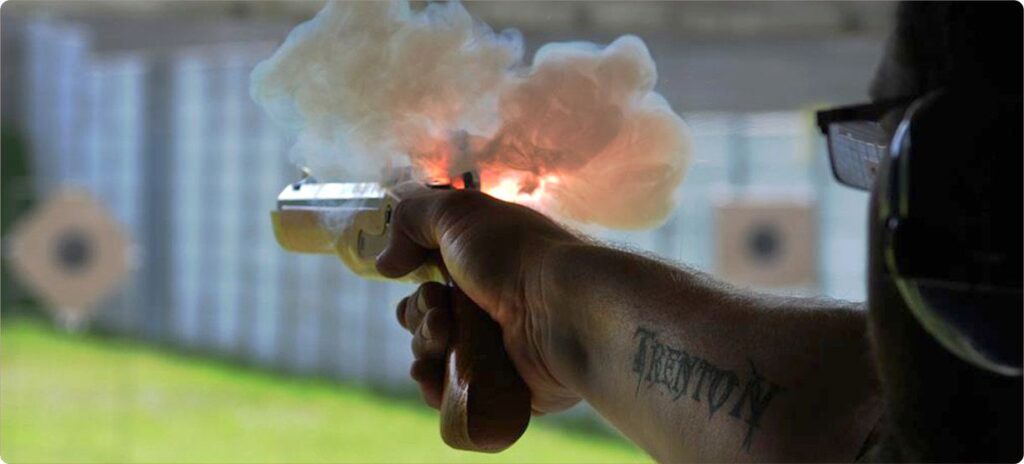 For centuries, firearms relied on black powder – a propellant that filled the air with thick smoke and left heavy residue behind. Each shot clouded the battlefield, obscuring vision and revealing a shooter’s position. Power came at the cost of visibility and tactical advantage.
 In 1846, Swiss chemist Christian Friedrich Schönbein discovered that cotton could be nitrated, creating a fast-burning material with immense chemical energy, later known as guncotton. It was far more powerful than black powder, but also somewhat unstable. Over the following decades, chemists continued refining the formula, and in 1884, French chemist Paul Vieille invented Poudre B, or “white powder.” Vieille’s innovation produced almost three times the power of black powder, burned cleaner, fouled barrels far less, and—most importantly—emitted almost no smoke when fired. The epoch of smokeless powder had begun.
The impact was immediate. Cartridges could be made smaller and lighter, allowing soldiers to carry more rounds. Bullets flew faster and farther, with flatter trajectories. On the battlefield, shooters were less exposed, and visibility improved dramatically. Soldiers could fire repeatedly without losing sight of their target. Firearms could now be smaller yet far more powerful, ammunition easier to carry, and tactics reshaped by improved visibility and extended engagement distances.
Smokeless powder also demanded stronger, more reliable firearms. Many older black-powder rifles could not withstand the higher pressures, prompting reinforced actions and barrels, as seen in rifles such as the Mauser and Lee-Enfield.
By the dawn of the 20th century, almost every major military power had adopted smokeless cartridges. This chemical breakthrough did not just improve firearms, it redefined warfare, shaping tactics, logistics and strategy, and laying the foundations for the modern firearms we know today.
The bolt-action revolution
 By the late 19th century, firearms had entered a new era. No longer limited to single-shot rifles, armies demanded weapons that could fire repeatedly, reliably and accurately. The answer was the bolt-action rifle – a design that would determine modern infantry warfare for decades to come.
In 1871, Germany adopted the Mauser, widely regarded as the first truly modern bolt-action rifle. Designed by Paul Mauser, it featured a strong rotating bolt that locked securely into the receiver, offering exceptional strength, safety and precision. With one smooth motion, a soldier could cock the firing pin, chamber a round and prepare to fire again. Its rugged reliability and long-range accuracy earned it global respect. In southern Africa, the Model 1895 “Boer Mauser,” loaded with five-round stripper clips, became a formidable weapon during the South African (Boer) War (1899–1902).
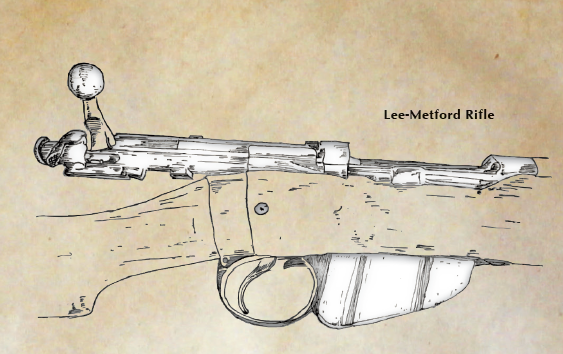 Meanwhile, Britain was advancing its own rifle technology. The Lee-Metford, adopted in 1888, combined bolt-action operation with a detachable magazine, allowing for rapid, sustained fire. Refinements in rifling and the adoption of smokeless powder led to the legendary Lee-Enfield. Known for its remarkably smooth bolt and speed, it enabled trained soldiers to deliver rapid, accurate fire even in harsh conditions – from the African veld to the trenches of Europe.
By 1900, most major powers had embraced bolt-action, magazine-fed rifles firing smokeless cartridges. Alongside the Mauser and Lee-Enfield stood the French Lebel, Austrian Steyr Mannlicher, Italian Mannlicher-Carcano, Russian Mosin-Nagant, and American Krag-Jørgensen. Together, they marked the dawn of truly modern military firearms.
Design of exhibition: Marelie van Rensburg
References:
Bester, R. (Ed.). 2003. Small arms of the Anglo-Boer War, 1899–1902. Brandfort: Kraal Publishers.
Bester, R. 2023. Boer firearms: From the earliest days at the Cape up to the time of the Anglo-Boer War of 1899–1902. De Kelders: Naledi.
Blackmore, H.L. 1965. Guns and rifles of the world. New York: The Viking Press. https://archive.org/details/gunsriflesofworl0000blac
Hogg, I.V. 1978. The complete illustrated encyclopedia of the world’s firearms. New York: A & W Publishers.
https://archive.org/details/completeillustra00ianv
Lategan, F. & Potgieter, L. 1981. Die Boer se roer tot vandag: Die ontwikkeling van die vuurwapen in Suider-Afrika. Cape Town: Tafelberg.
Peterson, H.L. (Ed.). 1964. Encyclopedia of firearms. London: The Connoisseur.
Redgwell, S. 2001. The accurate Lee Enfield: No. 1 (SMLEs) & No. 4 Rifles. Ontario: Gun Plumber Press.




Comments are closed.