Submit an article to Indago - a peer reviewed journal
Author

Staff writer

Browsing

Dr Nico Avenant, mammologist at the National Museum, Bloemfontein, was recently approached to identify two hedgehogs which were allegedly purchased from a pet shop.

The new owners became concerned when they learnt that it is illegal to have hedgehogs in captivity without a permit and took them to the offices of the Free State Department of Economic, Small Business Development, Tourism and Environmental Affairs (DESTEA) in Bloemfontein.


By Ina Marais

“Two birds flying high
A Chinese vessel, sailing by
A bridge with three men, sometimes four,
A willow tree, hanging o’er.
A Chinese temple, there it stands.
Built upon the river sands.
An apple tree, with apples on,
A crooked fence to end my song”

The willow pattern, or commonly named blue willow, is a distinctive and elaborate transfer pattern used on pottery, ceramic and porcelain ware.  This instantly recognisable pattern resembles a classic Chinese landscape design in which the following should be present:

An exhibition of purchased and donated artworks added to Oliewenhuis Art Museum’s Permanent Collection during the last 10 years are on display from 14 December 2018 to 3 February 2019. Oliewenhuis Art Museum, a satellite of the National Museum, Bloemfontein, is committed to building a representative collection of South African visual art and has shown a steady and interesting growth in its collection as South Africa has produced a number of celebrated artists whose works have become highly regarded both locally and abroad. 10 Years of Collecting: Additions to the Permanent Collection 2009-2018 is an eclectic mix of media, technical approaches and represent different art movements.

This #MuseumMonday we look at the origins of New Year’s celebrations. As the day has Roman origins, we must do as the Romans did: Make merry!

In 45 B.C., New Year’s Day is celebrated on January 1 for the first time in history as the Julian calendar takes effect.Soon after becoming Roman dictator, Julius Caesar decided that the traditional Roman calendar was in dire need of reform. Introduced around the seventh century B.C., the Roman calendar attempted to follow the lunar cycle but frequently fell out of phase with the seasons and had to be corrected. In addition, the pontifices, the Roman body charged with overseeing the calendar, often abused its authority by adding days to extend political terms or interfere with elections.

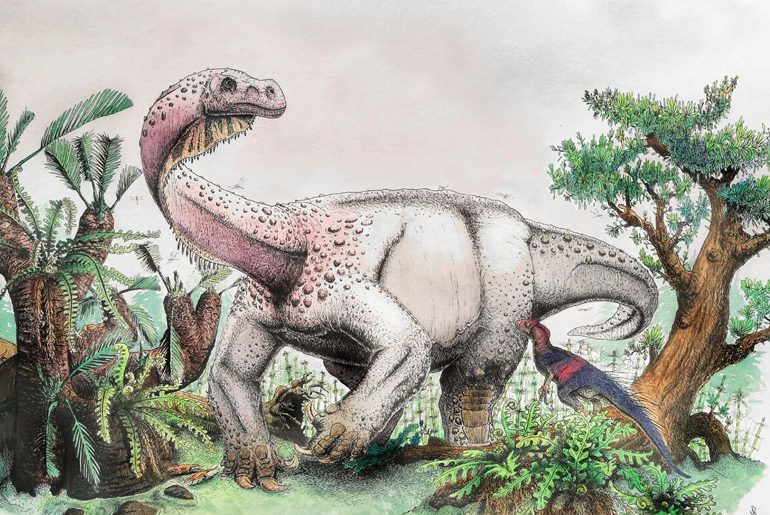
A new species of a giant dinosaur has been found in South Africa’s Free State Province. The plant-eating dinosaur, named Ledumahadi mafube, weighed 12 tonnes and stood about four metres high at the hips. Ledumahadi mafube was the largest land animal alive on Earth when it lived, nearly 200 million years ago. It was roughly double the size of a large African elephant. National Museum’s Dr Jennifer Botha- Brink, is the co- author of the article which was published in Current Biology.