


What are dung beetles?
Well, beetles that feed on dung. But while this is largely true, the definition of dung beetle is actually more complicated, being a mixture of an ecological trait (coprophagy) and a taxonomic classification (belonging to the scarabs). So dung beetles are those species of the large superfamily of scarab beetles (Scarabaeoidea) that feed on manure or belong to a taxonomic group that contains mainly dung-feeders. Dung feeding (coprophagy) has evolved several times within the scarabs, with the major groups being the Geotrupidae (dor beetles; ~150 species), the Aphodiinae (dung dwellers; ~3,500 species, Figure 1), and the Scarabaeinae (the dung beetles proper; ~7,000 species, Figure 2). Dung beetles show not only a high species diversity, but also an impressive range of size and weight, ranging from 1.2 to 68 mm in length and from less than 1 mg to more than 10 g body mass. A mid-sized dung beetle, Onthophagus taurus, has been identified as the strongest animal on earth, being able to pull up to 1141 times its own body weight.
Do dung beetles feed only on dung?
Very few dung beetles overall disdain faeces and those that do are saprophagous, meaning they feast on rotten plant material, fruit, fungi or dead wood. Moreover, a considerable number of dung beetle species transitioned from feeding on digested meat to rotten meat and have evolved into scavengers that consume vertebrate or invertebrate carcasses, including dead insects or millipedes. A couple of species prey on live leaf-cutter ants, and one Peruvian species is known to attack live millipedes (Deltochiulum valgum).
What do they do with the dung?
Most adult dung beetles eat only small particles from the liquid component of the dung, but provide large quantities of dung for their larvae, whose nests vary in location based on the type of dung beetle. Dung beetles are grouped into three main guilds or functional groups based on where their larvae develop: the nests inside a dung pat belong to the dwellers, the nests directly underneath the dung belong to the tunnelers, and the nests away from the dung belong to the rollers. Rollers, such as the famous Scarabaeus, typically make dung balls 10 to 30 times, in extreme cases up to 79 times their own body weight. They roll their balls distances of less than one meter up to 85 meters away, avoiding high competition and predation pressure in the dung pat. After construction, transport, and burying or placement in secure locations, eggs are laid inside these dung balls, which provide a sufficient food source for the duration of the larval development.
How do they find the dung?
All dung beetles locate manure through their sense of smell, located in the lamellate terminal segments of their antennae. Several odorous components of dung have been shown to attract dung beetles, but a combination of several of them is almost always more attractive than the single substances. Butyric acid and 2-butanone are crucial components of the attractive bouquet.
Reference
Hanski, I. and Cambefort, Y. eds. (1991). Dung Beetle Ecology (Princeton: Princeton University Press). Holter, P. (2016). Herbivore dung as food for dung beetles: elementary coprology for entomologists. Ecol. Ent. 41, 367–377.
Krell, F. T., and Moon, A. R. (2019). Dung beetles. Current Biology, 29(12), R554-R555.
Nichols, E., Spector, S., Louzada, J., Larsen, T., Amezquita, S., Favila, M.E., and The Scarabaeinae Research Network. (2008). Ecological functions and ecosystem services provided by Scarabaeinae dung beetles. Biol. Conserv. 141, 1461–1472.
Scholtz, C.H., Davis, A.L.V., and Kryger, U. (2009). Evolutionary Biology and Conservation of Dung Beetles (Sofia and Moscow: Pensoft).
Simmons, L.W., and Ridsdill-Smith, T.J. (2011). Ecology and Evolution of Dung Beetles (Chichester: Wiley-Blackwell)
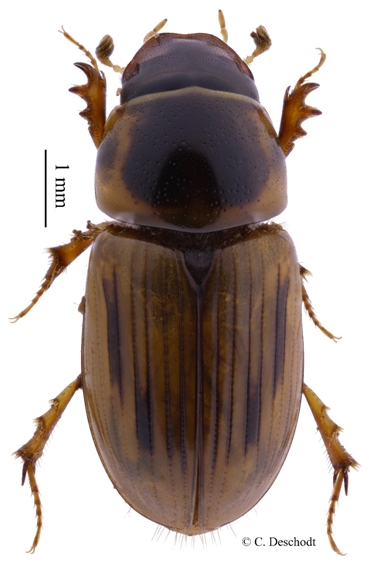
Figure 1. Dung beetle Aphodiinae (Aphodius sp.). Photo by Christian Deschodt
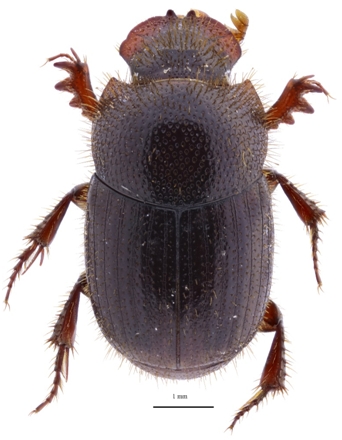
Figure 2. Dung beetle Scarabaeinae (Pseudosaproecius sp.). Photo by Christian Deschodt




Comments are closed.