

Archaeology is the study of the ancient and recent human past through their material remains obtained through systematic excavation and the analysis of artefacts and other physical remains. Archaeologists have long studied diseases in past populations through various evidence such as settlement layout, burials, funerary remains, and human (including hominid) skeletal remains. In this way they gain insight into the ideal environments for a pandemic to get a foothold and the strategies that earlier societies adopted to deal with it.
Archaeology offers additional and alternative research methods that help identify and understand the diseases behind ancient times’ plagues. Over the years, several specialist fields concerning the study of disease developed within the field of archaeology. This includes, but is not limited to, studies rooted in the natural sciences such as bioarchaeology, archaeozoology, archaeobotany, and geoarchaeology. In the human sciences, we find specialisation such as urban archaeology, settlement archaeology, and burial archaeology, to mention but a few. Although the scientific data confirm a pandemic’s presence, archaeologists use proxy data for their initial analysis, such as disruption in burial traditions (e.g. the sudden appearance of mass-burial sites), evidence for rapid loss of population, evidence of abandonment of settlements, and so forth.
The emergence of epidemics
We know through archaeological research that both archaic and modern humans have dealt with diseases for millions of years. It was, however, the move from a hunter-gatherer subsistence lifestyle to a more sedentary lifestyle that created the environment for epidemics and, the more interconnected the world became, pandemics.

Approximately 12,000 years ago, humans started to adopt an agrarian lifestyle. Planting crops and domesticating animals ensured greater food security and resulted in a more sedentary way of living. The majority of all human infectious diseases, and ultimately pandemics, have originated through the cross-species transmission of microorganisms from animals to humans – referred to as zoonotic diseases. The cohabitation of animals and humans in these early settlements provided the opportunity for zoonotic diseases to take root in humans. This cohabitation is well illustrated by the Central Cattle Pattern-layout of southern Africa’s Iron Age communities, where dwellings surround the cattle pen. Although early hunter-gatherers – and single household farms – contracted diseases from animals, there was limited opportunity to spread further. However, in time, people started grouping in small villages for economic and safety reasons. Eventually these groups became large settlements, and the opportunity for the spread of disease increased. Trade between local villages and later on a larger scale between countries allowed the spread of disease to turn into pandemics.
Although archaeology plays a role in investigating ancient diseases, one must bear in mind that the study of diseases has always relied upon a multidisciplinary approach that involves diverse fields ranging from ancient history to geology. However, the multi-faceted nature of archaeology through its numerous sub-disciplines provides an important contribution to such studies.
Sub-disciplines within archaeology involved in the study of epidemics

Urban archaeology provides an understanding of the urban environment and social conditions prevalent when an epidemic established the environment that enabled the disease to take root and spread. Town layout and size, infrastructures such as housing, water supply, sewerage systems, food supply, and general facilities may have impacted the emergence and spread of disease. For instance, we know today that the lack of an efficient sewerage system in London during the Third Cholera Pandemic (1846-1860), coupled with an insufficient system for freshwater supply, allowed the disease to spread like a veld fire.
Settlement archaeology mainly focuses on prehistoric settlements for which we do not have historical records to inform the archaeological record. Evidence of a sudden abandonment of a settlement could be an indication of a large-scale catastrophe. Evidence of sudden abandonment of settlements at Burkina Faso and Mali in West Africa during the same period as the Black Death (14th Century) throws a shadow of doubt over the assumption that the Black Death occurred only in North Africa and Europe.
Burial archaeology is the study of human remains in their archaeological context. The burial site’s size and how human remains were buried contain clues to a potentially catastrophic event.
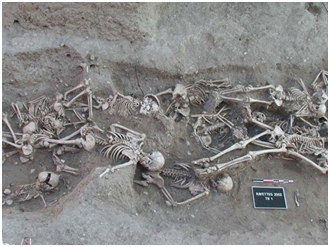
Bioarchaeology stems from human osteology, i.e. the anatomical study of skeletal remains. Pathogens (i.e. a bacterium, virus, or other microorganisms that can cause disease) rarely leave skeletal material evidence. Still, through modern DNA-studies, traces of the plague bacterium Yersinia pestis were found in the teeth of a 5,000-year-old skeleton from the Stone Age period. This strain differs from the one that caused the Black Death, but would have had the same ability to turn into a pandemic. We know, from bioarchaeology and from the evidence of other medical conditions that older people and frail people were at elevated risk during the Black Death. Excavations at the K2-archaeological site in the Mapungubwe National Park in the Limpopo Province uncovered an unusually high number of burials. Of the 94 individuals, 76 were infants under the age of four years. This information, coupled with the fact that the site also shows signs of an abrupt abandonment dating to the same period as the burials, indicates an epidemic that forced the inhabitants to move elsewhere.
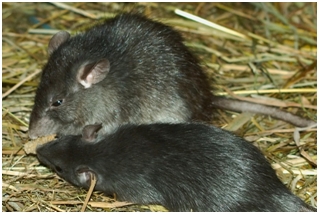
Archaeozoology focuses on the faunal materials left in the soil after the death and decay of animals. Zooarchaeology, on the other hand, focuses mainly on animal remains. An important contribution in the study of plague in this field comes from the study of black rats identified as the carrier of Yersinia pestis. The study concluded that the species’ colonisation followed trade and urbanisation routes during the first millennium AD. A strong increase in population occurred during the 11th and 13th centuries AD that coincides with the increase of the human population during the same period. The confinement to commercial roads is also significant evidence of the role trade plays in disease spread.
Archaeobotany, geoarchaeology, and palaeoecology are three specialist fields that provide information on the environment during any specific epidemic. Extremely hot climates, for instance, can aid the spread of disease. In cases where there are indications of an epidemic, e.g. sudden abandonment of settlements and changes in burial practices, but no written records to confirm it, information from these three sub-disciplines could strengthen the hypothesis of an epidemic.
What have we learned?
By understanding the impacts of catastrophes and disasters of the past, we can also learn where we are most vulnerable as a species. Increased interactions with animals through encroachment on their natural habitat, hunting, trading of animal foods, wet markets, the domestication of animals or exotic pets dramatically increase the probability of cross-species transmission of diseases.
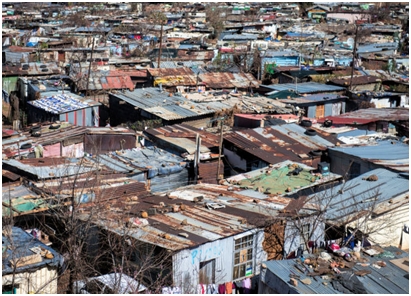
Global warming and poverty are issues that warrant scrutiny as we approach a period in the history of humanity where pandemics are likely to occur more often. According to the Department of Statistics in South Africa, 49.2% of the population over 18 falls below the upper-bound poverty line. Malnutrition, coupled with lack of adequate housing and infrastructure (running water and sewerage facilities), increases the risk of contracting and spreading communicable diseases. We all have a social responsibility to reduce poverty. Still, the threat that the favourable conditions for the outbreak of pandemic diseases in informal settlements hold to us all should serve as extra motivation to reduce poverty. Overpopulation and lack of proper education are two of the main causes of poverty worldwide. These two issues work hand in hand; educated people tend to value financial and domestic stability and wait until they have attained that before having children. For the same reason, they also tend to have fewer children. Addressing the need for proper education will thus also address the overpopulation issue.
Human influences are the number one cause of global warming through carbon pollution caused by burning fossil fuels and deforestation that reduces natural pollution capturing. Not only does global warming increase the risk of natural disasters such as drought and floods, but it also causes the melting of permafrost that could release ancient pathogens to which humans have no defence. Environmental issues caused by humans, such as global warming, are signs that the human world is in a state of overpopulation and exceeds the earth’s carrying capacity.
On the upside, archaeology provides proof of the human species’ adaptability and that life can return to normal after a catastrophic event. On the downside, due to overpopulation, the frequency of pandemics will increase so that we might not have sufficient time to recover from one before the next one strikes. The human ability to prolifically multiply under adverse conditions might, in the end, lead to our extinction as a species.
References:
Audoin-Rouzeau, F., & Vigne, J. 1994. La colnisation de l’Europe par le rat noir (Rattus rattus), Revue de Paléobiologie, Vol 13, No. 1, pp 125-145
Antoine, D. 2008. The Archaeology of “Plague”. Medical History, Vol 52, Issue S27, pp 101-114
Chirikure, S. 2020. Archaeology shows how ancient African societies managed pandemics. Retrieved from https://www.iol.co.za/lifestyle/health/archaeology-shows-how-ancient-african-societies-managed-pandemics-47979168 on 20 May 2020
Cole, S.C., et al. 1996. Earthquake-induced burial of archaeological sites along the southern Washington Coast about A.D. 1700. Geoarchaeology: An international Journal, vol 11, No 2, pp 165-177
De Witte, S.N. 2016. Archaeological evidence of epidemics can inform future epidemics. Annual Review of Anthropology. Vol 4, pp63–77
Erlandson, J.M., et al. 2001. Dates, demography, and disease: cultural contacts and possible evidence for Old World epidemics among the protohistoric Island Chumash. Pacific Coast Archaeological Society, Vol 37, No 3, pp 11-26
Flinders University. Archaeology offers clues to pandemic rebounds from the past. Retrieved from https://phys.org/news/2020-05-archaeology-clues-pandemic-rebounds.html on 20 May 2020
Fornaciari A. 2017. Environmental Microbial Forensics and Archaeology of Past Pandemics, Microbiol Spectrum, Vol 5, No 1.
Gallagher, D.E., & Dueppen, S.A. 2018. Recognizing plague epidemics in the archaeological record of West Africa. Afriques, Vol 9, pp 1-29
Huffman, T.N. 2007. Handbook to the Iron Age: The Archaeology of pre-colonial farming societies in Southern Africa. Pietermaritzburg: University of KwaZulu-Natal Press
Keller, M., et al. 2019, Ancient Yersinia pestis genomes from across Western Europe reveal early diversification during the First Pandemic (541–750), PNAS, Vol 116, No 25
Liu, Z., et al. 2020. Near-real-time monitoring of global CO2 emissions reveals the effects of the COVID-19 pandemic. Nature Communications, Vol 11.
Makarewicz, C. 2020. The roots of zoonoses. In ROOTS booklet series, Distant times so close: pandemics and crises reloaded, no 1/2020
Max Plank Institute for the Science of Human History. 2019. Details of first historically recorded plague pandemic revealed by ancient genomes. Retrieved from https://www.sciencedaily.com/releases/2019/06/190605114620.htm on 20 May 2020
Mitchell, P. 2003. The archaeological study of epidemic and infectious disease. World Archaeology, Vol 35, No. 2, pp 171-179
Moseng, O.G. 2004. Climate, ecology and plague: The second and third pandemic reconsidered. Living with the Black Death – a Medieval symposium, 8-9 November 2004, University of Southern Denmark Odense (used)
Ogundiran, A. 2020. The COVID-19 Pandemic: Perspectives for Reimaging and Reimagining Archaeological Practice. The African Archaeological Review, Vol 37, Issue 3, pp 471-473 (see printout)
Pike, B.L., et al. 2010. The origin and prevention of pandemics IN Public Health Emergency Collection, Oxford University Press, Oxford. pp 1636-1640
Rascovan, N., et al. 2018. Emergence and Spread of Basal Lineages of Yersinia pestis during the Neolithic Decline. Cell, Vol 176, Issue 1-2.
Roberts, M.C., et al. 2020. What the archaeological record reveals about epidemics throughout history – and the human response to them. Retrieved from https://theconversation.com/what-the-archaeological-record-reveals-about-epidemics-throughout-history-and-the-human-response-to-them-138408 on 11 January 2021
Trigger, B.G. 1967. Settlement Archaeology. Its goals and promise. American Antiquity, vol 32, Issue 2, pp 149-160
Williams A., Temple T., Pollard S.J., Jones R.J.A., Ritz K. (2009) Environmental Considerations for Common Burial Site Selection After Pandemic Events. In: Ritz K., Dawson L., Miller D. (eds) Criminal and Environmental Soil Forensics. Springer, Dordrecht, pp 87-101
Yeloff, D., & Van Geel, B. 2007. Special paper: Abandonment of farmland and vegetation succession following the Eurasian plague Pandemic of AD 1347-52, Journal of Biogeography, Vol 34, No 4, pp 575-582
Archaeology offers clues to pandemic rebounds from the past (2020, May 5) retrieved 8 May 2020 from https://phys.org/news/2020-05-archaeology-clues-pandemic-rebounds.html (Dr Kotarba)
Chirikure, S. 2020. Archaeology shows how ancient African societies managed pandemics, retrieved from https://www.iol.co.za/lifestyle/health/archaeology-shows-how-ancient-african-societies-managed-pandemics-47979168 on 25 May 2020
Weitzel, E. 2020. Are pandemics good for the environment? Anthropology Magazine Sapiens. Retrieved from https://www.sapiens.org/archaeology/covid-19-environment/ on 5 February 2021
What the archaeological record reveals about epidemics throughout history – and the human response to them. Retrieved from http://theconversation.com/what-the-archaeological-record-reveals-about-epidemics-throughout-history-and-the-human-response-to-them-138408 retrieved on 5 October 2020.




Comments are closed.