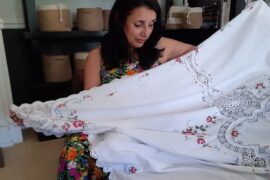
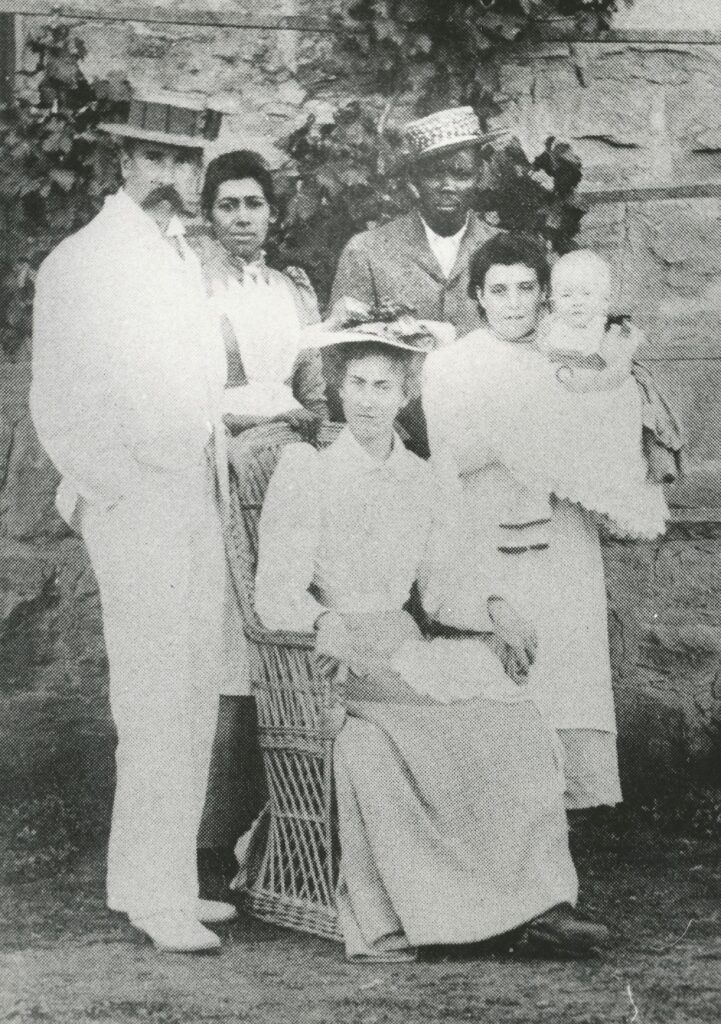
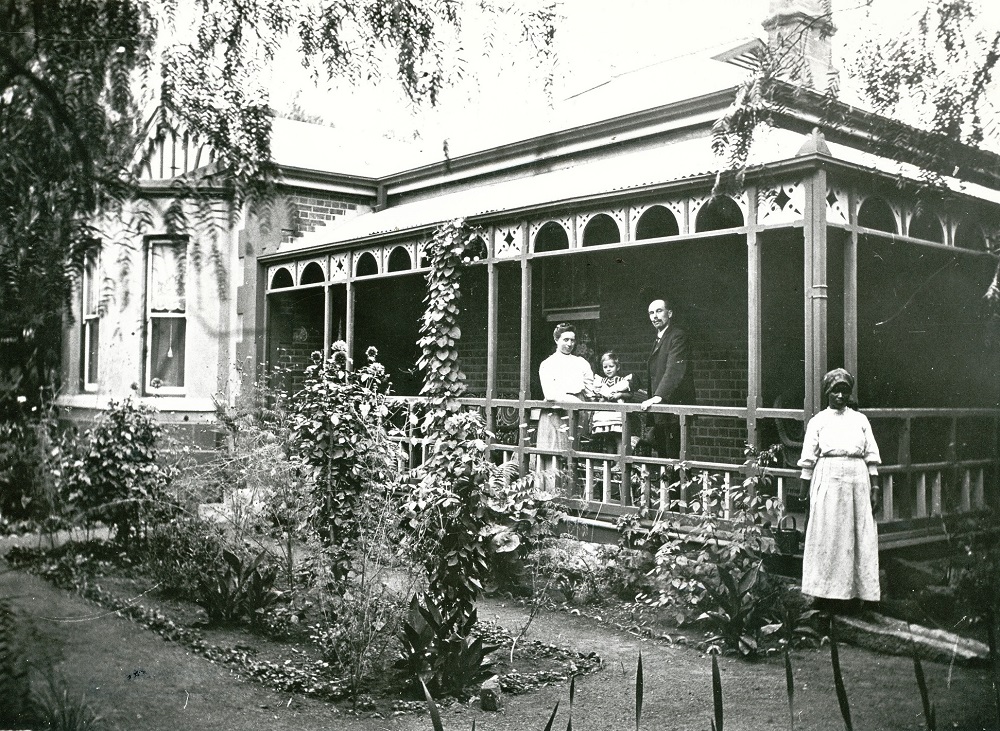
A confluence of unfortunate historical forces was shaping the lives of South African women of colour for centuries. Since the founding of a white colonial society at the Cape of Good Hope by the Dutch East India Company (Verenigde Oostindische Compagnie, or VOC) in the 17th century, domestic labour was performed by the indigenous Khoikhoi. Young Khoi women were trained as kitchen and house servants and later, with the advent of slavery at the Cape, most domestic work was done by slaves of African and Southeast Asian origin. Subsequently, the white colonists and their descendants who populated the South African interior during the 18th and 19th centuries, developed strict racialised attitudes towards domestic labour as inferior work performed by people of colour. Therefore, the concept of the ‘house servant’ as a socio-economic institution is deeply rooted in the South African colonial history.
In the Orange Free State republic (1854–1902), the situation was no different; in fact, race and class divisions were deeper and harsher. While many white Bloemfontein households employed black men as ‘houseboys’ during the city’s pioneering years, the situation started to change after the Anglo-Boer (South African) War (1899–1902), when cheap black female labour became readily available because of the urbanisation of black people. It was unusual for white families, even poor households, not employing at least one black or coloured woman as a so-called aia or ousie (sic). During apartheid she became a huisbediende (domestic servant) and in the post-apartheid times a huishulp (domestic help) or huiswerker (houseworker), but the nature of her work remained the same: cleaning the house, doing the laundry, looking after small children, and, occasionally, cooking meals. Typically, houseworkers worked long hours for very little pay and no social security. During the second half of the 20th century – the heydays of apartheid (1948–1994) – up to sixty percent of South African households employed a female houseworker; many of them inslaap (sleep-in).
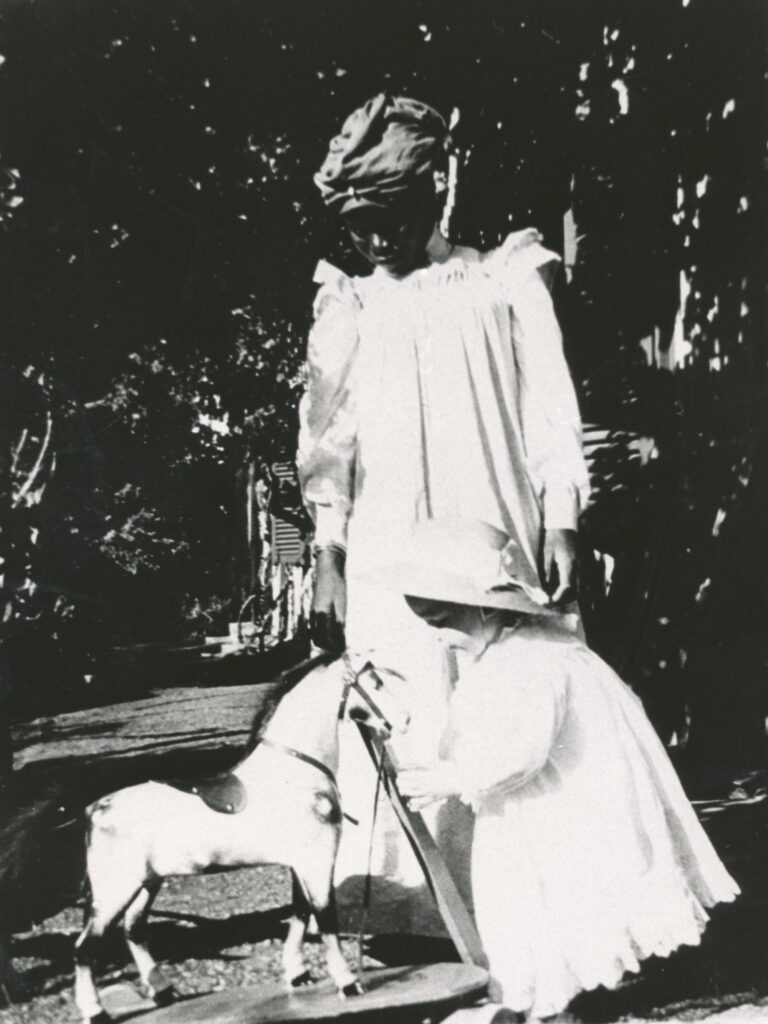
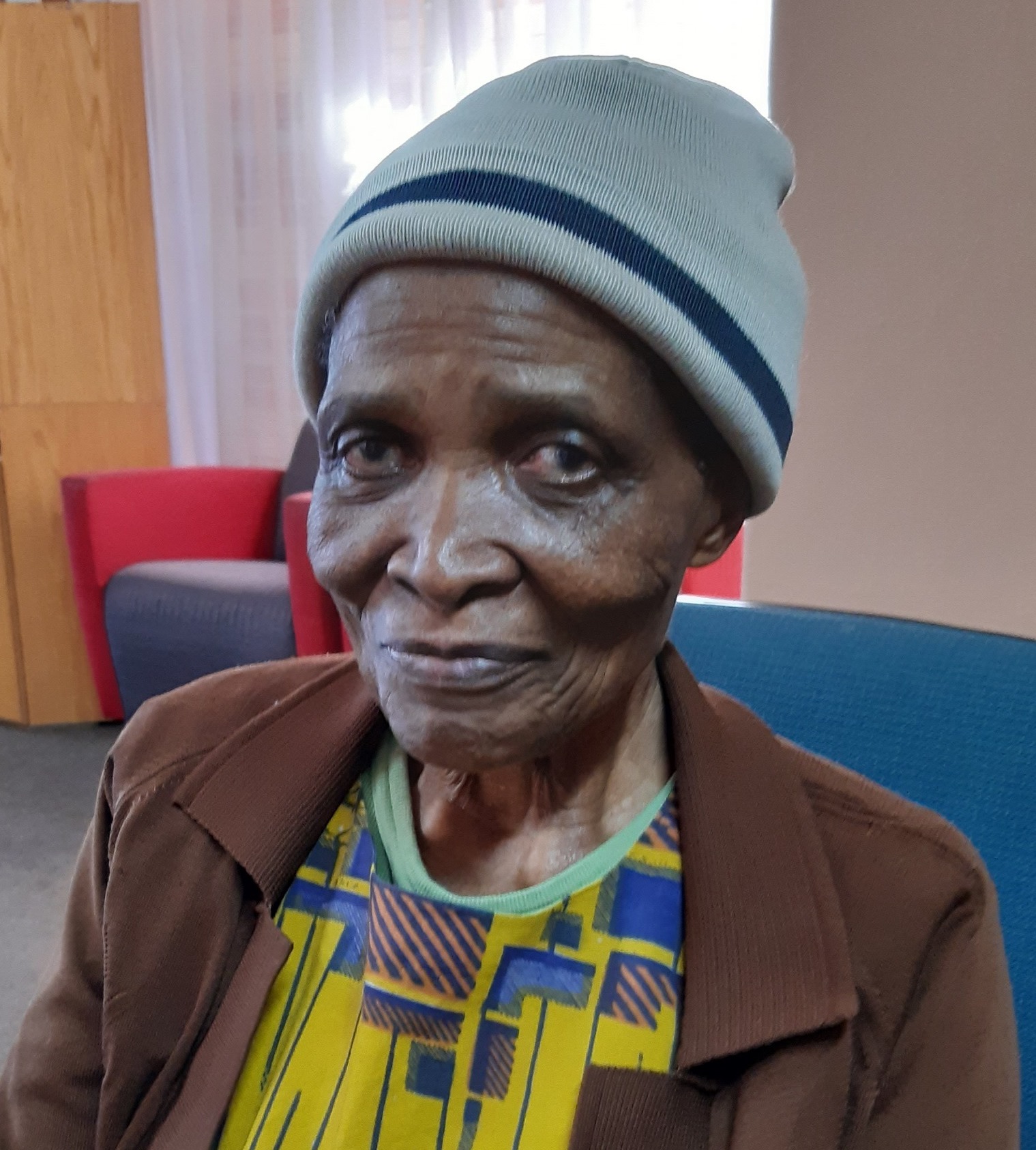
Many black women who worked as full-time houseworkers for whites during apartheid are still alive. They either live with their families or, if they can afford it, in old-age homes. One of them who worked for white families most of her adult life is Matahlo Elizabeth Khohlokoane (born 1938). To her employers, she was known as Elisa. Matahlo’s life as a houseworker in the apartheid South Africa was in many respects comparable to the lives of many of her peers. Matahlo is the quintessence of a typical South African houseworker as a product of her time. She was born in Tierpoort (formerly Kafferrivier) south of Bloemfontein to Izak Louw and Lena Matekane. Izak and Lena were “married with cattle” (according to the lobola custom) but they had all their ID books and even “all those passbooks of the olden days”, to quote Matahlo. Because Lena worked as a domestic worker in Port Elizabeth (Gqeberha), Matahlo stayed with her uncle on one of the Ferreira smallholdings on Bloemfontein’s southern outskirts. She attended school but completed only Standard Two (Grade Four) because she had to find work to earn an income.
Matahlo found employment as a full-time domestic worker with the Besselaar family who lived on a smallholding not far from where she grew up. Subsequently, she moved to the Haupt family who also lived on a smallholding in Ferreira. Matahlo described her job as a bediende (servant) who did huiswerk (housework), “the only work we could do in those times when you did not go to school” or did not have the money to study further. Her responsibilities involved cleaning the house, washing the laundry, ironing, and later also cooking meals when Mrs Haupt started working full-time. Matahlo says that both families treated her well; in fact, she “still wants to see other white people like them, like the Besselaars and the Haupts”. Matahlo was so happy with the Haupt family that she worked for them for fifty years. During that time, she raised five children of her own and helped raise the two Haupt children.
Most black people’s memories of the apartheid years reflect their both “good times” and “bad times”, to quote an oral historian Sean Field. Therefore, many black houseworkers’ recollections of their lives are a blend of conflicting emotions: humiliation, sadness, and fear on the one hand, but a nostalgic longing for the familiarity and ‘security’ of the past, on the other hand. Irrespective of how they were treated by their Baas and Mies, many houseworkers still harbour an unwavering sense of loyalty towards them. Matahlo is no exception; she explains that she had a special relationship with Mrs Haupt and, therefore, she felt “very sorry that my Mies has passed away”. In fact, Matahlo expresses a deep longing for the time when she lived in her little house on the Haupts’ smallholding: “I do not want to lie, I really wish that my white people did not grow old and we did not have to leave one another because of old age”.
When Matahlo speaks about apartheid and the effect it had on her life, she downplays her experiences of hardship with a sense of gratitude because her life has turned out to be better than the lives of many of her peers. Describing her own life, Matahlo says that “circumstances were difficult, but it was not too bad [sic]”. Financially she could make ends meet because her mother sent her a monthly stipend to help with necessities. To make the apartheid system bearable, Matahlo says she had no other option than to ‘accept’ the apartheid laws, especially the notorious pass law which required black adults to carry a passbook whenever they found themselves outside the townships. Matahlo remembers when she “started wearing the passbook, I did not wear it around my neck like my grandmother”; instead, she kept it safely in her pocket. There were consequences for not having a passbook: “If you did not have a passbook on you, they [police] caught you, that is what I have heard, but I was never caught without a passbook”, Matahlo says.
More than thirty years after the end of apartheid almost a million black and coloured South African women make a living as domestic workers. Thanks to the minimum wages and labour legislation that protects the basic rights of houseworkers, conditions have improved for many of them. Yet, their earnings are still low, and many houseworkers are not employed full-time but do ‘piece jobs’ for a daily wage with no benefits. Although many employers are people of colour themselves, housework is still frowned upon as menial labour that should preferably be done by people of colour. This stubborn perception is one of apartheid’s enduring legacies that are deeply ingrained in the South African society. Sadly, centuries of race conditioning have turned such attitudes into a uniquely South African trait. According to Matahlo these perceptions persist because “we [black women] were probably used to it” and “we thought it was how it was supposed to be”.
Now in her late eighties, Matahlo finds herself at peace. She harbours no bitterness against anyone, not even the apartheid bureaucrats. This nostalgic outlook towards the past is not uncommon among elderly houseworkers, though. According to a former anti-apartheid activist and journalist Suzanne Gordon, it underscores “an almost heroic acceptance of the forces behind the march of events”. The ability to rise above the unfortunate historical circumstances that have shaped their lives is perhaps Matahlo’s and thousands of other South African houseworkers’ most powerful testimony.
Surnames of employers were changed to protect their identity.
Sources
Dlamini, J. 2009. Native nostalgia. Auckland Park: Jacana.
Field, S. 2012. Oral history, community, and displacement: Imagining memories in post-apartheid South Africa. New York: Palgrave Macmillan.
Giliomee, H. & Elphick, R. (Eds). 1982. ’n Samelewing in wording: Suid-Afrika 1652–1820. Cape Town: Maskew Miller Longman.
Gordon, S. 1985. A talent for tomorrow: Life stories of South African servants. Johannesburg: Ravan Press.
Jansen, E. 2015. Soos familie: Stedelike huiswerkers in Suid-Afrikaanse tekste. Pretoria: Protea Boekhuis.
National Museum Oral History Collection: M.E. Khohlokoane, 24 October 2025.
Ritchie, D.A. 1995. Doing oral history. New York: Twayne Publishers.
Schoeman, K. 2001. Armosyn van die Kaap: Die wêreld van ’n slavin, 1652–1733. Cape Town: Human & Rousseau.