

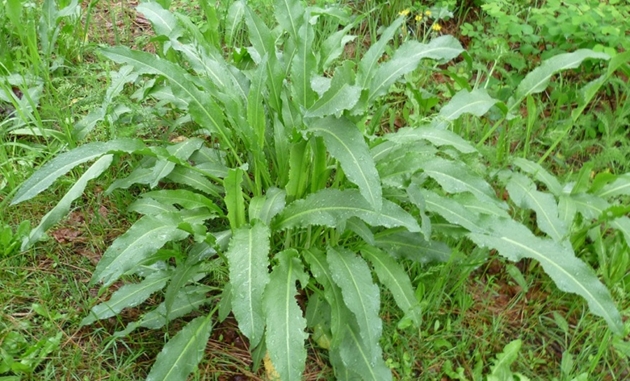
Rumex crispus is an invasive plant species found worldwide. In English, it is known as curley or curly dock, yellow dock, narrow-leaf dock, and sour dock. It is known as ubuhlunga in Xhosa and idolo lenkonyana in Zulu. In Afrikaans, it is known as krultongblaar and occasionally weeblaar. The plant originated in Europe and Western Asia but spread to all continents (except Antarctica) and can now be found in almost all parts of the world. It is said to be among the top five most widely distributed plants in the world. We may have seen it in quite a number of places, primarily in wetlands and on dry land, particularly in agricultural areas, grasslands, and waste lands (see pictures).
The genus name “Rumex” is thought to be derived from “rumo”, the Latin word for “docks”, which describes the ancient Roman practice of sucking the leaves for moisture. Rumex is also believed to have originated from the Latin rumex (“sorrel”), which describes the brown colouration and red tint of the leaves. Another account has it that the word “rumex” probably comes from the Greek word “spear” or “dart”, with reference to the spear-shaped leaves. The species name “crispus”, on the other hand, means “curled”, which alludes to the wavy and curly leaves of the plant. Rumex crispus belongs to the family Polygonaceae and is a perennial plant that can survive for several years by means of a fleshy taproot.
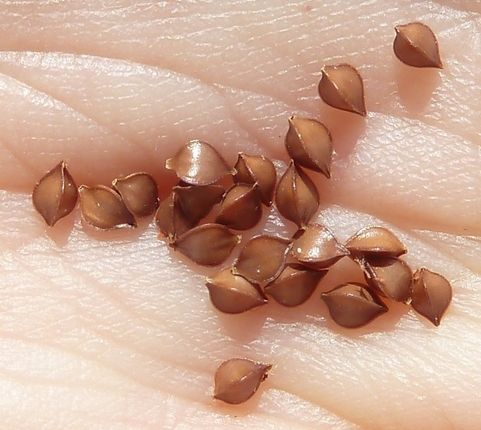
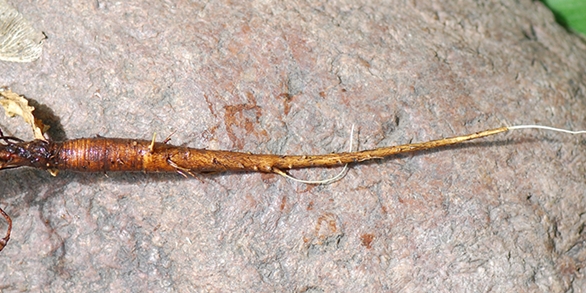
Rumex crispus is a herb that grows upright or semi-upright, 40–150 cm tall, with an extended flower stalk or inflorescence. The leaves are smooth with distinctively curled edges and grow up to 24 cm in length. The greenish or reddish-tinged flowers are produced in clusters on the stalk, which produces 2–3 mm long, angular, glossy, dark brown seeds. The root is large and carrot-shaped (it can grow up to 20–30 cm), with a dark brown exterior and a yellow-to-orange interior. As a result of the plant’s roots, it can withstand harsh conditions and regenerate when conditions are favorable, giving it considerable longevity. This also makes it difficult to control as a weed. It is tolerant or resistant to a number of herbicides. However, R. crispus can be controlled by either a single or combined herbicide. According to studies, sulphonylurea herbicides, such as thifensulfuron, and synthetic auxin herbicides, such as MCPA and Dichlorprop-P, in combination or independently, have been used successfully to control the plant.
This invasive plant does have benefits. The leaves are eaten as a wild vegetable in some parts of the world, including the Eastern Cape Province. It is an excellent source of both vitamin A and C, as well as a source of iron and potassium. Nevertheless, it should be consumed with extreme caution as it has a high antinutrient (oxalic acid and tannin) content, which is linked to irritation of the urinary track and can cause kidney stones. Prior to the development of modern medicine, it has been commonly used in traditional medicine for the treatment of wounds, blood and skin diseases, jaundice, sore throats and coughs, for de-worming, as a laxative, astringent, liver stimulant, and in the treatment of cancer.
Submitted by: Dr Oladayo A. Idris, Department of Animal and Plant Systematics


Further information is available in the following referenced articles:
Dold, A. P., & Cocks, M. L. (1999). Preliminary list of Xhosa plant names from Eastern Cape, South Africa. Bothalia, 29(2), 267-292.
Idris, O. A., Wintola, O. A., & Afolayan, A. J. (2017). Phytochemical and antioxidant activities of Rumex crispus L. in treatment of gastrointestinal helminths in Eastern Cape Province, South Africa. Asian Pacific Journal of Tropical Biomedicine, 7(12), 1071-1078. https://doi.org/10.1016/j.apjtb.2017.10.008
Korpelainen, H., & Pietiläinen, M. (2020). Sorrel (Rumex acetosa L.): not only a weed but a promising vegetable and medicinal plant. The Botanical Review, 86(3), 234-246. https://doi.org/10.1007/s12229-020-09225-z
Mamarot, J., & Roturier, C. (1997). Sensibilité des mauvaises herbes aux herbicides.




Comments are closed.