


Oliewenhuis has chosen an artwork entitled the Blind Alphabet A to celebrate International Museum Day. The 𝘁𝗵𝗲𝗺𝗲 𝗳𝗼𝗿 𝟮𝟬𝟮𝟬 is 𝗠𝘂𝘀𝗲𝘂𝗺𝘀 𝗳𝗼𝗿 𝗘𝗾𝘂𝗮𝗹𝗶𝘁𝘆: 𝗗𝗶𝘃𝗲𝗿𝘀𝗶𝘁𝘆 𝗮𝗻𝗱 𝗜𝗻𝗰𝗹𝘂𝘀𝗶𝗼𝗻.
Blind Alphabet A, is a collection of 94 identically pedestalled and boxed artworks, inspired by words starting with the letter a, and forms part of Oliewenhuis Art Museum’s Permanent Collection. A selection of these artworks is always on display on the first floor of the Main Building at Oliewenhuis Art Museum.
 Unfortunately it is not accessible currently as Oliewenhuis is closed to the public due to the COVID 19 lockdown and the irony of discussing this artwork virtually is not lost as the work can only be experienced fully through physical interaction and touch.
The artist is Willem Boshoff. He is a conceptual artist who researches, engages and ultimately plays with language as inspiration and a subject matter for his artworks.
While working on compiling a dictionary for blind people he became increasingly interested in words that describe form, structure and texture and he started collecting relevant words. These terms and words, although they can be found in English Dictionaries, are relatively unknown to most people. One such word is apopetalous which is a word use in botany, meaning to have distinct or free petals. Boshoff wanted to describe and explain the words through physical form so he created small, easy to handle, wooden carved and constructed artworks. These artworks were not meant to explain the word visually, but to explain the word through the sense of touch. As blind persons are very reliant on the sense of touch- for example reading Braille or selecting money, they would be the ideal group to experience the meaning of the artworks through touch. The blind are chirosophists, which, if freely translated means, ‘hand-wise’.
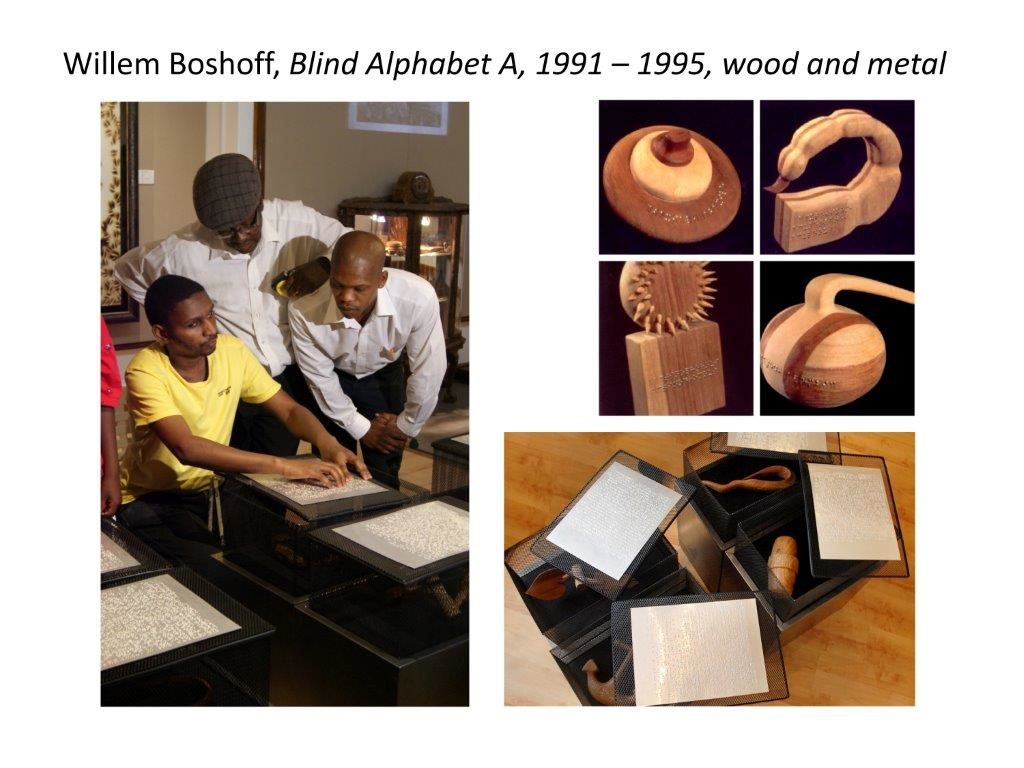 In other words these artworks were created specifically for blind people to appreciate and are also exhibited to make it accessible to the blind. Each object is in a similar black metal ‘box’ at an easy to reach height and the boxes are exhibited close to each other in rows. There is a lid on each box, with an essay written in Braille explaining the relevant word. The plain, lidded black box obscures the beautifully created object inside and for those that can see it is visually an unexciting installation of black boxes at first glance.
 Willem Boshoff effectively reverses the ‘normal’ roles of visitors to an art museum- if a blind person visits an art museum their only access to artwork is by listening to someone that can see, describing the artwork to them. No one is allowed to touch artworks in a gallery or museum so the sense of touch is very rarely engaged in visual art. With the Blind Alphabet, only blind visitors are allowed to touch and handle the artworks. Sighted visitors are not allowed to handle this artwork, effectively excluding them from experiencing the artwork first hand.
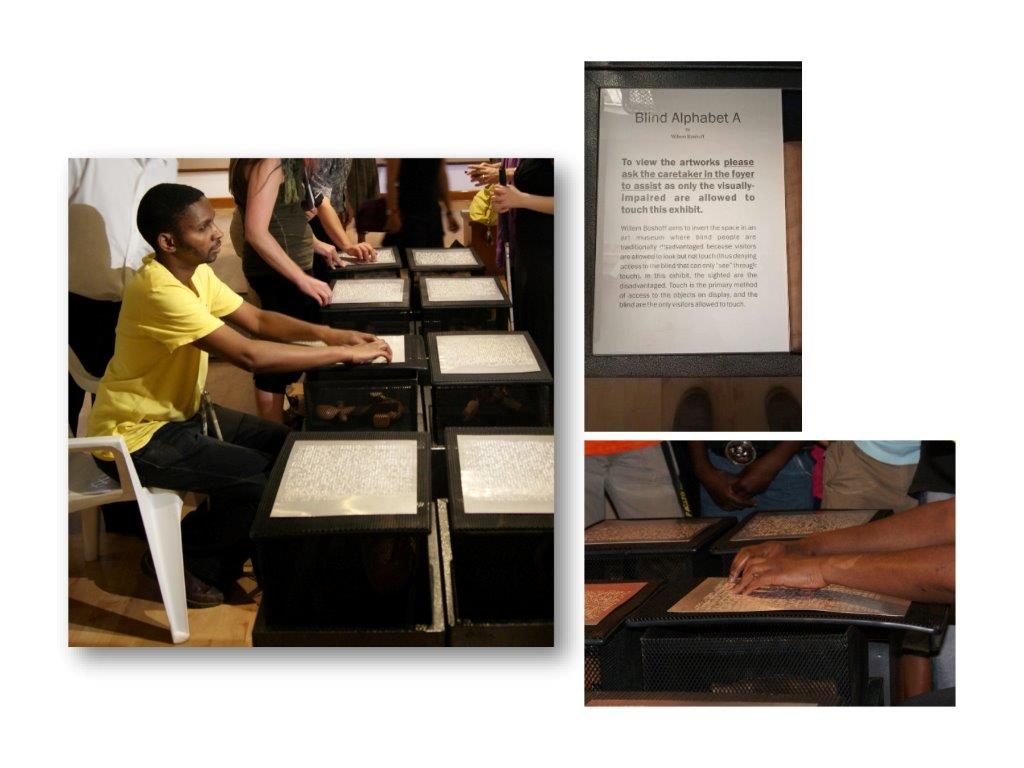 Sighted visitors will need a blind person as an interpreter or guide not only to read the Braille essay, but to open the box and touch and handle the object. Without a blind person present it is just an installation of similar black boxes and the complete experience of the artwork can only take place when a blind person experience and then describes the object by physically touching, handling and feeling the object.
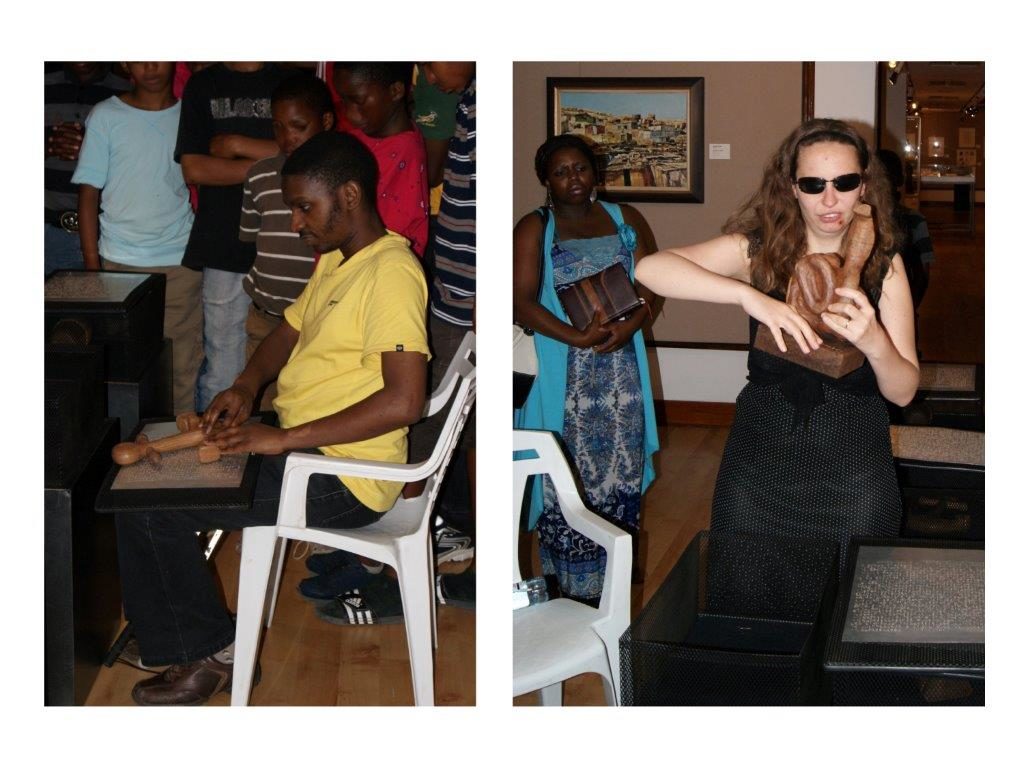 As Willem Boshoff explains so eloquently in his own words: ‘The BLIND ALPHABET PROJECT re-establishes the integrity of touch as a socially viable catalyst for interactive discourse. It sets up touch in favour of sight by enabling, if not ennobling, the state of blindness and by disabling the sense of sight’
The Blind Alphabet is an ongoing project by South African artist Willem Boshoff. All 94 artworks comprising the Blind Alphabet A was acquired by Oliewenhuis Art Museum in 1996, and he recently completed Blind Alphabet L.
For more information on Willem Boshoff, the Blind Alphabet and other artworks, visit www.willemboshoff.com.


Comments are closed.