Hendrik Johannes van der Bijl was born in Pretoria in 1887 and studied at Victoria College (today Stellenbosch University) before travelling to Germany to complete his doctorate in electrical engineering. While busy with his studies he unwittingly reinvented the thermionic valve that had first been developed by the American Lee de Forest in 1906. Van der Bijl’s research came to the attention of the American physicist Robert Millikan, who invited him to join his staff at the University of Chicago.
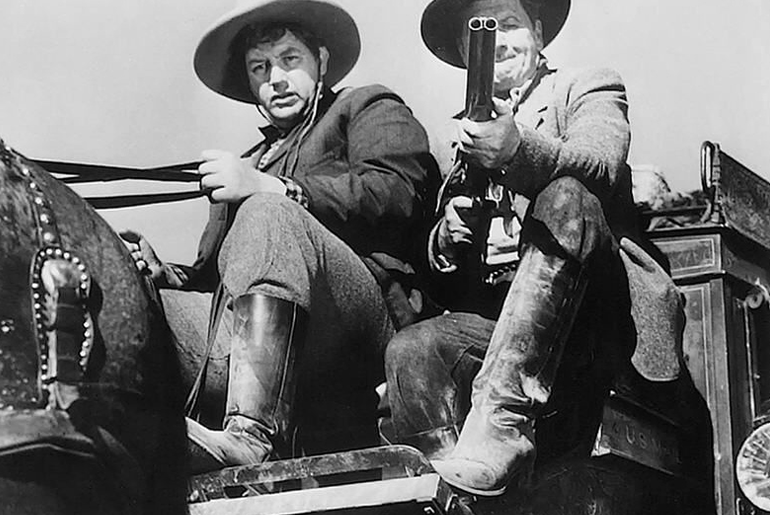
In the late 19th century, before the introduction of the railway, coach travelling became the main mode of transport. The foremost destination was certainly the newly discovered diamond fields at Kimberley. Stagecoach companies such as the Inland Transport Company, the Red Star Line and later the Zeederberg Line strived to transport passengers from the Cape Colony and Natal to the interior of South Africa as quickly and in as much comfort as possible. By 1891 there was a network of 73 stagecoach routes in the Free State.
In 1870, during the Franco-Prussian War (1870-1871), Napoleon II ordered one million cans of beef to feed his troops. In order to solve the problem of transporting and storing such large quantities of beef, John Lawson Johnston, a Scotsman, created a product known as ‘Johnston’s Fluid Beef’, later called Bovril.
Dolosse refer to the crude toys of bone used by children since the 1830’s to imitate a team of oxen pulling a wagon.
Dolosse were actually the knucklebones of sheep, cattle and goats, and with a little imagination looked quite similar in shape to oxen with their sharp horns in front and rounded buttocks.
The Queen Anne pistol was a flintlock that derives its name from the era in which it first appeared. While any gun from the years 1702 to 1714 could technically be called a “Queen Anne”, it is the turn-off pistol (barrels unscrew at the breech) that has become synonymous with the name.