


More than forty years after his death, Bram Fischer has become a household name for most South Africans and, of course, for many Bloemfonteiners. Bloemfontein’s so-called ‘glaspaleis’ (Civic Centre) as well as the local airport are named after this well-known Afrikaner communist and struggle icon. For those who are interested in Bloemfontein’s struggle history, it is worth noting that Bram was born in Bloemfontein on 23 April 1908 and died in the same city on 8 May 1975
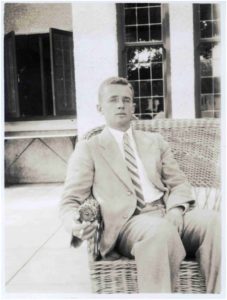
Since the early 1900s, the Fischer family has been one of Bloemfontein’s most prominent and influential families. Bram’s paternal grandfather and namesake, Abraham Fischer, was the first Prime Minister of the Orange River Colony (later the Orange Free State). Bram’s father, Percy Ulrich Fischer, was judge-president of the Orange Free State and his mother, Ella (née Fichardt), was a well-known community leader and writer. Bram followed in his father’s footsteps by also choosing a career in law. He practised as an advocate in Johannesburg during the 1930s, 1940s and 1950s.

During the 1950s and 1960s Bram’s commitment to and involvement in South Africa’s liberation struggle made him a hero in the eyes of many South Africans – especially black South Africans. He will be remembered for his role as a member of the legal team who defended the accused in the Treason Trial of 1955 to1960, and also in 1964 when he led the defense for the accused in the Rivonia Trial. It is believed that the accused, among them Nelson Mandela and Walter Sisulu, were spared the gallows because of Bram’s passionate plea.
The National Museum honours the memory of Bram Fischer, a son of the Free State soil.
Text: Dr Derek du Bruyn l Historian l National Museum


Comments are closed.