


Ella Cecil Fischer (née Fichardt) was the mother of the well-known struggle activist, Bram Fischer. Ella was an intelligent and well-read woman with good leadership qualities who rendered selfless service in her community. She served on the management committees of several associations and did relief work, while through her involvement with the President Steyn Memorial Fund, she also played an important role in youth education.
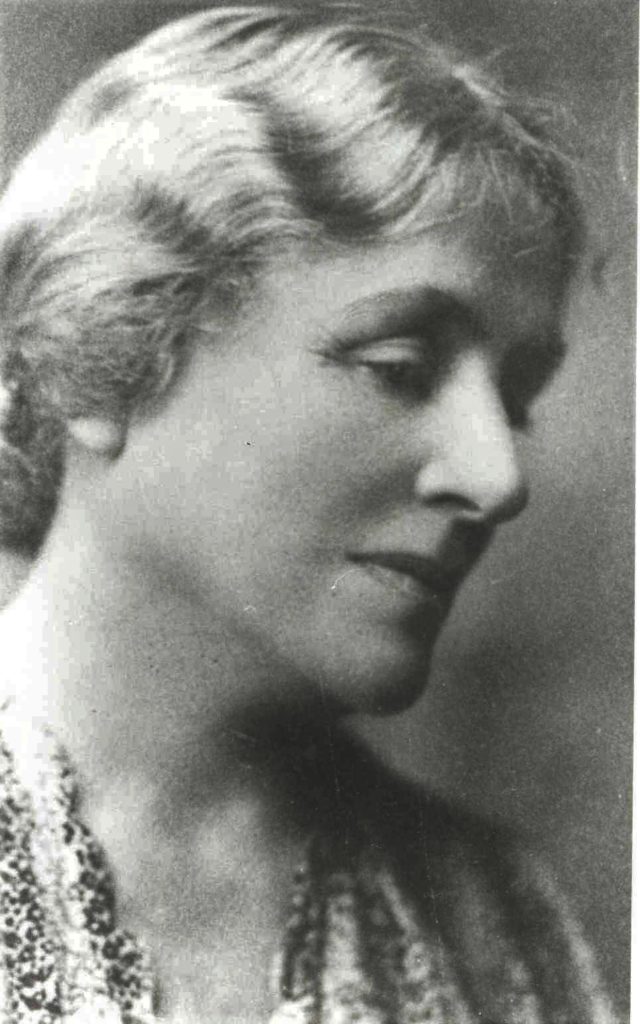 Ella Cecil Fichardt was born on 1 January 1884 in Bloemfontein and lived in and around Bloemfontein for the rest of her life. She was the youngest child of Gustav Adolf Fichardt and his wife Caroline Beck. Gustav Fichardt came to Bloemfontein from Germany in 1853 and soon established the largest commercial business in the Free State capital. He also occasionally served as mayor of the city. Although of German descent, the home language of the family was English, but Ella also spoke fluent Afrikaans. She attended the St Michael School, the first school for girls in Bloemfontein.
During the last months of the Anglo-Boer War (1899-1902) Ella performed relief work by serving on the committees in connection with the Boer Ambulance. The Boer Ambulance also provided clothes and other aids to the women and children in the concentration camps. After the peace agreement in 1902, she continued to support the needy, especially the orphans, and provided them with clothes and other necessities.
In April 1907 she married lawyer Percy Ulrich Fischer, who later became Judge President of the Orange Free State. He was the son of Abraham Fischer, who was the Prime Minister of the Orange River Colony as well as a member of the first Union Cabinet. After the marriage, the couple settled in Bloemfontein. Ella and Percy’s eldest child was Bram Fischer, the well-known advocate who defended Nelson Mandela in the Rivonia trial, and leader of the South African Communist Party. Bram was sentenced to life in prison in 1966 for his resistance to the apartheid government.
After the 1914 Rebellion, when Afrikaners rebelled against the South African government’s support of Britain and participation in the First World War, the Help Each Other Movement was founded to support the rebels and Ella diligently raised funds for this movement. Furthermore, she was the Free State leader during the women’s protest demonstration to the Free State Administrator to request pardon for the rebels, and the historic women’s march to the Union Buildings to urge the Governor-General to regard the rebels as political prisoners and release them.
Ella was passionate about the education of the youth in Bloemfontein. In September 1923 she was one of the founders of the President Steyn Memorial Fund. As Chairperson for many years, she accumulated considerable reserves used to develop a home management course at Oranje Girls’ School in Bloemfontein. Black schools such as the mission school at Shannon and the St Patrick School in the black neighbourhood were also supported by the Fund.
A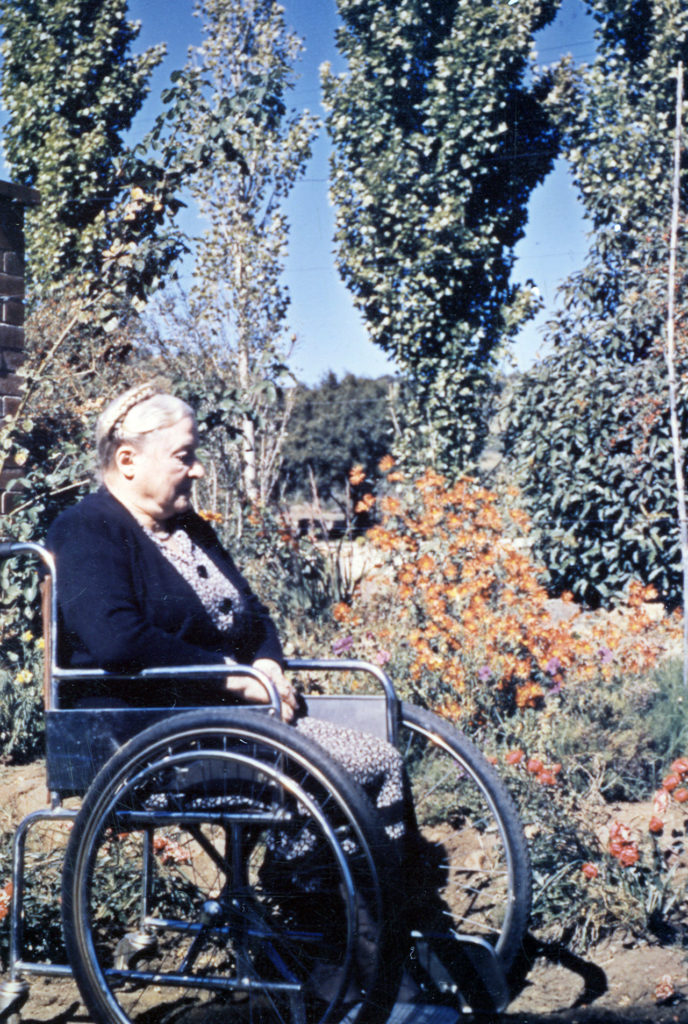 lthough Ella started several manuscripts, she only completed the novel The Purification of Peter. It deals with a pastor’s temptation and sin and his inner struggle. She initially wrote the novel in English, but insisted that it be published in Afrikaans to convey the correct mood and background, after which it was translated by Francois J. Eybers. For its time, the novel deals with a very daring theme. Due to the controversial theme, Ella could not find a publisher for the book, which she published in 1939 at her own expense. Furthermore, her memories of old Bloemfontein were recorded and published in the book Pen pictures of the past, which is an important source for nineteenth- and twentieth-century cultural history.
After her husband’s retirement, they went to live on the farm Diepwater just outside Bloemfontein, which was part of the Fischer family farm Hillandale. But Ella remained very active in community life and served on the governing body of the Girls’ School Oranje. She was a member of the management committees of Tempe Industrial School, the Spinning and Weaving School and the G.A. Fichardt Public Library, and also a member of the Kindergarten Association of South Africa and the Education Association of Parents. She furthermore served on the Bloemfontein branches of the General Women’s Council of South Africa and the Oranje Women’s Association. In her later years she was forced to get by with a wheelchair due to arthritis, but nonetheless continued with her extensive community activities. Her husband died in 1957 and she passed away in Bloemfontein on 7 March 1964.
Sources:
Haasbroek, H. 2011. ’n Seun soos Bram: ’n portret van Bram Fischer en sy ma Ella. Cape Town, Umuzi.
Haasbroek, J. 1992. Ella Fischer (1884–1964): ’n Veelsydige gemeenskapsleier. Navorsinge van die Nasionale Museum Bloemfontein 8(5).
Haasbroek, J. 1993. Ella Fischer 1884–1964. Lantern 42(3).
Fischer, E. , Introduction in M. & C.H. Bidwell 1986, Pen pictures of the past (ed K. Schoeman), Vrijstatia Series 1. Cape Town: Human & Rousseau.
https://af.wikipedia.org/wiki/Ella_Fischer, (Accessed, 20.07.2020).
https://www.geni.com/people/Ella-Cecil-fischer-6/6000000016871433786, (Accessed, 21.07.2020).

Comments are closed.