


Martha Moipone Motlhakwana was one of Free State’s fearless women who challenged and took a stand against the apartheid government. Born on the 23rd December 1906 in Leqwala in Thaba Nchu, she was a daughter to the Makabane family. She worked as a domestic worker for 22 years and she used to sell fish to provide for her family.
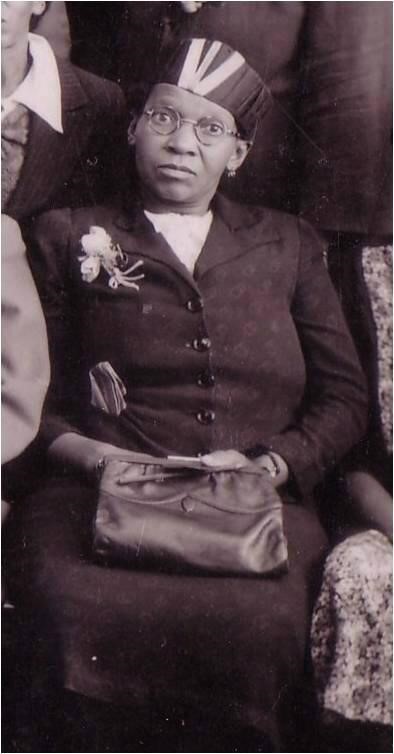
When the Union of South Africa was established in 1910, there was already the foundation for a pass system. However, over time men and women resisted the imposition of passes [reference document] as it severely restricted their freedom. Martha was 4 years old when the Union was established and the loathed pass system that was used to regulate black people began as early as 1893.
In 1913 the Orange Free State [the Free State as it was called then] introduced a new law, in addition to the regulation for black men, that women were also required to carry a pass. This resulted in women from different racial backgrounds protesting against this requirement.
The general unrest of the 1920’s, the African mineworkers strike, the White mineworkers strike in 1922 and the pressure applied by women in the preceding years forced the government to relax the pass laws. Amongst the women who rallied was Motlhakwana who was 16 years old at that time.
Many of the women were supporters of the then South African Native National Congress (SANNC) which became the ANC [African National Congress] in 1923.The protest action spread through the Orange Free State to the extent that the authorities agreed to relax the legislation. The abovementioned rally consisted of women from all levels of education and walks of life from the province.
Martha is one of the co-founders of the ANCWL [African National Congress Women’s League which was formed in 1948]. It became known to the Special Branch that her house was, in most cases, used as the ANC’s ‘Headquarters’ in Bloemfontein.
Setlhawuno Isaac Sedikelo recalled: “We had brave people such as J.B. Mafora, M.M. Motlhakwana, C. Dichabe, C. Motshabi and J. Kgasane. We used to hold meetings in our homes, but in most cases, we used to meet at Mrs Motlhakwana’s place.
I can say that was our office. We had local group of ANC members and the Executive of the ANC who used to meet there. We used to meet at different times; for example, on Mondays it was a local meeting and on Wednesdays we would meet as the Executive”.
She was used to arrests, time and again she was subjected to police arrests but she never skipped the country. She would equally provoke the police by ululating when they were to arrest her.
Sedikelo further recalled: “She was part of the National Committee working on the organisation of the Defiance Campaign. From us here in Bloemfontein, it was Dichabe, Motlhakwana, Monnenyane and Mafora. All of these people were arrested. The leaders in the whole of South Africa were arrested. She was in that group. She was the only woman from the beginning”.
Martha was instrumental and participated in the 1956 anti-pass laws march. In the Bloemfontein area, she mobilised people to burn their passes. Her fearless organisation strategies earned her the nickname in the community of ‘Motabola Pasa or Mochesa Pasa’ [the one instrumental in tearing up the dompas or the one burning the passes].
Martha was one of the 156 people arrested for the Treason Trial and later was placed under house arrest.
Oupa Mokele further recalled: “… she [Motlhakwana] became one of the Treason Trialist of 1956… and she was placed under house arrest when the trial was over. So, I grew inside a house of a person who was under house arrest”.
Motlhakwana had four children and more than 10 grandchildren. Martha passed away due to illness on the 27 July 1989 and she was buried at the Phahameng Cemetery in Bloemfontein. Kgosi Motlhakwana was only eight years old when his grandmother passed away but he remembered how strict she was while instilling discipline in her four boys and some of her grandchildren.
References
Personal Collection: Interview with Setlhawuno Isaac Sedikelo, Bloemfontein, 29 January 2012, Free State Provincial Heritage Authority (FSPHRA) Declaration Project.
The Weekly, 6 January 2012.
Women’s Anti-Pass campaign Orange Free State, https://www.sahistory.org.za/article/1913-womens-anti-pass-campaign-orange-free-state [Accessed 08/07/2020].
Pudumo Collection: Telephonic Interview with Oupa Mokele, Bloemfontein, 10 August 2012.
Dossier 1: Nominated Sites for Declaration in the Free State Province. www.heritagefreestate.co.za .

Comments are closed.