

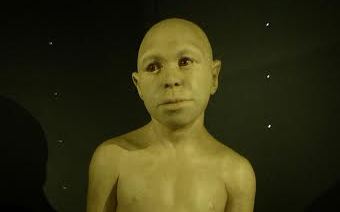
Using state of the art mass spectrometry, researchers have been able to fill gaps in our fossil records.
The analysis of ancient proteins now provides evidence that H. antecessor is closely related to Middle and Late Pleistocene hominins, including modern humans, Neanderthals and Denisovans. This is according to a new study published in Nature.
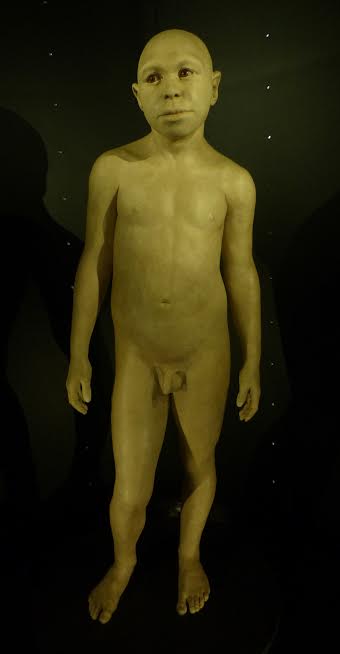 Ancient proteins last longer in fossils than ancient DNA and this new methodology is exciting as it allows scientist to find answers and fill in those unknown gaps in our prehistory.
Article: The dental proteome of Homo antecessor published in Nature
https://doi.org/10.1038/s41586-020-2153-8
Image: Homo antecessor reconstruction, Museo de la Evolución Humana (Burgos), reconstruction by E. Dayes (2014), based on fragments from Gran Dolina, Atapuerca, Spain (ATD6-15, ATD6-96, ATD6-96), ca. 850 ka. E. Daynes (sculpture)


Comments are closed.