

While gender balance in the field of archaeology is very gradually changing today, males dominated the composition of the field in the past. In honour of International Museum Day, National Museum archeologist, Dr Will Archer has profiled three of the women that made major contributions, and shaped the way archaeologists conduct African Stone Age research today. International Museum Day is celebrated throughout the world on 18 May. The theme for 2020 is Museums for Equality: Diversity and Inclusion.

Janette Deacon
Dr. Janette Deacon continues to make pioneering contributions to our understanding of Stone Age human behavior and ecology, particularly through the study of stone artefacts. She has chaired several policy-making/enforcing committees in archaeological heritage management and rock art conservation in South Africa. Some of Janette Deacon’s more influential research concerns exploring how past human groups adapted their stone artefact technologies to climate change, particularly across the last 20 000 years of human evolution, a subject that has real world relevance to environmental issues the world faces today.
Mary Leakey
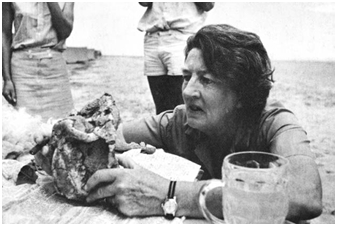
Image: Mary Leakey: https://alchetron.com/Mary-Leakey
Mary Leakey was a key figure in several paleoanthropological discoveries in Eastern Africa. Among others, these include the Laetoli footprints that clarified ideas about the upright walking abilities of hominins 3.7 million years ago. Her team discovered the famous ‘Zinjanthropus’ skull, in Tanzania, and the associated archaeological assemblage that fuels debates about early hominin stone tool use, diet and subsistence that continue today. To archaeologists, however, Mary Leakey is more well-known for the development of a stone artefact classification system to study the artefacts she recovered in her excavations at Olduvai Gorge, Tanzania. Although new digital technologies are available to analyze stone artefacts today that were not available to Mary Leakey and her team in the past, her tool classification system remains influential in the way many archaeologists document the earliest stone artefacts produced by our ancestors today.
Kay Behrensmeyer
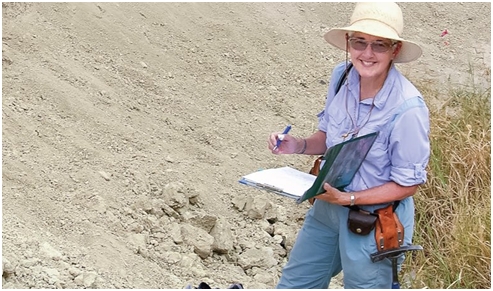
Image: Kaye Behrensmeyer: https://alchetron.com/Kay-Behrensmeyer
Dr. Kay Behrensmeyer continues to make pioneering contributions to the study of human evolution in Africa through investigating animal fossils (ancient bones and teeth), and the sediments in which they were recovered by archaeologists. Through an understanding of the relationship between sediments and bones, she reconstructs the environments in which hominin evolution took place. Her related work in the field of ‘taphonomy’ – the study of changes in fossils and stone artefacts after they enter the archaeological record – shifted the way archaeologists interpret the archaeological record of Africa today.
Text: Dr Will Archer
#InternationalMuseumDay #IMD2020 #Museums4Equality #MuseumFromHome #VirtualMuseum


Comments are closed.