

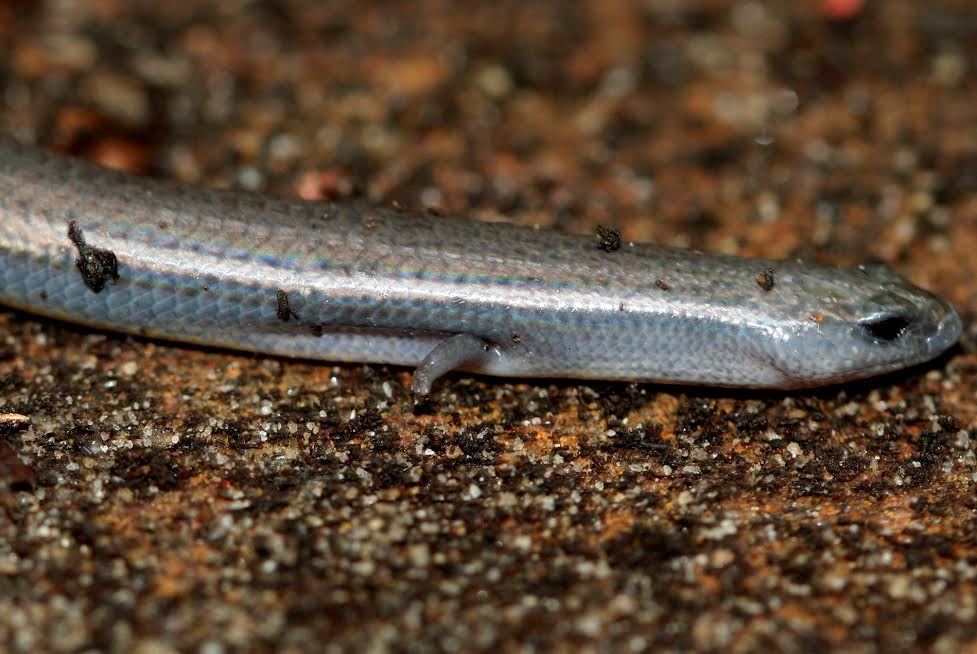
Not all species of reptiles are egg-laying (oviparous). The females of many species give birth to offspring that develop within shells inside the female’s body and ‘hatch’ just before being delivered (viviparity). The occurrence of either mode of reproduction appears to be influenced by the environmental risks affecting the survival of the parents or young. For example, extreme temperatures (too cold or too hot) negatively impacts eggs, but environments heavily populated by predators mean that mothers may be eaten before giving birth.The ability to “bet-hedge” and switch to either live-birth or egg-laying as needed would be a massive evolutionary advantage. Enter the three-toed skink (Saiphos equalis), a species of burrowing lizard from eastern Australia. In the high-elevation portion of its range, females of this species give birth to live young, but in coastal regions they lay eggs (~15 days to hatching). There is also a third “intermediate” group in some low elevation areas which lay eggs that hatch after only about 5 days. The difference between egg-laying and live-birth is therefore not very great in this species as it results in an offset of just a few days to weeks – live-birth results in fully developed offspring in transparent membranes, normal egg laying results in thick eggshells protecting developing embryos, and intermediates lay eggs with partly shelled eggs containing mostly developed embryos.
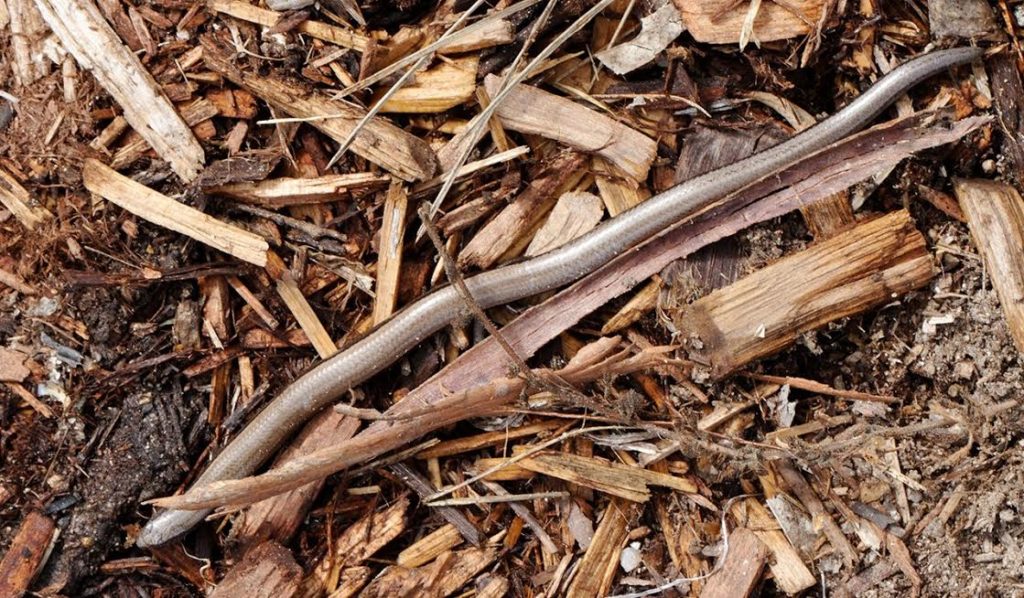 Last year, an adult three-toed skink was observed laying three eggs and straight afterwards gave birth to a baby lizard. This remarkable occurrence represents the first mixed reproductive mode event recorded in any vertebrate! It indicates that the three-toed skink is at an evolutionarily advantageous sweet spot as it transitions between reproductive modes.
For more information, read the full research article here:
https://europepmc.org/backend/ptpmcrender.fcgi…
Text by Cora S. Stobie (Herpetology Department). Photos by Peter Ostergaard (close-up) and
Michael Jefferies (aerial). Photos distributed under Creative Commons License
(https://creativecommons.org/licenses/by-nc/2.0/).


Comments are closed.