


Motlalepule Winifred (Winnie) Kgware (née Monyatsi) was born in Thaba Nchu, Orange Free State, on 27 October 1917. She was raised by her aunt in Kroonstad and became a teacher at Thaba Nchu. In 1942, she married a fellow teacher, William Kgware, who later joined the University of the North at Turfloop (currently University of Limpopo) as an academic and eventually became the Turfloop’s first Black Rector in 1977.
She and her husband toured the United States of America for six months in 1962–63 and she came home inspired by the projects and organizations of African American women.
Motlalepule displayed her support for students in their protest against the then government’s restrictions on campus. She was vigorous in the Young Women’s Christian Association and other women’s groups, helped Turfloop students form organizations, and in 1967 was elected as the executive of the newly formed University Christian Movement (UCM). She launched the South African Students’ Organization (SASO) in 1968, after its breakaway from the UCM due to displeasure by black activists with the latter organization’s all-white national executive committee.
The first national conference of the Black People’s Convention (BPC) took place in Hammanskraal from 16 to 17 December 1972, with over 1400 delegates in attendance. The conference elected an executive committee comprising Winnie Motlalepule Kgware (President), Madibeng Mokoditoa (Vice President), Sipho Buthelezi (Secretary General), Mosibudi Mangena (National Organiser), and Saths Cooper (Public Relations Officer).
Kgware became the first president of the BPC formed in 1972, and Steve Biko was one of the founders of the BPC, which functioned as an umbrella organization of Black Consciousness Movement. Five years later, the BPC was amongst the organizations banned by the Apartheid Government.
In 1977, when Security Police stopped a bus of mourners to prevent them from proceeding to Steve Biko’s funeral in Ginsberg, Eastern Cape, the 66-year-old Winnie Kgware managed to evade the police and hitched a lift all the way to King William’s Town (now Qonce) to attend the funeral. In time, this would become one of the most memorable incidents regarding Winnie Kgware. During the Biko inquest in late 1977, Winnie led the daily singing by spectators outside the Pretoria Palace of Justice.
Winnie’s transition from wife and mother to activist and figurehead of a party is instructive in several ways, her Christian beliefs were the impetus that prompted her own politicization through the University Christian Movement. She campaigned for more press coverage of student protests at Turfloop, and of what she perceived as the persecution of the UCM by the then Turfloop’s Rector J.L. Boshoff. In addition to her political activism, Mrs Kgware was a teacher at Mankweng Hwiti High School, just outside the Turfloop gates. There, she helped expose her students to some of the political movements that were growing at the university.
As a mother, wife and teacher, she was an ideal figure to lead the BPC because she as a middle-aged Black woman represented the demographics that the more radically active students hoped to reach. Winnie and William had three children Bob, Manana and Pinky Kgware who were also anti-apartheid activists.
While Winnie became more politically active in the BPC, her husband started distancing himself from political activism after the death of their son Bob. Shortly after their return from a UCM conference in the USA, Bob was killed by unknown assailants by driving a bicycle spoke through his heart.
Manana and Pinky were both active in the SASO on campus at Turfloop. Manana was part of the first executive committee under Steve Biko and continued her activism when she graduated from Turfloop as a teacher and moved to Thaba Nchu in the Orange Free State.
At the end of her tenure as the BPC president and amidst the banning of political organizations, Winnie Kgware retired from formal politics and returned to her hometown.
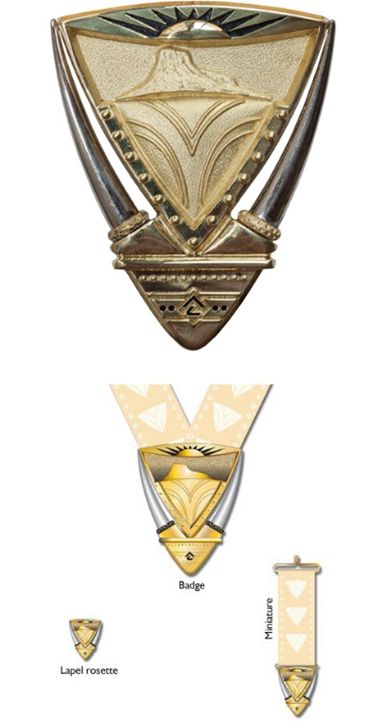
Winnie was awarded the Steve Biko Award for her role in the struggle, and in 2003 President Thabo Mbeki conferred her the Order of Luthuli in Silver posthumously for her outstanding leadership and lifelong commitment to the ideals of democracy, non-racialism, and peace and justice.
Winnie Kgware passed away in 1998, after a long life of teaching and political struggle. She was a remarkable woman and a heroine who played her part in the liberation of South Africans from the shackles of apartheid.
Sources
Gerhart, G.M. 2017. From protest to challenge: A documentary history of African politics in South Africa, 1882 – 1990: Political Profiles, 1882 – 1990, Volume 4. Auckland Park: Jacana Media.
Heffernan, A. 2019. Limpopo’s legacy, student politics and democracy in South Africa. Johannesburg: Boydell & Brewer.
Moore, B. 2018. Learning from Black Theology. Journal for the Study of Religion 31(1): 86–96. https://doi.org/10.17159/2413-3027/2018/v31n1a5
African American Registry. 2017. Winnie Kgware, Teacher and Activist born. https://aaregistry.org/story/winnie-kgware-teacher-and-activist-born (accessed 14/08/2025)
NWU. 2019. NWU celebrate Africa Day by honouring feminine leadership hero. https://news.nwu.ac.za/nwu-celebrate-africa-day-honouring-feminine-leadership-hero (accessed 14/08/2025)
South African History Online. 2011. Winnie Motlalepule Kgware. https://sahistory.org.za/people/winnie-motlalepule-kgware (accessed 9/07/2025)
Sunday World. 2018. Pioneering women paved the way. https://www.sowetanlive.co.za/sundayworld/lifestyle/2018-08-30-pioneering-women-paved-the-way (accessed 9/07/2025)
The Presidency, Republic of South Africa. WINNIE KGWARE (1917 – 1998). https://www.thepresidency.gov.za/winnie-kgware-1917-1998 (accessed 13/08/2025)

Comments are closed.