

The World Health Organisation (WHO) defines traditional medicine (TM) as “the sum total of knowledge, skills and practices based on the theories, beliefs and experiences indigenous to different cultures, whether explicable or not, that are used to maintain health, as well as to prevent, diagnose, improve or treat physical and mental illnesses” (WHO 2008). Various remedies have been used throughout the history of mankind and are still used by many in various parts of the world. African traditional medicine (ATM) or healing is said to be one of the oldest and most diverse as it is interwoven with cultural practices and religious beliefs, which involves holistic healing of the body, mind and spirit (Mothibe and Sibanda 2019). In some African countries a pluralistic system of healthcare exists, in which traditional and western medicines coexists. However, in most cases traditional medicines are the only health-care service available, especially in rural areas where the majority of the population rely on it for their primary health care needs. Traditional healers (also referred to as Traditional Healer Practitioners or THPS) generally outnumber western medical doctors, and it is estimated that there are about 200,000 traditional healers in South Africa compared to about 25,000 doctors trained in western medicines (www. en.wikipedia.org , Mothibe and Sibanda 2019).
The Chinese are also renowned for their ancient knowledge of traditional medicines, which have been well catalogued by their physicians (Broster 1982:101). As in an African context, traditional Chinese healing encompasses various approaches such as acupuncture, tai chi and use of herbal remedies, which are believed to help improve the quality of life. Thus, when COVID-19 (Corona virus or SARS-CoV-2) was first detected in 2019, in the city of Wuhan, it did not come as a surprise when many resorted to their traditional remedies. Reports indicated that 90% of patients with COVID-19 used traditional Chinese medicine (TCM), which showed an effectiveness rate of 80% and no deterioration in patient condition (An et.al 2021). Some of these medicines had proven to be effective in the treatment of Severe Acute Respiratory Syndrome (SARS) of 2002–03 and the influenza pandemic (H1N1) of 2009 (Chu et.al 2021). An example is Yinqiao powder, which was used as treatment during the early stages of COVID-19 as it is believed to alleviate acute lung injury and to improve immune response to viruses.
Age-old remedies consisting of ginger, cayenne pepper, turmeric, cinnamon, lemon, honey, garlic and onions, also became popular. Individually these products are known to have several medicinal properties and are packed with various vitamins and minerals. A combination of these taken as hot beverages (teas, concoctions) was said to help with relieving some of the symptoms of COVID-19. Onions, especially freshly cut ones, have long been touted as a cure for diseases. During the outbreak of the Spanish flu, people were encouraged to place cut onions around their houses to fight off the virus and the same applied for COVID-19 (interestingengineering.com).
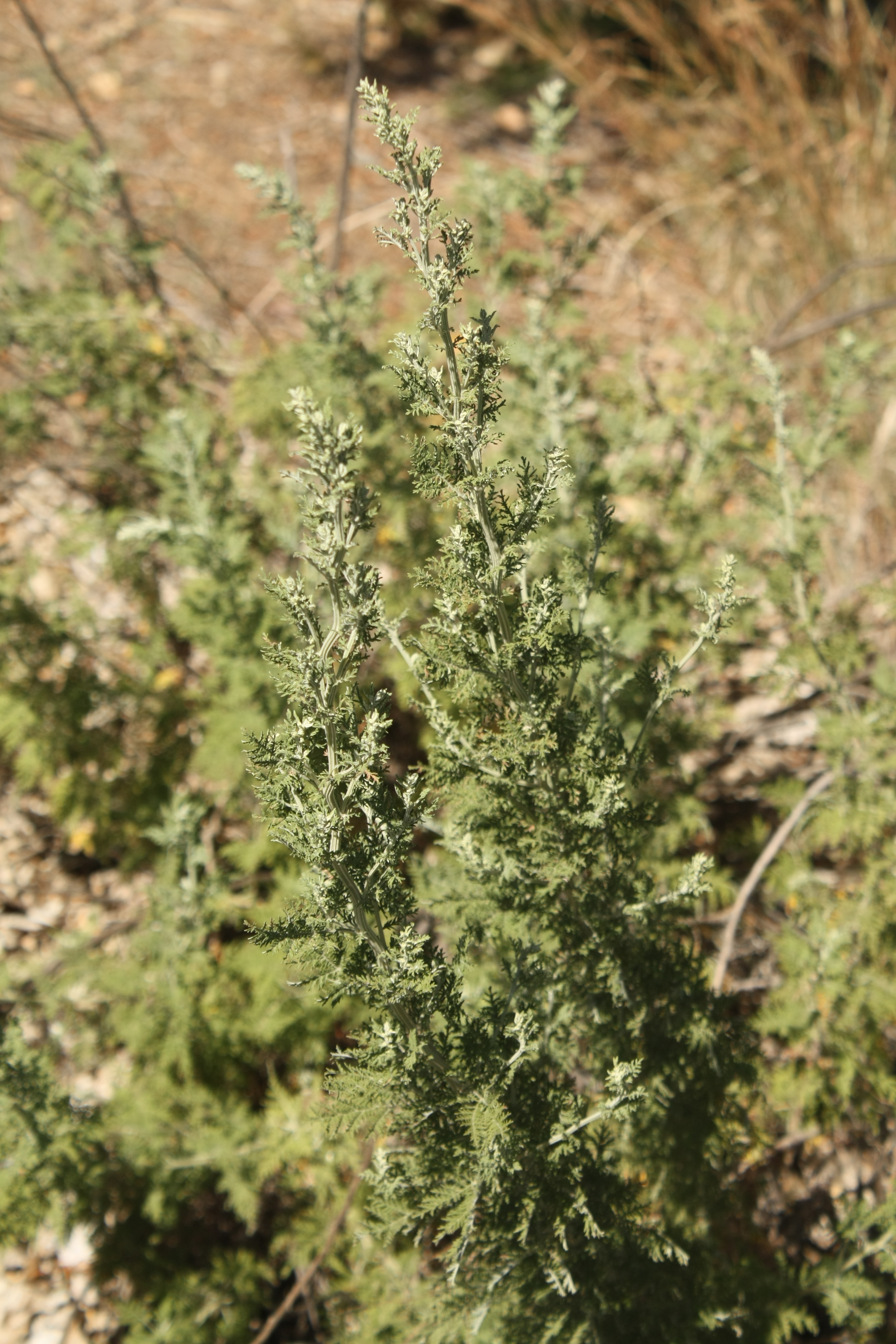
In 2020 the president of Madagascar, Andry Rajoelina, announced the launch of covid-organics, a herbal remedy that he claimed could prevent and cure COVID-19 (africa.cgtn.com). The announcement created much excitement, especially for some African countries. The main ingredient in the remedy, artemisia (wormwood, sagebrush, mugwort), is a well-known medicinal plant popular in most cultures. The species common in Africa is Artemisia afra (known as lengana in Sotho/Tswana and Pedi, wilde-als in Afrikaans, umhlonyane in Xhosa and Zulu). It grows widely in most parts of South Africa, including the Free State and is used for the treatment of various ailments such as coughs, fevers, colds, chills, colic, asthma, malaria, headache, arthritis, haemorrhoids (piles), nasal congestion, intestinal worms, loss of appetite, gastric problems, convulsions, diabetes, bladder and kidney problems (Moffett 2010, southafrica.co.za). The roots, stems and leaves are used and prepared as enemas, infusions, lotions, body washes and essential oils. It is also smoked/ inhaled (to loosen phlegm and ease sore throat), snuffed or drunk as a tea (southafrica.co.za). Another common practice is to put the leaves in the nostrils to clear nasal congestion and stop nose bleeds (Moffett 2010). The vapour from boiling leaves is also used for the treatment of menstrual pain and after childbirth.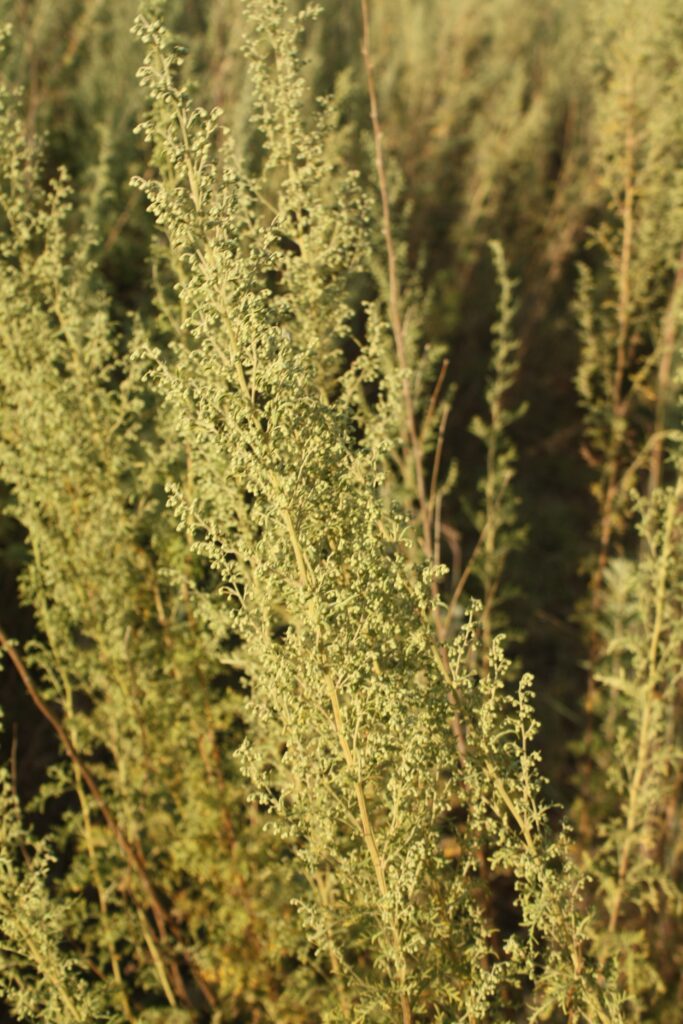
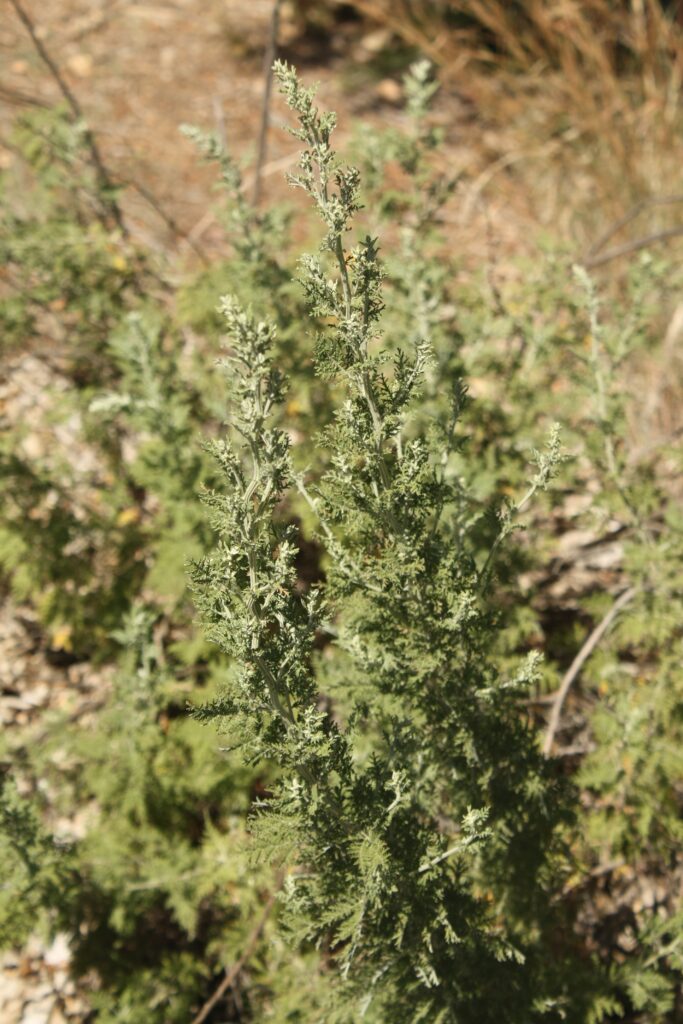
Artemisia afra (Source: D.P. van Rensburg)
The World Health Organisation (WHO) announced that it recognises the benefits of traditional healing and other alternative medicines as possible treatments for COVID-19 (www.capetownetc.com). However, they cautioned against the use of artemisia for the treatment of COVID-19 as it had not been scientifically tested for efficacy and safety. Local traditional healers came to its defense stating that it is one of the most trusted remedies for respiratory infections, but advised that caution should be exercised when using it to avoid overdosing. Eucalyptus (blue gum, bloekom), which is used for treating influenza (flu) and colds (Moffett 2010), also became a popular treatment for COVID-19. It is usually added to cough and cold medicines, dental products, antiseptics or used directly to treat fevers. The leaves are often stuffed into the nostrils and the oil, which is extracted from the leaves of certain eucalyptus trees, is inhaled through steam to relieve nasal congestion, and to clear the chest and throat. Although eucalyptus oil has many benefits, the undiluted form can be highly toxic when taken orally.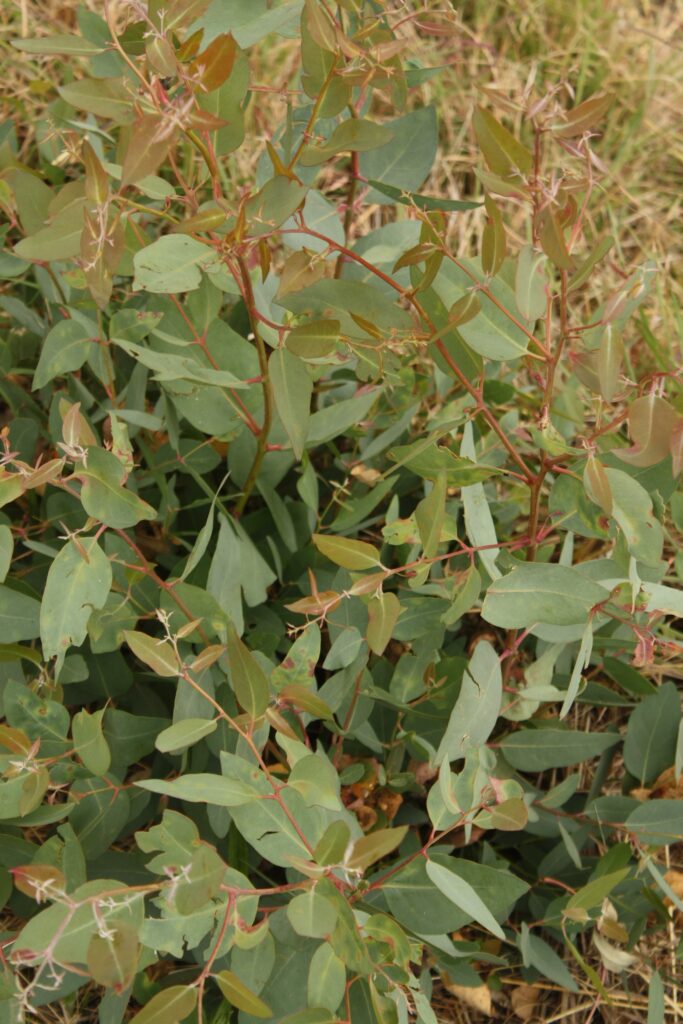
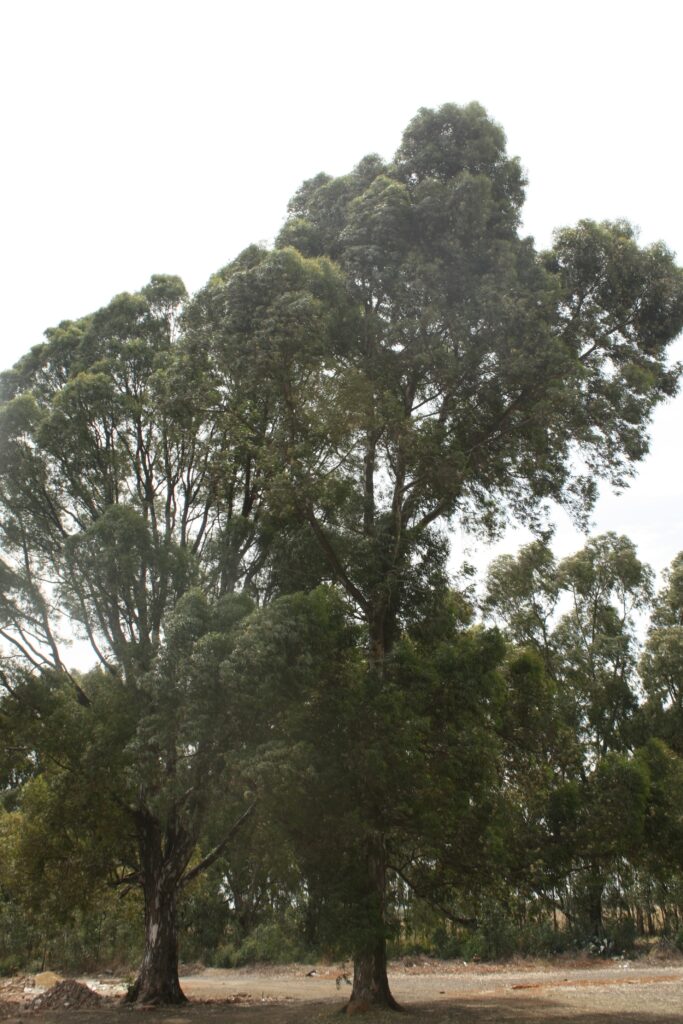
E.camaldulensis (Source: D.P. van Rensburg)
The National University of Lesotho made news headlines after announcing they had sent samples of two indigenous plant species to the Council for Scientific and Industrial Research (CSIR) to be tested for their effectiveness against COVID-19 (www.sabcnews.com). The results confirmed the extracts of the two plant species are active against the two COVID-19 strains, namely Severe and Acute Respiratory Syndrome (SARS) and the Middle East Respiratory Syndrome (MERS). The University has not yet disclosed which indigenous plants were tested and sadly due to lack of funds no further scientific testing was undertaken. Nonetheless, the research team sounded excited about future prospects.
A WHO report of 2013 acknowledged growing interest in the world regarding the use of traditional and complementary medicines. In most parts of Africa, medicinal plants are sold in the informal or semi-formal trade sector as crude, unprocessed plant material (Mothibe and Sibanda 2019). Some are sold as concoctions or ready-to-use herbal mixtures. Often, when medicinal plants get commercialised, there’s no benefit to the communities whose indigenous knowledge is used (theconversation.com).
The 31st of August has been declared African Traditional Medicine Day and is celebrated every year.
References
An, X., Zhang, Y., Duan, L., Jin, D., Zhao, S., Zhou, R., Duan, Y., Lian, F. and Tong, X. 2021. The direct evidence and mechanism of traditional Chinese medicine treatment of COVID-19. Available from: https://pubmed.ncbi.nlm.nih.gov/33508618/#affiliation-1 [Accessed on 03/11/21]
Chu, L., Huang, F., Zhang, M., Huang, B. and Wang, Y. 2021. Current status of traditional Chinese medicine for the treatment of COVID-19 in China. Available from: https://cmjournal.biomedcentral.com/articles/10.1186/s13020-021-00461-y [Accessed on 03/11/21]
Broster, J.A. 1981. Amagqirha: Religion, Magic and Medicine in Transkei. Johannesburg: Via Afrika Limited.
https://www.capetownetc.com/news/who-recognises-traditional-medicine-in-covid-19-treatment/ [Accessed 06/05/20]
https://africa.cgtn.com/2020/05/05/au-opens-talks-with-madagascar-over-safety-and-efficiencyof-covid-19-herbal-remedy/ [Accessed 08/09/2021]
https://en.wikipedia.org/wiki/Traditional_healers_of_Southern_Africa [Accessed 08/09/2021]
https://southafrica.co.za/can-african-wormwood-cure-cancer.html [Accessed on 26/10/21]
Moffett, R. 2010. Sesotho: Plant and Animal and Plants used by the Basotho. Bloemfontein: SunPress
https://theconversation.com/what-south-africa-is-doing-to-protect-and-share-traditional-medicine-resources-145135 [Accessed on 26/10/21]
Mothibe, M.E and Mncengeli Sibanda African Traditional Medicine: South African Perspective. Available from: https://www.intechopen.com/chapters/65475 [Accessed on 26/10/21]
World Health Organization. Traditional Medicines. 2008. Available from: http://www.who.int/mediacentre/factsheets/fs134/en/ [Accessed 26/10/21]
SABC. 2021. Lesotho makes strides towards possible COVID-19 treatment. Available from:https://www.sabcnews.com/sabcnews/lesotho-makes-strides-towards-possible-covid-19-treatment/ (Accessed on 15/11/21)
https://interestingengineering.com/11-bizarre-remedies-used-to-treat-the-1918-spanish-flu [Accessed on 27/02/22]
Acknowledgements
I would like to thank Louise Zietsman, Elmarie and D.P van Rensburg for providing me with the pictures.


Comments are closed.