


In indigenous South African societies, totems (diboko) are deeply meaningful symbols that express cultural identity, spiritual beliefs and social belonging. They are adopted by families, clans or groups to signify shared descent and to mediate relationships between humans, nature and the spiritual universe. The majority of the totems are wild animals such as lions, elephants, crocodiles, kudus and monkeys to name a few (Lye & Murray 1980). These totems are believed to possess spiritual or supernatural powers, thus harming or killing them is considered taboo in many African cultures (Ndubisi 2018).
Although the origins of some totems are unclear, most can be traced back to historical events or ancestral stories (Ashton 1967: 13). Cultural reverence for totems is expressed through ceremonies involving singing, dancing, praise poetry and storytelling. Among the Basotho and Batswana, the recitation of clan praises is a key ritual that strengthens lineage ties. These praises often reference totemic connections, reinforcing group identity and passing down cultural values across generations.
From a young age, Basotho children learn about their cultural heritage through oral tradition and recitation of diboko, which are often taught through a playful song or game called Mantilatilane. In this game, children respond to questions about their origins with metaphorical references, culminating in the recitation of clan praises:
A: O tswa kae? (Where do you originate?)
R: Ha Mantilatilane. (From Mantilatilane’s place)
A: Wa ja eng? (What did you eat?)
R: Ka ja bohobe. (I ate bread)
A: Wa futswela ka eng? (What did you mix it with?)
R: Ka metsi a pula. (With rainwater)
A: Thella he! (Tell us more!). This phrase is used metaphorically, much like the idea of ‘flow’ in rap or poetry, where it means expressing oneself through rhythm, rhyme and verbal artistry.
R: Ke thell’eng ke le… or ke tla thella jwang ke le… (Why should I tell you more or how can I say more, when I am…?). The response shifts into the recitation of clan praises, asserting identity.
Such practices cultivate early consciousness of belonging and embed totemic identity within everyday socialisation.
Some prominent totems and their symbolic functions
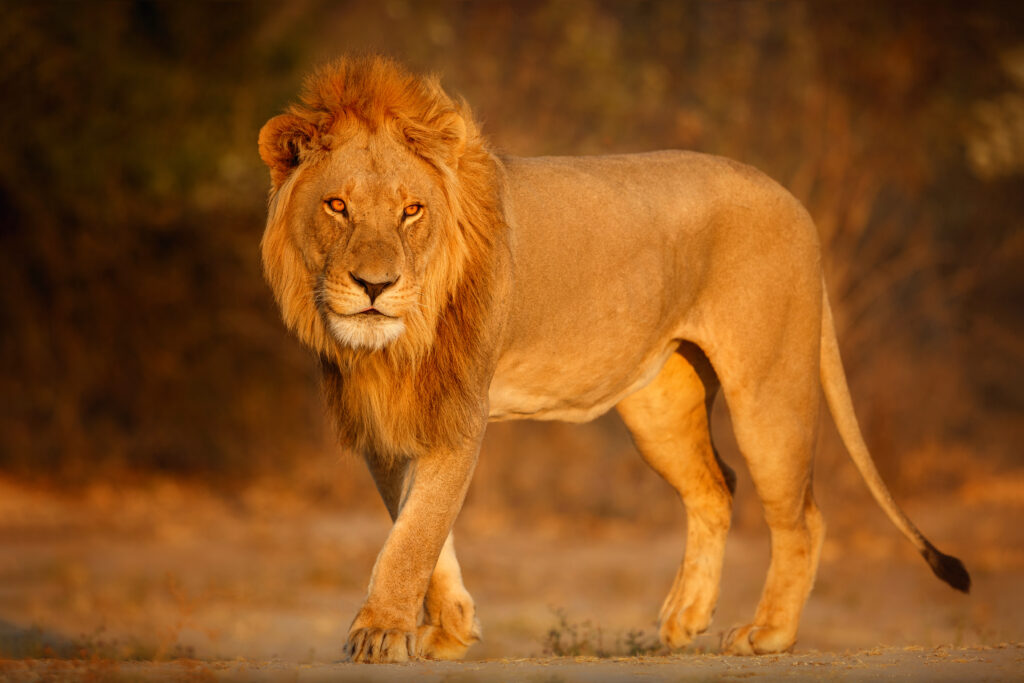
Among the most revered animal totems in South Africa is the lion (tau/ibhubesi/ingonyama) often referred to as sebata in Sesotho, meaning ‘beast’. It is regarded as a symbol of power, courage and royalty. The lion holds ceremonial importance among several groups such as Basotho, Batswana, AmaZulu and others. In the Zulu culture, a king is expected to slay a lion before his coronation ceremony and must wear the skin of the animal, which signifies his power and greatness. Zulu kings are often referred to as Ingonyama, which means ‘lion’. The lion’s symbolic status is further reflected in titles such as Tautona (a Setswana title that means ‘great lion’), which is used to honour prominent political figures. Interestingly, in some South African cultures, the leopard commands even greater reverence than the lion. Leopard’s skin is highly esteemed and is often chosen as a ceremonial attire of kings, chiefs, warriors and some traditional healers.
Equally significant is the crocodile (kwena, ingwenya), a royal totem of the Bakoena (Bakuena/Bakwena) of Lesotho and South Africa. Although there are generally no crocodiles in most of the local rivers of the Free State Province and Lesotho, the totem’s enduring symbolism likely reflects ancestral connections to the Madikwe (Marico) and Limpopo rivers (Philip 2024). Mythical narratives about the crocodile such as the tale of Lafitwe, a supernatural creature capable of dragging individuals into the water through their shadows as narrated by Dornan (1934), likely arose from those early encounters or oral traditions. Among the VhaVenda, crocodiles and serpents, particularly pythons, are regarded as sacred and tied to ancestral spirits. Such beliefs often entail dietary taboos and handling restrictions, which have historically functioned as ecological conservation mechanisms, protecting vulnerable species from exploitation.
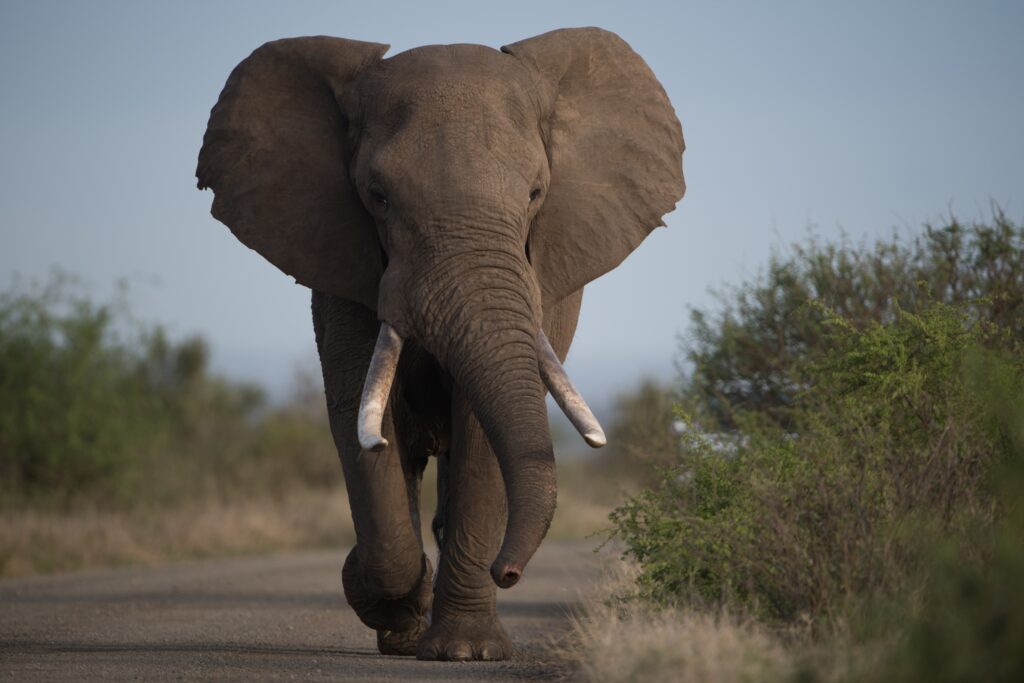
The elephant (tlou/ndlovu/nzou/zhou) serves as the totem of the Batloung, whose very name translates as ‘people who revere the elephant’. In Zimbabwe, elephant is recognised as one of the prominent totems and its symbolism extends across many African communities. Within the AmaZulu and EmaSwati (AmaSwati) traditions, royal titles such as Ndlovukazi and Ndlovukati (derived from ndlovu (elephant) and kazi/kati (signifying female) are reserved exclusively for the king’s wife or mother. These titles, meaning ‘great she-elephant’, denote a status second only to the king himself. Ellenberger and Macgregor (1912) trace the Batloung lineage back to the Barolong, whose totem is the kudu (tholo), which they share with the Batlhaping.
The Barolong are recognised as one of the earliest Sotho-Tswana groups in Southern Africa, often regarded as the ‘mother nation’ from which many Tswana and Sotho clans originated (Ellenberger & Macgregor 1912; Matthews 1940). The kudu’s selection as a Barolong totem is explained through legends of survival during drought and its role in aiding King Tau’s escape. Its spiral horns have been historically used as musical instruments (diphala) or weapons. Another significant totem of the Barolong is the iron (tshipi). According to Bishop (1986) these totems suggest that the Barolong were originally hunters, farmers and ironworkers, long before cattle became central to their way of life.

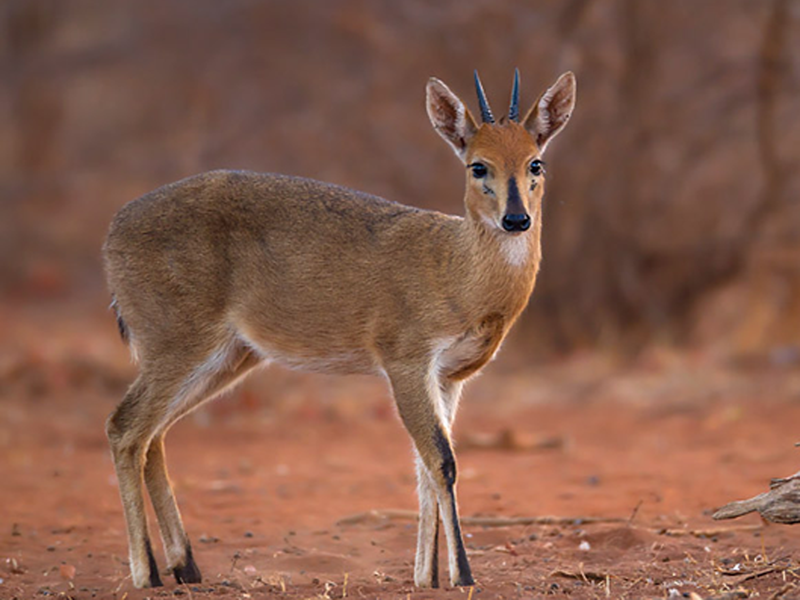
The duiker (phuthi) is a totem of the Maphuthing, Baphuthi, as well as some branches of the Makholokoe, Bangwato and Bangwaketse. The name ‘duiker’ comes from the Afrikaans word duik, which means ‘to dive’ as these small animals often dive into vegetation for cover. The Bangwato adopted the duiker after it allegedly saved Chief Khama from capture. Some Bangwato still venerate the crocodile, the totem of their parent group, Bakwena. For the Maphuthing, the duiker was chosen as a totem because of its abundance in their original homeland (Ashton 1967). Ellenberger & Macgregor (1912) note that the Baphuthi (descendants of the Mazizi or amaZizi) adopted the duiker after encountering the Maphuthing, even changing their name in the process. A broader history of the Baphuthi reflects the amalgamation of the southern Bantu-speaking communities, including the Nguni-speaking groups such as the amaZizi and the Mpondomise, alongside Sesotho-speaking groups like the Maphuthing and Bafokeng. Yet, their oral traditions and collective identity also affirm some KhoiSan heritage (Daniels et al. 2023).
Many other notable totems exist across Africa, with most shared by multiple groups. Within the Sotho groups—the Basotho, Batswana and Bapedi—there are striking similarities in the clan identities and totemic traditions, highlighting their shared ancestral legacy.
SOURCES
Ashton, H. 1967. The Basuto: A social study of traditional and modern Lesotho. London: Oxford University Press.
Bishop, S.D. 1986. The Rolong of Thaba Nchu. Culna 31: 24–25. http://hdl.handle.net/11660/10806
Daniels, R.J., D’Amato, M.E., Lesaoana, M., Kasu, M., Ehlers, K., Chauke, P.A., Lecheko, P., Challis, S., Rockett, K., Montinaro, F., González-Santos, M. & Capelli, C. 2023. Genetic heritage of the Baphuthi highlights an over-ethnicized notion of “Bushman” in the Maloti-Drakensberg, Southern Africa. The American Journal of Human Genetics 110(5): 880–894. https://doi.org/10.1016/j.ajhg.2023.03.018
Dornan, S.S. 1934. The crocodile in South African religion and folk lore. South African Journal of Science 31: 495–499. https://hdl.handle.net/10520/AJA00382353_6446
Ellenberger, D.F. & Macgregor, J.C. 1912. History of the Basuto: Ancient and modern. London: Caxton Publishing Company Ltd. https://archive.org/details/historyofbasutoa00elle
Fowler, K.D. 2008. Social memory and the antiquity of snake and crocodile symbolism in Southern Africa. In: Badenhorst, S., Mitchell, P. & Driver, J.C. (Eds), Animals and people: Archaeozoological papers in Honour of Ina Plug. Oxford: Archaeopress.
Futhwa, F. 2011. Diboko tsa Basotho. Alberton: Nalane ka Fezekile Futhwa. https://www.researchgate.net/publication/305781978
Lye, W.F & Murray, C. 1980. Transformations on the Highveld: The Tswana and Southern Sotho. Cape Town: David Philip. https://archive.org/details/transformationso00will
Matšela, Z.A. 2001. Lipapali tsa Basuto. Maseru: Mazenod Printing Publishers.
Matthews, Z.K. 1940. Marriage customs among the Barolong. Africa: Journal of the International Institute of African Languages and Cultures 13(1): 1–24. https://doi.org/10.2307/1156989
Mogotsi, G.N. 2022. The origin and breakaway groups of Barolong. Dikgotla tsa Barolong le Bakaa. Cape Town: Mogotsi.
Ndubisi, E.J.O. 2018. Totemism in Africa: A philosophical evaluation of its significance in a world of change. Journal of African Studies and Sustainable Development 1(1): 25–32. https://www.acjol.org/index.php/jassd/article/view/2785
Philip, L. 2024. Crocodiles: Facts, myth and symbolism in Africa. Culna 78: 4–6. https://nationalmuseumpublications.co.za/crocodiles-facts-myths-and-symbolism-in-africa/



Comments are closed.