Submit an article to Indago - a peer reviewed journal
Category

Culna Articles

Category

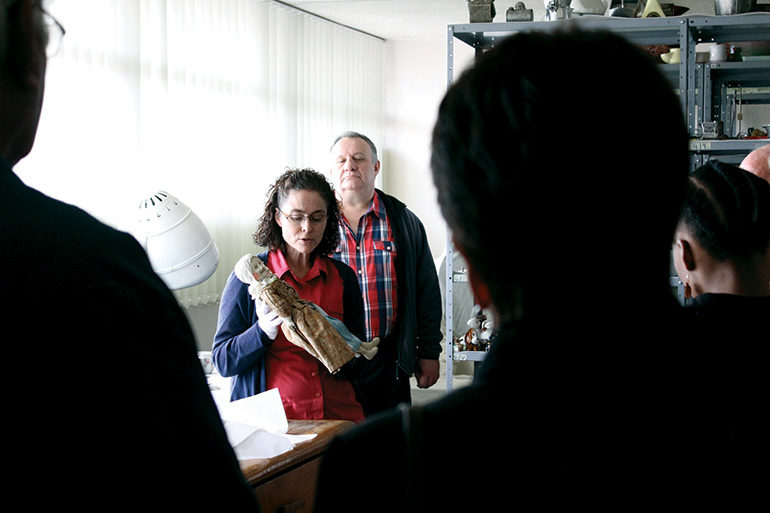
International Museum Day, celebrated worldwide every year on 18 May, is a day to celebrate the work of museum professionals.  The objective of this day is to raise awareness of the importance of museum collections and the research based on these collections.  This year the Museum opened its Cultural History and Anthropology Collections and the Palaeontology Laboratory to the public. 

Learners at Oliewenhuis during Heritage Day.

In celebration of Heritage day, Oliewenhuis arranged special activities for learners of two primary schools, Sentraal and Rutanang.  The learners were introduced to various indigenous games, Volkspele and traditional African dances.  The aim of this event was to promote social cohesion and nation building through cultural and sporting platforms.  

Recently the National Museum held an exhibition about body art and its relationship to identity.  As part of this display visitors were introduced to ‘Ötzi’, the oldest known example of a tattooed body.  Ötzi was named after the region in the Ötzal Alps near the Similaun mountain refuge in north-west Italy, where he was discovered in 1991 by hikers in a thawing glacier pool.  Currently he is kept preserved in a perfectly controlled environment in the South Tyrol Museum of Archaeology, in Bolzano, Italy, where he provides an invaluable view into Neolithic man’s life and environment.

In China, for over a thousand years, tiny feet were symbols of feminine beauty, elegance and sexuality. If you were a Chinese woman living between the late Tang Dynasty (618-907) and 1949, small, slim, soft and pointed feet were a must have. When looking at photographs of curled, callused toes and gnarled bones it is difficult to see the beauty, but for a thousand years men adored these tiny feet lotus or lily feet, as they were called.