

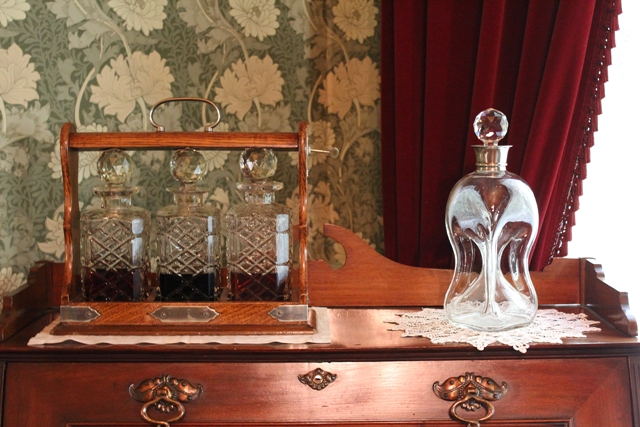
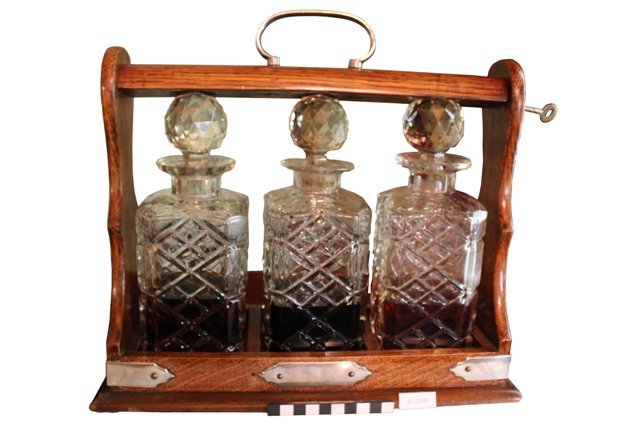
On display at Freshford House Museum is a small wooden cabinet
containing three crystal decanters, known as a Tantalus. Its defining
feature is that it has a lock and key to open and close the wooden
frame. The purpose of the lock being to stop unauthorized people from
opening the Tantalus and drinking the contents (usually whiskey, brandy,
scotch or any other liquor), while still allowing the decanters to be on
show on your bar.
The name “Tantalus” is a reference to the Greek mythological character
of the same name, most famous for his unsatisfied temptations.
A son of Zeus, Tantalus offended the gods by revealing their secrets to
mortals. As a result they punished him with everlasting thirst and
hunger: he was made to stand in a pool of water beneath a fruit tree
with low branches, with the fruit ever eluding his grasp, and the water
always receding before he could take a drink.
This ordeal of Tantalus is the origin of the word “tantalise”, meaning
to tease or torment by keeping out of reach something that is much
needed.
The Tantalus Decanter Set was first patented in 1881 by George
Betjemann, a cabinet maker from the Netherlands, who had worked in
London since the 1830s.
Freshford House Museum, a satellite of the National Museum, is situated
at 31 Kellner Street in Bloemfontein.
#Day22ofLockdown l #FreshfordHouseMuseum l #MuseumCollections


