

Abstract
As part of a collaborative long-term biodiversity monitoring programme initiated by Kolomela mine (Kumba Iron Ore) with the National Museum (Bloemfontein) and the University of the Free State (Bloemfontein) a plant species list was compiled for Kolomela mine’s property on the Ghaap Plateau. This is the first comprehensive plant species list for this part of the Ghaap Plateau. Kolomela mine is situated west of Postmasburg in the Northern Cape Province, South Africa. A total of 573 plant species, representing 81 families and 311 genera, were recorded. Four pteridophyte (ferns) taxa, 164 monocotyledons and 438 dicotyledons were collected. Three species are nationally protected (TOPS), three are specially protected in the Northern Cape, and 76 are protected in the province. Fifty-four species are endemic to South Africa and an additional 14 are endemic to the Northern Cape. Seven species that are regarded as encroachers were collected and 30 alien invasive species recorded. Based on the diversity of plant species found, it is evident that the area is botanically important. It is also clear that by conserving the non-mining areas on its property, Kolomela mine can contribute towards the National Biodiversity Strategy and Action Plan (NBSAP) by conserving and sustainably managing this part of the Ghaap Plateau.
(Ghaap Plateau, plant diversity, endemic, Kumba Iron Ore, Anglo American
INTRODUCTION
Kolomela mine (Kumba Iron Ore), subsequently referred to as ‘Kolomela’, is a new open pit iron ore mine situated approximately 12 km south-west of Postmasburg on the Ghaap Plateau in the Northern Cape Province, South Africa (Fig. 1). Production started in 2009 and mining activities have started to affect the immediate and regional biodiversity throughout the life cycle of the mine. Possible negative impacts were identified in the Environmental Impact Assessment (EIA) for Kolomela mine, initially named Sishen South (Anderson 2004). Direct negative impacts on the biodiversity of the area include land clearance, de-watering and dust generation.
The farms that belong to Kolomela cover approximately 33 478 ha. Although no fixed boundaries exist for the Ghaap Plateau, it is estimated that these farms represent about 0.6% of the area generally regarded as the Ghaap Plateau. Only 8% (2 749 ha) of Kolomela is currently mined or earmarked for future mining activities.
The negative impacts that mining can have on local and regional biodiversity create opportunities to minimise or prevent such impacts. As custodians of the mining rights area, the mine’s management accepted the responsibility of managing undisturbed areas to ensure that the biodiversity value of these areas is not degraded beyond repair. The mine’s management team recognises its opportunity to develop, build and expand biodiversity management into a showcase of possibilities and opportunities in this very sensitive and arid region. In 2010 they embarked on a long-term biomonitoring programme, in collaboration with the National Museum, Bloemfontein and University of the Free State. In so doing they contributed towards improving our knowledge and understanding of the biodiversity of the Ghaap Plateau. A thorough inventory of the flowering plants forms an integral part of this extensive monitoring programme.
South Africa is one of the most biologically diverse countries in the world, topped only by Indonesia and Brazil. It occupies only about 2% of the world’s land area, but supports nearly 10% of all plant species. The Cape Floristic Region, Succulent Karoo and Maputaland-Pondoland are three globally-recognised biodiversity hotspots in South Africa (Klopper et al. 2010; Driver et al. 2012).
The Ghaap Plateau is part of the Griqualand West Centre of Endemism (Van Wyk & Smith 2001) and is approximately 130 km wide. It stretches from the Harts River in the east to the north-south trending Korannaberg and Langberg close to Olifantshoek. The plateau extends from Vryburg in the north to Prieska in the south, and includes the Asbestos Hills west of Griekwastad. Acocks (1988) noted 302 plant species in a single survey in the Asbestos Hills between Daniëlskuil and Kuruman on the Ghaap Plateau. This is the highest number of species recorded at any of the sampling points he used to produce his Veld Types of South Africa, including the above-mentioned biodiversity hotspots (Van Wyk & Smith 2001). It is estimated that succulent species occurring on the Ghaap Plateau comprise 32.5% of the endemic or near-endemic species of the area, and that due to the unexplored status of this area, many new taxa might still be discovered (Van Wyk & Smith 2001).
Despite Acocks’ (1988) findings, little work has been conducted in this area since then. Botanically it is unfortunately a neglected part of the country as the diversity is deemed to be low. Most studies of the Northern Cape included both fauna and flora (Coetzee & Werger 1975; Rutherford & Westfall 1986; Siegfried 1992; Cowling & Hilton Taylor 1994; Low & Rebelo 1996; Van Rooyen 1999; Van Wyk & Smith 2001; Mucina & Rutherford 2006; Cromhout 2007; Veldsman 2008; Bezuidenhout 2009; Zietsman 2013, 2014, 2016). Although these studies were regional and did not focus on the Ghaap Plateau specifically, they provide a platform against which to interpret the pre-mining vegetation conditions at Kolomela. Subsequent environmental assessments and biodiversity surveys were based on these studies and have improved our knowledge of biodiversity at Kolomela, its immediate neighbourhood and the Ghaap Plateau in general.
Recent conservation assessments completed in South Africa show that loss of natural habitat or land cover change, particularly as a result of agriculture, is the primary threat to species. These reports were completed in 2010 for amphibians and 2011 for plants and reptiles. Invasive alien species threaten both terrestrial and freshwater species (Driver et al. 2012). In the arid environment of the Ghaap Plateau, cultivation is almost non-existent and only a few farmlands are irrigated for grazing. The main threat is the increase in open-cast mining, poor environmental management (or total lack thereof), over-grazing and bush-thickening.
Tracking changes in the percentage of threatened species provides a good indication of a country’s success in preserving its biodiversity. Knowledge of threatened species or species of particular concern for other reasons such as rarity, helps to prioritise conservation resources (Driver et al. 2012). There is a critical need for long-term biomonitoring programmes to ensure future data collection. This will allow the continuous tracking of changes in threatened species and targeting of conservation resources. There is also a need for conservation activities to be set up around agricultural areas and for land use changes to be controlled in both protected and unprotected areas (Driver et al. 2012).
At the start of the biomonitoring programme, the only verifiable list of plants collected in quarter-degree cell (QDS) 2822BD, in which the largest part of Kolomela falls, was one available from the Pretoria National Herbarium (PRE) of the South African National Biodiversity Institute (SANBI). This list consisted of 101 plant species.
The plant diversity of Kolomela is greater than in other areas of the Northern Cape due to strong elements from the Eastern Kalahari Bushveld Bioregion, the Kalahari Duneveld Bioregion and the Upper Karoo Bioregion of the Nama-Karoo Biome (Mucina & Rutherford 2006). Even though the Ghaap Plateau is not regarded as a biodiversity hotspot, both it and the Asbestos Hills have been identified by the Northern Cape Nature Conservation Service as a priority for conservation in the Province. They can therefore be considered as areas of high conservation value (N. Uys pers. com. 2013).
A survey of the floristic diversity of these areas is fundamental to the success of Kolomela’s management programmes and conservation policies, especially regarding mine closure. It is also fundamental to biogeographical analyses and conservation planning (Clark, Barker & Mucina 2011). Such a survey can furthermore be used to evaluate the presence of threatened species and to manage the threat of alien species (Zietsman & Bezuidenhout 1999). In a long-term monitoring programme, accurate GPS data, digital photographs of species, and fixed point photographs of landscapes can also contribute to monitoring programmes of rare and endangered plant species and unique landscapes.
Rain is the main ecological driver on the Ghaap Plateau where the rainfall pattern is extremely erratic with most rain falling during late summer (Van Wyk & Smith 2001). During excessive rainfall, which is an irregular but not uncommon event, the ephemeral rivers and endorheic pans are flooded for extended periods, sometimes up to eight months as during the 2010/11 season (P.C. Zietsman pers obs.). Periods of drought, worsened by extreme summer temperatures, are quite common.
The National Biodiversity Strategy and Action Plan (NBSAP) has a number of goals, one of which is to create a network of protected and conservation areas representative of landscapes, ecosystems and species. These areas must be managed well and sustainably, and at the same time expand, strengthen and transform the biodiversity economy to benefit the rural poor (DEA 2016). The commitment of Kolomela’s management to this long-term monitoring programme is in line with NBSAP outcomes and also presents the ideal opportunity to conserve the biodiversity of the areas of the Ghaap Plateau that are currently under severe threat because of mining activities.
MATERIALS & METHODS
Study area
Kolomela is located on the Ghaap Plateau, 12 km south-west of Postmasburg in the Northern Cape Province of South Africa (Fig. 1). The farms that belong to the mine cover a total area of 33 478 ha. Kumba holds a mining license on 16 954 ha as per the farm title deeds. Approximately 8% of this area is currently affected by mining-related activities. The farms on which Kolomela is situated were historically used for commercial farming (mostly small stock farming with limited cattle). The mine still uses some of the large areas that fall outside its footprint for commercial farming. Approximately 30% of the total area is earmarked for conservation or is included in the Kolomela Biodiversity Action Plan as conservancies.
Kolomela is located in the Kuruman Mountain Bushveld (SVk 10), Northern Upper Karoo (NKu 3) and Postmasburg Thornveld (SVk 14). The Groenwaterspruit at Leeuwfontein falls within Postmasburg Thornveld (Fig. 2). The Southern Kalahari Salt Pans (AZi 4) vegetation type is represented at Ploegfontein (Mucina & Rutherford 2006). Although a number of endemic plant species occur in these vegetation types, they are not regarded as veld types in need of conservation.
Kuruman Mountain Bushveld is characterised by banded iron formations with jaspilite, chert and riebeckite-asbestos of the Asbestos Hills Subgroup of the Griqualand West Supergroup. Soils are shallow sandy soils of the Hutton form (Mucina & Rutherford 2006). The underlying geology of the Northern Upper Karoo is formed by shales of the Volksrust and Prince Albert Formations as well as Dwyka Group diamictites. Superficial deposits, such as calcretes of the Kalahari Group, cover large areas. Soils vary from shallow to deep, red-yellow, apedal, freely drained soils to very shallow Glenrosa and Mispah forms (Mucina & Rutherford 2006). The Postmasburg Thornveld is characterised by red Aeolian sand of the Kalahari Group overlying the volcanics and sediments of the Griqualand West Supergroup that outcrops in places. Deep soils are of the Hutton form (Mucina & Rutherford 2006).
The Groenwaterspruit at Kappies Kareeboom is situated in the Northern Upper Karoo (NKu 3) which forms part of the Upper Karoo Region in the Nama Karoo Biome. This vegetation type is found on floristic and ecological gradients between the Nama-Karoo, arid Kalahari Savanna and arid highveld grasslands (Mucina & Rutherford 2006). The Northern Upper Karoo is regarded as Least Threatened and it is not conserved in any statutory conservation areas. As a result of agricultural activities and the building of dams, approximately 4% of the Northern Upper Karoo has been irreversably transformed. This is the highest percentage loss of natural veld as a result of development in any of the Nama-Karoo veld types (Mucina & Rutherford 2006). In recent years, open cast mining of especially iron ore started increasing along the eastern parts of the Ghaap Plateau.

Figure 1. Location of Kolomela mine.
The climate of the area is hot and semi-arid; the rainy season usually extends from October to May, and rainfall is irregular and erratic (250–450 mm per annum). Late summer (March to May) marks the peak of the rainy season. The mean long-term seasonal rainfall is 327 mm. The area is characterised by very high day temperatures of up to 46°C during the summer months. Winter months are much colder, with minimum temperatures often below freezing. The area’s average annual temperature is 18.8°C (Smit et al. 2013).
Material collected
At least three collecting trips were conducted per annum since the start of the programme, from March 2010 to July 2018. As many habitats as possible were sampled to represent the flora of the area as accurately as possible. Field work was conducted at various times of the year. Voucher specimens of all flowering and/or fruiting plants were collected. Standard data was recorded, including locality, habitat, substrate, lithology, exposure, aspect and slope. The GPS data recorded does not indicate the co-ordinates of individual plants but represents general readings for an area in which specimens were collected (Fig. 2). Specialists at various academic institutions assisted with the identification and/or verification of names of some of the specimens that were collected (see Acknowledgements). Cuttings from non-flowering succulents, such as mesems (vygies) and stapeliads were planted in pots and grown until flowering and then identified. The flowers were then added to the herbarium sheets. All specimens are housed at NMB and duplicates were sent to PRE. The species list (Appendix 1) also includes existing specimen records at PRE. Photographs (see figures below) were taken by the first author (P.C. Zietsman).
Nomenclature and identification
Nomenclature follows BRAHMS (Botanical Research and Herbarium Management System) (SANBI 2017b). In the species list, families are arranged alphabetically, followed by an alphabetically-arranged list of genera and species within each family. For each of the taxa the collector and collector’s number are indicated. Herbaria acronyms follow Holmgren et al. (1990). Where experts were unable to identify the species, the genus is followed by a number (e.g. Dipcadi sp. 1). Exotic plants are indicated by an asterisk.
With regard to endemism, distribution and conservation status, data in Fish et al. (2015) and the South African Red List (SANBI 2017a) were used.

Figure 2. Map of Kolomela mine showing collecting localities (red circles), with vegetation types (Mucina & Rutherford 2006) indicated.
RESULTS AND DISCUSSION
Plant diversity
Since the start of the project, specimens of 573 plant species have been collected and/or observed at Kolomela (Appendix 1). Most of these are new records for the Ghaap Plateau. This list represents 81 families (Table 1). Two are pteridophytes (ferns). The monocotyledons are represented by 14 families, of which the Poaceae is the largest with 31 genera and 72 species (75 taxa). There are 65 families of dicotyledons, of which the Asteraceae is the best represented with 48 genera and 76 species (79 taxa) (Table 2).
Although plant collecting activities started during the unusually wet 2010/2011 season, most of the collecting took place during the following dry seasons, which had very little summer rain. In an area such as the Ghaap Plateau, where rainfall is the main driver with regard to biodiversity, it can be expected that there are still many species to collect during wetter seasons.
Conservation status
Three species are protected nationally as Threatened or protected species (TOPS), 76 are protected in the Northern Cape and three are specially protected in the province (Table 3). Some of these species are listed only because the family (e.g. Apocynaceae) is listed provincially as protected. We do not regard all such species to be in need of protection and they have therefore not been included in Table 3 (e.g. Gomphocarpus fruticosus, Euphorbia inaequilatera and Moraea pallida). The two most important tree species in this area, Vachellia erioloba (Camel Thorn) and Boscia albitrunca (Shepherd’s Tree), are protec- ted under the Forestry Act (DAFF 2015).
Information regarding the rationale behind listing a plant species as protected is not always clear. Hoodia gordonii is currently TOPS listed but has been omitted from the 2013 Draft TOPS list (DEA 2015). For the purpose of this study it is still regarded as a TOPS species. The survival of these protected species depends on the continued sustainable management and protection of ecological processes at Kolomela.
Species of conservation concern
Although several species collected at Kolomela might still occur in large numbers throughout their distribution range, they are of conservation concern because of local anthropogenic threats. In general, the greatest threats are uncontrolled and unsustainable harvesting for medicinal purposes (Hoodia gordonii and Boophone disticha), illegal collecting, for example by succulent enthusiasts (Pachypodium succulentum) and habitat decline (Pentzia stellata).
Table 1. Total numbers of plant families, genera, species and taxa collected at Kolomela mine.
| Family | Genera | Species/taxa | |
| Pteridophyta | 2 | 3 | 3 / 4 |
| Monocotyledonae | 14 | 69 | 151 / 164 |
| Dicotyledonae | 65 | 239 | 419 / 438 |
| TOTAL | 81 | 311 | 573/ 606 |
Table 2. List of largest plant families (with 10 or more species) at Kolomela mine.
| Family | No. of species (taxa) | No. of genera | % of flora |
| Asteraceae | 76 (79) | 48 | 13.2 |
| Poaceae | 72 (75) | 31 | 12.6 |
| Fabaceae | 40 (41) | 22 | 7.0 |
| Malvaceae | 35 (37) | 12 | 6.1 |
| Amaranthaceae | 23 (26) | 13 | 4.0 |
| Hyacinthaceae | 23 (27) | 6 | 4.0 |
| Cyperaceae | 23 (26) | 9 | 4.0 |
| Aizoaceae | 20 (20) | 12 | 3.5 |
| Scrophulariaceae | 18 (19) | 9 | 3.1 |
| Solanaceae | 17 (17) | 5 | 3.0 |
| Acanthaceae | 12 (12) | 4 | 2.0 |
| Apocynaceae | 10 (10) | 8 | 1.7 |
| Cucurbitaceae | 10 (10) | 7 | 1.7 |
| Convolvulaceae | 10 (10) | 5 | 1.7 |
Table 3. List of plant taxa, collected at Kolomela mine, that are of conservation concern. [Nationally protected (TOPS), Specially protected provincially (SP), Provincially protected (P), Red List Critically Endangered (CR), Red List Near-threatened (NT), s = succulent species]
| Family | Taxon | Status |
| DICOTYLEDONS | ||
| Aizoaceae | Aizoon asbestinum Schltr.s | P |
| Galenia affinis Sond. | P | |
| Galenia collina (Eckl. & Zeyh.) Walp. | P | |
| Galenia crystallina (Eckl. & Zeyh.) Fenzl ex Harv. & Sond. var. crystallina | P | |
| Galenia prostrata G.Schellenb. | P | |
| Galenia pubescens (Eckl. & Zeyh.) Druce | P | |
| Lithops aucampiae L.Bolus subsp. aucampiaes | P | |
| Mestoklema arboriforme (Burch.) N.E.Br. ex Glenss | P | |
| Nananthus aloides (Haw.) Schwantess | P | |
| Plinthus karooicus I.Verd. | P | |
| Plinthus sericeus Pax | P | |
| Prepodesma orpenii (N.E.Br.) N.E.Br.s | P | |
| Ruschia calcarea L.Boluss | P | |
| Ruschia griquensis (L.Bolus) Schwantess | P | |
| Ruschia uncinata (L.) Schwantess | P | |
| Tetragonia arbuscula Fenzl | P | |
| Tetragonia calycina Fenzl | P | |
| Titanopsis calcarea (Marloth) Schwantess | P | |
| Trianthema triquetra Willd. ex Spreng. subsp. triquetra var. triquetra | P | |
| Trichodiadema pomeridianum L.Bolus.s | P | |
| Anacampserotaceae | Anacampseros subnuda Poelln. subsp. subnudas | P |
| Avonia papyracea (E.Mey. ex Fenzl) G.D.Rowley subsp. namaensis (Gerbaulet) G.D.Rowleys | P | |
| Apiaceae | Deverra burchellii (DC.) Eckl. & Zeyh. | P |
| Deverra rapaletsa Magee & Zietsman | P | |
| Apocynaceae | Cynanchum orangeanum (Schltr.) N.E.Br. | P |
| Cynanchum viminale (L.) Bassi subsp. viminales (Sarcostemma viminale subsp. viminale) | P | |
| Fockea angustifolia K.Schum.s | P | |
| Gomphocarpus tomentosus Burch. subsp. tomentosus | P | |
| Hoodia gordonii (Masson) Sweet ex Decne.s | TOPS | |
| Microloma armatum (Thunb.) Schltr. var. burchellii (N.E.Br.) Bruyns | P | |
| Orbea lutea (N.E.Br.) Bruyns subsp. luteas | P | |
| Pachypodium succulentum (L.f.) Sweets | TOPS | |
| Piaranthus decipiens (N.E.Br.) Bruynss | P | |
| Asteraceae | Pentzia stellata (P.P.J. Herman) Magee | NT |
| Capparaceae | Boscia albitrunca (Burch.) Gilg & Gilg-Ben. | P |
| Caryophyllaceae | Dianthus micropetalus Ser. | P |
| Celastraceae | Gymnosporia buxifolia (L.) Szyszyl. | P |
| Crassulaceae | Crassula capitella Thunb. subsp. nodulosa (Schönland) Toelkens | P |
| Crassula corallina Thunb. subsp. corallinas | P | |
| Crassula lanceolata (Eckl. & Zeyh.) Endl. ex Walp. subsp. lanceolatas | P | |
| Crassula lanceolata (Eckl. & Zeyh.) Endl. ex Walp. subsp. transvaalensis (Kuntze) Toelkens | P | |
| Kalanchoe paniculata Harv.s | P | |
| Kalanchoe rotundifolia (Haw.) Haw.s | P |
| Family | Taxon | Status |
| Euphorbiaceae | Croton gratissimus Burch. var. gratissimus | P |
| Euphorbia crassipes Marloth.s | P | |
| Euphorbia gariepina Boiss. subsp. gariepinas | P | |
| Euphorbia spartaria N.E.Br.s | P | |
| Euphorbia wilmaniae Marloth.s | P | |
| Fabaceae | Lessertia frutescens (L.) Goldblatt & J.C.Manning subsp. frutescens | SP |
| Lessertia pauciflora Harv. var. pauciflora | SP | |
| Vachellia erioloba (E.Mey.) P.J.H.Hurter | P | |
| Vachellia haematoxylon (Willd.) Seigler & Ebinger | P | |
| Geraniaceae | Pelargonium minimum (Cav.) Willd. | SP |
| Meliaceae | Nymania capensis (Thunb.) Lindb. | P |
| Oleaceae | Olea europaea L. subsp. cuspidata (Wall. ex G.Don) Cif. | P |
| Oxalidaceae | Oxalis depressa Eckl. & Zeyh. | P |
| Oxalis hirsuta Sond. | P | |
| Oxalis lawsonii F.Bolus | P | |
| Oxalis obliquifolia Steud. ex A.Rich. | P | |
| Pedaliaceae | Harpagophytum procumbens (Burch.) DC. ex Meisn. subsp. procumbens | TOPS |
| Scrophulariaceae | Jamesbrittenia atropurpurea (Benth.) Hilliard subsp. atropurpurea | P |
| Jamesbrittenia aurantiaca (Burch.) Hilliard | P | |
| Jamesbrittenia integerrima (Benth.) Hilliard | P | |
| Jamesbrittenia tysonii (Hiern) Hilliard | P | |
| Manulea gariepina Benth. | P | |
| MONOCOTYLEDONS | ||
| Agavaceae | Chlorophytum fasciculatum (Baker) Kativu | P |
| Chlorophytum krauseanum (Dinter) Kativu | P | |
| Amaryllidaceae | Ammocharis coranica (Ker Gawl.) Herb. | P |
| Boophone disticha (L.f.) Herb. | P | |
| Crinum lugardiae N.E.Br. | P | |
| Nerine laticoma (Ker Gawl.) T.Durand & Schinz | P | |
| Asphodelaceae | Aloe grandidentata Salm-Dycks | P |
| Aloe hereroensis Engl.s | P | |
| Bulbine abyssinica A.Rich.s | P | |
| Bulbine cf. praemorsa (Jacq.) Spreng.s | P | |
| Haworthiopsis tessellata (Haw.) G.D.Rowley var. crousii (M.Hayashi) Gildenh. & Kloppers | P | |
| Trachyandra saltii (Baker) Oberm. var. oatesii (Baker) Oberm.s | P | |
| Colchicaceae | Colchicum melanthoides (Willd.) J.C.Manning & Vinn. subsp.
melanthoides |
P |
| Hyacinthaceae | Lachenalia cf. karooica W.F.Barker ex G.D.Duncan | P |
| Ledebouria coriacea S.Venter | CR | |
| Iridaceae | Babiana bainesii Baker | P |
| Duthieastrum linifolium (E.Phillips) M.P.de Vos | P | |
| Gladiolus permeabilis D.Delaroche subsp. edulis (Burch. ex Ker Gawl.) Oberm. | P | |
| Moraea polystachya (Thunb.) Ker Gawl. | P |
Throughout large parts of its distribution range, Hoodia gordonii (Ghaap, Fig. 3) has undergone severe decline since 2001 as a result of harvesting for its appetite-suppressing properties. Fortunately wild harvesting of this TOPS species has declined in South Africa as a result of the decrease in international demand and the strict enforcement of new legislation to protect it (SANBI 2017a).
Harpagophytum procumbens subsp. procumbens (Devil’s Claw, Figs 4a & b) occurs over a wide range of habitats on well drained sandy soil in open savanna. It is not endemic to South Africa, but has TOPS status because of harvesting pressure due to its medicinal value in treating arthritis and rheumatism. Between 1999 and 2005 the international demand for Devil’s Claw tubers was very high, but the demand and subsequent harvesting pressure have since declined (SANBI 2017a).
Pachypodium succulentum (Dikvoet, Figs 5a & b) is the third TOPS species recorded at Kolomela. It is fairly localised on quartzite outcrops.
The extremely toxic bulb of Boophone disticha (Bushman Poison Bulb, Figs 6a & b) is widely used medicinally to treat septic wounds and as dressing after circumcision (Van Wyk, van Oudtshoorn & Gericke 2009). It is very popular in the muti markets and amongst urban and rural healers. This is a protected species that is threatened in most parts of the country. It is declining due to both habitat loss, especially in KwaZulu-Natal and Gauteng, and unsustainable harvesting, mainly because large, reproductive individuals are being removed. Although this species is long-lived, the plant only flowers after 10 years and seldom flowers every year. As can be expected, harvesters collect the biggest bulbs, which are also the reproductive individuals, thus putting further pressure on populations (SANBI 2017a).
According to Herman (1999), Pentzia stellata occurs only on seasonally waterlogged pans that consist of unweathered calcrete. These pans are often exploited for calcrete rock used in road construction. One of its major habitats is the Ghaap Plateau, where numerous such ephemeral pans occur. Unfortunately, this habitat is under threat due to increased mining activities in the area. A few known populations are situated on farms where they may be affected by habitat degradation due to trampling and overgrazing. It has a very small Area of Occupancy, estimated to be less than 20 km², and is listed as Near Threatened (SANBI 2017a).
Endemic species
There are 14 species of plants at Kolomela that are endemic to the Northern Cape (Table 4). Apart from these, there are another 52 species that are endemic to South Africa (Table 5).
All mesem (vygies) species are protected in the Northern Cape. A Nanathus aloides (Figs 7a & b) community consisting of more than 100 individuals occurs on the calcrete banks between the Groenwaterspruit and the floodplain.
All but one of the 14 species of Prepodesma that occur in South Africa can be found in the Great and Little Karoo (SANBI 2017a). Prepodesma orpenii (Fig. 8a), a Northern Cape endemic, is quite common although very difficult to find due to its cryptic nature. Van Wyk & Smith (2001) noted that although mesems are well represented on the Ghaap Plateau, they are taxonomically poorly known in this region. Considering the cryptic nature of some of these species, it is very likely that the list of mesem taxa for Kolomela is an under-representation of what can be found in the area.
Ledebouria coriacea (Fig. 8b) is critically endangered and previously known only from the Coega Bontveld near Port Elizabeth. There it occurs on alluvial sand and fine gravel underlain by calcrete. A single, small population numbering fewer than 500 individuals is under severe threat due to ongoing habitat loss caused by urban expansion, especially uncontrolled expansion of informal settlements (Venter 1993). It is also losing habitat to ongoing industrial development as the population occurs in an area that has been earmarked for large-scale economic development (SANBI 2017a). A small population has been recorded at the farm Heuningkranz where active prospecting is currently taking place.
A number of scarce and protected species were observed and collected on the calcrete bank at Ploegfontein and along the bank of the Groenwaterspruit west of the Witsand Road. The only population of Euphorbia wilmaniae (Figs 9a & b), an endemic to the Ghaap Plateau, observed at Kolomela occurs on the calcrete banks at Ploegfontein adjacent to the Groenwaterspruit.
The habitat of Lithops aucampiae subsp. aucampiae (Figs 10a & b) is characterised by very shallow soil, exposed limestone outcrops and no cover from shrubs or trees, which creates an extremely harsh micro-environment (Cole 1988). This species is a popular collectors’ item and as such, is under threat.

Figure 3. Hoodia gordonii
(a)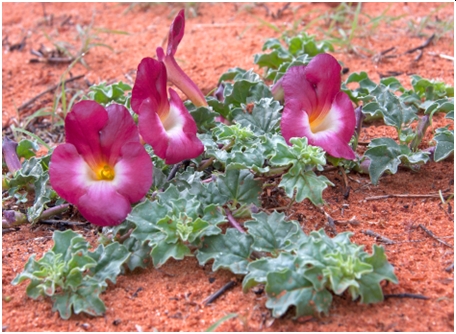
(b)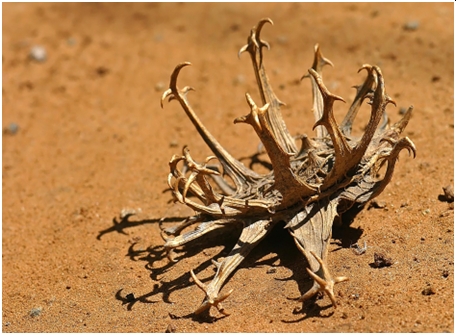
Figure 4. Harpagophytum procumbens subsp. procumbens flowers (a) and fruit (b). The vernacular name of Devil’s Claw is in reference to the appearance of the fruit.
(a) 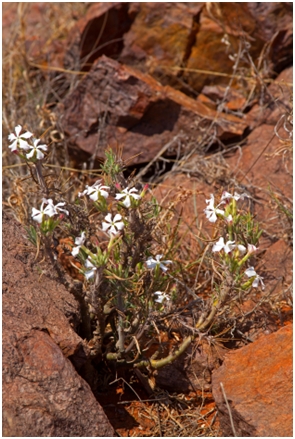 (b)
(b) 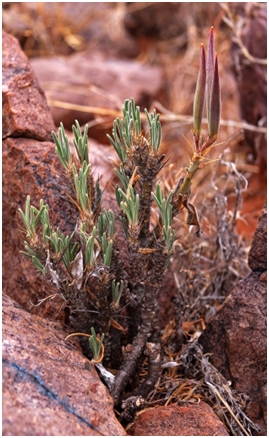
Figure 5. Pachypodium succulentum flowers (a) and fruit (b).
(a) 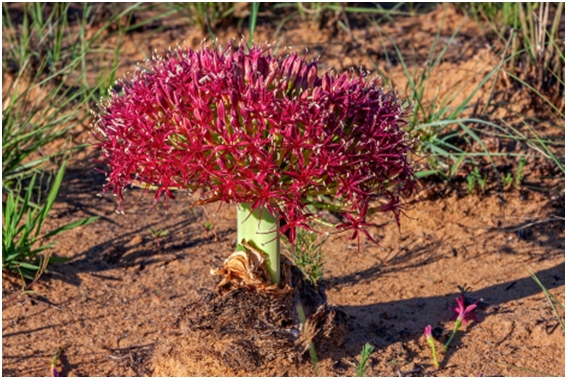
(b) 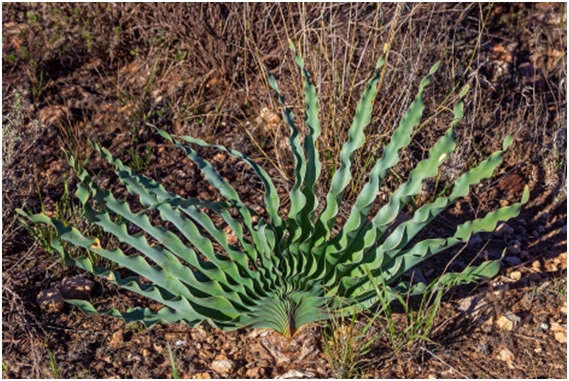
Figure 6. Boophone disticha inflorescense (a) and fan-shaped leaves (b).
Van Wyk & Smith (2001) presented a list of non-succulent endemic species that occur on the Ghaap Plateau. Searsia tridactyla, a shrub (Figs 11a & b), occurs on the shallow limestone in the pan veld at Ploegfontein, and Putterlickia saxatilis (Figs 12a & b) was found only on exposed iron ore outcrops at the farm Heuningkranz.
New species and species of taxonomic interest
A fairly common, but previously undescribed, Deverra species (Figs 13a & b) was collected at Kolomela. It was described as Deverra rapaletsa. The species epithet is derived from the Setswana (a major language in the area) word for flat and refers to the distinctive prostrate growing habit of this species. This species occurs on the weathered limestone outcrops along the Groenwaterspruit, south of Postmasburg.
In South Africa, Triaspis hypericoides subsp. hypericoides (Figs 14a & b) is restricted to the Griekwaland West Centre of Endemism (Van Wyk & Smith 2001). It is isolated from its closest neighbouring populations, which are found in the northern part of Botswana. This plant is also isolated from the Triaspis hypericoides subsp. nelsonii populations that occur in Limpopo, Mpumalanga and North West provinces in South Africa and the populations in the far north of Namibia (Immelman 1986). In Sekhukhuneland, T. glaucophylla is associated with heavy-metal soils (Van Wyk & Smith 2001). It has been suggested that T. hypericoides subsp. hypericoides might also be an indicator of similar soils. Based on the complete isolation of the Ghaap populations from all other Triaspis species, this subspecies may be elevated to species status (Van Wyk pers. com. 2018).
Invasive and problem plant species (IAPS)
Invasive alien species pose a management challenge as well as a major threat to biodiversity in protected areas (Spear et al. 2011). Identifying them is the first step towards their monitoring and eradication. By far the most important and troublesome of these species at Kolomela are Cylindropuntia indicata which occurs along the Groenwaterspruit (Figs 15a & b), C. fulgida subsp. mamillata (Fig. 16a) at Wildealsput, and Opuntia microdasys (Fig. 16b) at Wolhaarkop. These species establish very successfully by vegetative propagation (P.C. Zietsman pers. obs.). Unfortunately their attractive flowers make them popular garden plants, especially in arid regions, and their extremely thorny stems make them ideal for use as security hedges.
Thirty invader species in categories 1, 2 and 3 were observed at Kolomela (Table 6). Twenty-five of these fall into category 1, and three fall into category 2. Plant species with invader status 1 and 2 must be actively eradicated and their regrowth controlled (DAFF 2001). Category 3 plants need not be removed, but may not be propagated or sold. Seven declared indigenous bush-thickening species occur at Kolomela.
Prosopis glandulosa var. glandulosa (Figs 17a & b) falls into category 3 (DEA 2016) and represents the biggest threat to the indigenous vegetation in Kolomela and the greater Ghaap Plateau. It occurs primarily along drainage lines, such as the Groenwaterspruit, and in disturbed areas around watering points. The mine is currently involved with a very successful control programme aimed at eradication of this species.
Table 4. List of South African endemic plant taxa collected at Kolomela mine that occur exclusively in the Northern Cape. [s = succulent species]
| Family | Taxon |
| Acanthaceae | Blepharis marginata (Nees) C.B.Clarke |
| Glossochilus burchellii Nees | |
| Justicia puberula Immelman | |
| Justicia thymifolia (Nees) C.B.Clarke | |
| Aizoaceae | Prepodesma orpenii (N.E.Br.) N.E.Br.s |
| Ruschia calcarea L.Boluss | |
| Anacardiaceae | Searsia tridactyla (Burch.) Moffett |
| Asphodelaceae | Haworthiopsis tessellata (Haw.) G.D.Rowley var. crousii (M.Hayashi) Gildenh. & Kloppers |
| Asteraceae | Eriocephalus ericoides (L.f.) Druce subsp. griquensis M.A.N.Müll. |
| Tarchonanthus obovatus DC. | |
| Celastraceae | Putterlickia saxatilis (Burch.) Jordaan |
| Euphorbiaceae | Euphorbia wilmaniae Marloths |
| Molluginaceae | Pharnaceum viride Adamson |
| Santalaceae | Thesium pleuroloma A.W.Hill |
Table 5. List of plant taxa collected at Kolomela mine that are endemic to South Africa (excluding those endemic to the Northern Cape). [s = succulent species]
| Family | Taxon |
| DICOTYLEDONS | |
| Acanthaceae | Barleria bechuanensis C.B.Clarke |
| Aizoaceae | Galenia affinis Sond. |
| Galenia collina (Eckl. & Zeyh.) Walp. | |
| Galenia crystallina (Eckl. & Zeyh.) Fenzl ex Harv. & Sond. var. crystallina | |
| Galenia prostrata G.Schellenb. | |
| Galenia pubescens (Eckl. & Zeyh.) Druce | |
| Lithops aucampiae L.Bolus subsp. aucampiaes | |
| Ruschia griquensis (L.Bolus) Schwantess | |
| Titanopsis calcarea (Marloth) Schwantess | |
| Amaranthaceae | Salsola kalaharica Botsch. |
| Apocynaceae | Pachypodium succulentum (L.f.) Sweets |
| Asteracae | Berkheya pinnatifida (Thunb.) Thell. subsp. pinnatifida |
| Eriocephalus karooicus M.A.N.Müll. | |
| Garuleum bipinnatum (Thunb.) Less. | |
| Osteospermum leptolobum (Harv.) Norl. | |
| Pentzia stellata (P.P.J. Herman) Magee | |
| Phymaspermum parvifolium (DC.) Benth. & Hook. ex B.D.Jacks. | |
| Campanulaceae | Wahlenbergia nodosa (H.Buek) Lammers |
| Caryophyllaceae | Dianthus micropetalus Ser. |
| Convolvulaceae | Convolvulus boedeckerianus Peter |
| Crassulaceae | Crassula lanceolata (Eckl. & Zeyh.) Endl. ex Walp. subsp. lanceolatas |
| Cucurbitaceae | Cucumis heptadactylus Naudin |
| Fabaceae | Listia minima (B.-E.van Wyk) B.-E.van Wyk & Boatwr. |
| Rhynchosia capensis (Burm.f.) Schinz | |
| Rhynchosia ciliata (Thunb.) Schinz | |
| Malvaceae | Hermannia bryniifolia Burch. |
| Hermannia linearifolia Harv. | |
| Hermannia pulverata Andrews | |
| Hibiscus marlothianus K.Schum. | |
| Oxalidaceae | Oxalis hirsuta Sond. |
| Polygalaceae | Polygala asbestina Burch. |
| Santalaceae | Thesium hystricoides A.W.Hill |
| Scrophulariaceae | Aptosimum indivisum Burch. ex Benth. |
| Jamesbrittenia tysonii (Hiern) Hilliard | |
| Selago albida Choisy | |
| Selago mixta Hilliard | |
| Sutera griquensis Hiern | |
| Solanacae | Solanum capense L. |
| Vahliaceae | Vahlia capensis (L.f.) Thunb. subsp. capensis |
| Zygophyllaceae | Roepera lichtensteiniana (Cham.) Beier & Thulins |
| Roepera microphyllum (L.f.) Beier & Thulins | |
| MONOCOTYLEDONS | |
| Asparagaceae | Asparagus striatus (L.f.) Thunb. |
| Asphodelaceae | Trachyandra saltii (Baker) Oberm. var. oatesii (Baker) Oberm.s |
| Hyacinthaceae | Dipcadi ciliare (Zeyh. ex Harv.) Baker |
| Family | Taxon |
| Lachenalia cf. karooica W.F.Barker ex G.D.Duncan | |
| Ledebouria coriacea S.Venter | |
| Ledebouria glauca S.Venter | |
| Iridaceae | Babiana bainesii Baker |
| Duthieastrum linifolium (E.Phillips) M.P.de Vos | |
| Poaceae | Eragrostis macrochlamys Pilg. var. wilmaniae (C.E.Hubb. & Schweick.) De Winter |
| Eragrostis obtusa Munro ex Ficalho & Hiern | |
| Eragrostis x pseud-obtusa De Winter |
Verbesina encelioides var. encelioides (Golden Crownbeard, Figs 18a & b), a native to the south-western United States and Mexico, has not yet reached invader status in South Africa but is already presenting problems in disturbed sandy areas (P.C. Zietsman pers. obs.). It aggressively invades disturbed areas in the drier parts of the country and being a pioneer plant, it prevents natural sucession. Waste rock dumps, road reserves and areas that are being rehabilitated are exceptionally vulnerable to invasion by this species. As rehabilitation of, especially, waste rock dumps is very important to Kolomela and all other mining companies in the Ghaap Plateau, this species will have a significant impact on the success of rehabilitation activities.
The conservation and invasive status of species occurring at Kolomela is summarised in Fig. 19.
CONCLUSION
Until about 15 years ago, the vegetation of the Ghaap Plateau was relatively well conserved despite the fact that there is only one formally declared nature reserve in the area, namely Witsand Nature Reserve. Since 2005, numerous small and large iron ore mines have emerged, putting immense pressure on the biodiversity. Furthermore, poor veld management over decades led to bush-thickening, which resulted in even more veld degradation to the detriment of biodiversity.
Although Acocks (1988) reported the highest number of plant species noted in the Asbestos Hills on the Ghaap Plateau between Daniëlskuil and Kuruman, few if any, botanical collecting has been conducted since. Phenological data and distribution records of more than 472 previously unrecorded plant species for this specific area were collected. This includes 54 species that are endemic to South Africa, 14 endemic to the Northern Cape, and 82 species of national or provincial conservation concern.
As part of Kolomela’s farm management plan, 52% (17 430 ha) of the area will be used for stock farming and the remaining 40% (13 298 ha) for offset areas and conservation purposes. With this in mind, the 68 endemic species, and the 82 protected species, present the mine with a unique opportunity to contribute towards conservation of this unique biodiversity-rich botanical area.
This study confirms the estimated percentage of succulent endemism in southern Africa (van Wyk & Smith 2001). The species of conservation concern include 40% succulents, of which 16% are South African endemics. Most importantly, 28.5% of Northern Cape endemics listed are succulents. The majority of the latter group of species occur in offset areas or areas already earmarked for farming, thus presenting a very good conservation opportunity to the mine.
This study significantly increases knowledge about this neglected and under-collected habitat and contributes greatly towards expanding the information base on plant diversity of the Ghaap Plateau. It enhances knowledge on species distribution and resulted in the discovery of at least one new species. It also increases the awareness of local threats to the flora of this area. Of the seven encroacher species recorded for Kolomela, it is suggested that Senegalia mellifera and Tarchonanthus camphoratus must be included in control programmes. Due to an aggressive ongoing eradication programme, most IAPS a Kolomela are under control. The four cacti species are still of great concern though, due to their ability to establish vegetatively. Verbesina encelioides var. encelioides, a proposed invader, presents a serious challenge due to mining-related disturbances and should be monitored and controlled.
With this newly accumulated knowledge on the distribution of species (indigenous and alien), a programme can be put in place to monitor mining-related impacts, such as de-watering and dust, on plant diversity. The area presents major opportunities for botanists, especially plant taxonomists, as many species of restricted distribution remain undiscovered (Van Wyk & Smith 2001). According to Van Wyk & Smith (2001), the remaining large outcrops of iron-ore and manganese should receive immediate attention for detailed floristic surveys. Based on his taxonomic review of the genus Hermannia, Gwynne-Evans (in litt. 2018) noted that: “A number of Hermannia species are restricted to the inland limestones including several new species. As Hermannia has been shown to be representative of vegetation types, they indicate that the limestone is an important habitat for restricted and specialist species in other families and genera as well. They are deserving of greater protection from threats of all kinds including limestone mining, the use of limestone on roads and from grazing.”
(a) 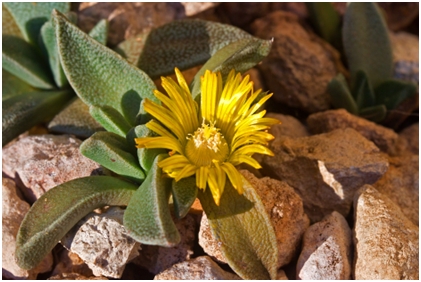
(b) 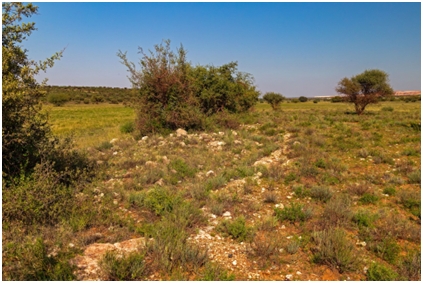
Figure 7. Nanathus aloides flower (a) and habitat (b).
(a) 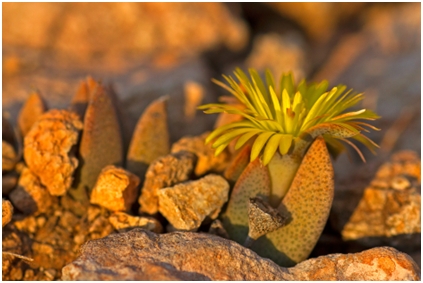
(b) 
Figure 8. Prepodesma orpenii (a) and Ledebouria coriacea (b).
(a) 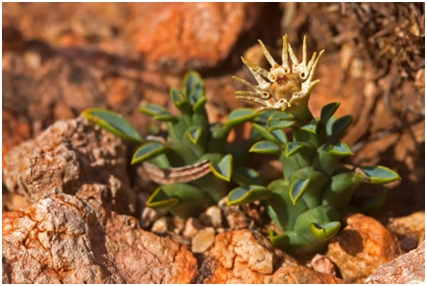
(b) 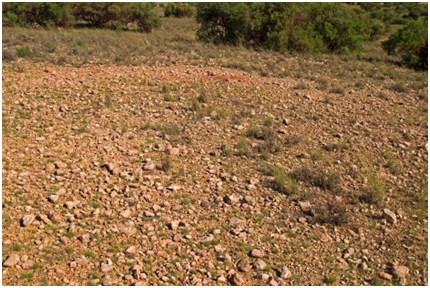
Figure 9. Euphorbia wilmaniae (a) and habitat (b).
(a) 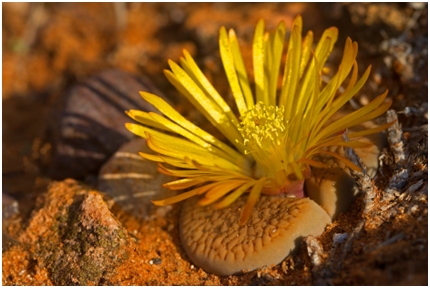
(b) 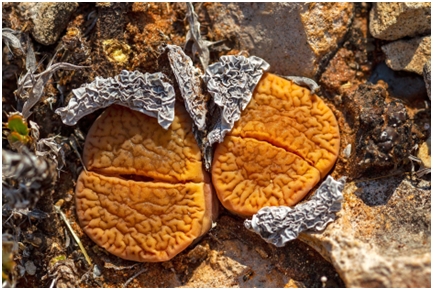
Figure 10. Lithops aucampiae subsp. aucampiae flower (a) and leaves (b).
(a) 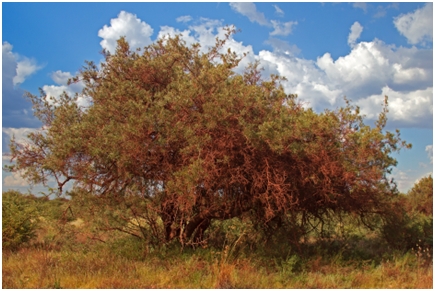
(b) 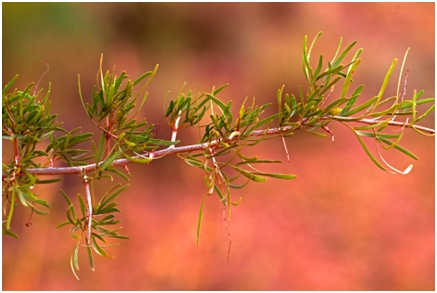
Figure 11. Searsia tridactyla shrubs (a) are fairly common on the shallow limestone at Ploegfontein. The spiny stems (b) are a distinctive characteristic of this plant.
(a) 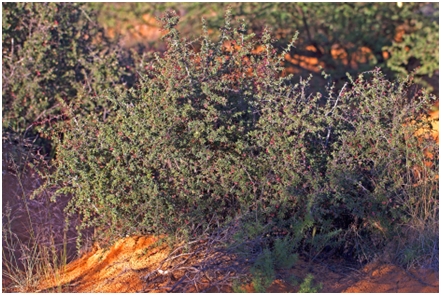
(b) 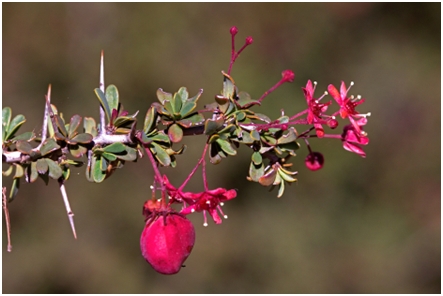
Figure 12. Putterlickia saxatilis (a). The flowers and fruit (b) are bright red.
(a) 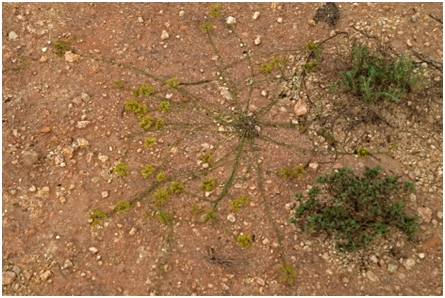
(b) 
Figure 13. Deverra rapaletsa, a newly described species. Prostrate habit (a) and flowers (b).
(a) 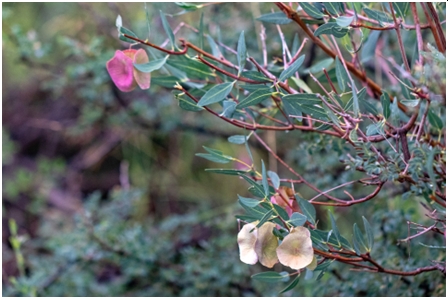
(b) 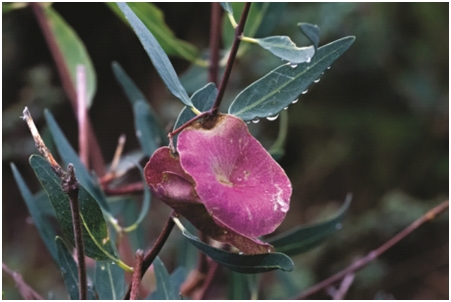
Figure 14. Triaspis hypericoides subsp. hypericoides (a) and fruit (b).
(a) 
(b) 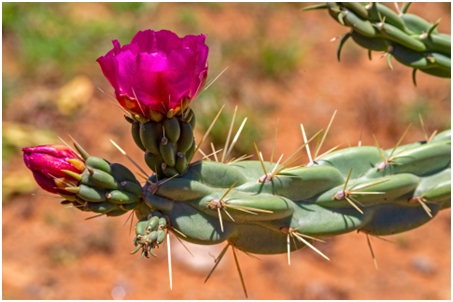
Figure 15. Cylindropuntia imbricata (a) and flower (b).
(a) 
(b) 
Figure 16. Cylindropuntia fulgida var. mamillata (a) and Opuntia microdasys (b).
By continuing with this long-term biomonitoring project, Kumba Iron Ore can contribute towards improving the knowledge, understanding and interpretation of the biodiversity, environmental processes and drivers of this very sensitive arid region. Furthermore, by protecting the approximately 30 100 ha (91%) of non-mining areas, Kolomela can contribute immensely towards conservation of the many species that are endemic or under threat.
ACKNOWLEDGEMENTS
We are indebted to the National Museum, Bloemfontein for allowing us to do this research. Anglo American, Kumba Iron Ore (KIO) allowed us to conduct research at the mine. This would not have been possible without the enthusiastic support of Mr Aart van den Brink (former General Manager, KIO) and Mr Jaco Lambrechts (Environmental Manager, KIO). Mrs I.J. Sparks and Mr Izak Gous, both from KIO, assisted with logistics and field work. Special thanks to Pretoria National Herbarium (PRE) for assisting with identifications. We are especially grateful to Drs Hester Steyn and Marinda Koekemoer, Messrs Paul Hermann and Pieter Bester from PRE, and Drs John Manning and Anthony Magee from Compton Herbarium and Graham Duncan from Kirstenbosch National Botanical Garden, who assisted with identifications of species in their respective fields of expertise. Ms Priscilla Burgoyne (Curator of the Southern Cape Herbarium, George) helped with the identification of the mesems, while Dr Fanie Venter (Australian Tropical Herbarium, Cairns) identified all the Ledebouria species. Dr David Gwynne-Evans assisted with the identification of Hermannia species. Mr Mias van der Westhuizen (Glen Agricultural College) assisted with identification of the grasses. Dr Kenneth Oberlander (University of Stellenbosch) identified the Oxalis species. Prof. Braam van Wyk (University of Pretoria) offered valuable inputs on Ghaap Plateau endemism. The inputs and suggestions of the reviewers, Dr Hugo Bezuidenhout and an anonymous individual, are sincerely appreciated.
Table 6. List of weeds, invaders and indigenous encroachers (bush-thickening species) collected at Kolomela mine.
(1 = Declared weeds – must be eradicated; 2 = Declared invaders – must be removed. Commercial species can be grown with permission; 3 = Ornamental plants that can become invasive. Need not be removed, but may not be propagated or sold)
| Family | Taxon | Category |
| Amaranthaceae | Achyranthes aspera L. var. sicula L.* | 1 |
| Atriplex nummularia Lindl. subsp. nummularia* | 2 | |
| Salsola kali L.* | 1 | |
| Asteraceae | Cirsium vulgare (Savi) Ten.* | 1 |
| Flaveria bidentis (L.) Kuntze* | 1 | |
| Tarchonanthus camphoratus L. | Encroacher | |
| Verbesina encelioides (Cav.) Benth. & Hook.f. ex A.Gray var. encelioides* | Proposed invader | |
| Xanthium spinosum L*. | 1 | |
| Bignoniaceae | Rhigozum trichotomum Burch. | Encroacher |
| Cactaceae | Cylindropuntia fulgida (Engelm.) F.M.Knuth var. mamillata (A.Schott ex Engelm.) Backeb.* | 1 |
| Cylindropuntia imbricata (Haw.) F.M.Knuth* | 1 | |
| Opuntia ficus-indica (L.) Mill.* | 1 | |
| Opuntia microdasys (Lehm.) Pfeiff.* | 1 | |
| Convolvulaceae | Cuscuta campestris Yunck.* | 1 |
| Ipomoea purpurea (L.) Roth* | 1 | |
| Ebenaceae | Euclea undulata Thunb. | Encroacher |
| Euphorbiaceae | Ricinus communis L. var. communis* | 2 |
| Fabaceae | Erythrostemon gilliesii Klotzsch* (Caesalpinia gilliesii*) | 1 |
| Prosopis glandulosa Torr. var. glandulosa* | 3 | |
| Senegalia mellifera (Vahl) Seigler & Ebinger subsp. detinens (Burch.) Kyal. & Boatwr. | Encroacher | |
| Vachellia karroo (Hayne) Banfi & Galasso | Encroacher | |
| Vachellia tortilis (Forssk.) Galasso & Banfi subsp. heteracantha (Burch.) Kyal. & Boatwr. | Encroacher | |
| Malvaceae | Grewia flava DC. | Encroacher |
| Malvastrum coromandelianum (L.) Garcke* | 1 | |
| Meliaceae | Melia azedarach L.* | 1 |
| Myrtaceae | Eucalyptus camaldulensis Dehnh.* | 1 |
| Nyctaginaceae | Mirabilis jalapa L.* | 1 |
| Papaveraceae | Argemone ochroleuca Sweet subsp. ochroleuca* | 1 |
| Poaceae | Pennisetum setaceum (Forssk.) Chiov.* | 1 |
| Salicaceae | Populus x canescens (Aiton) Sm.* | 2 |
| Solanaceae | Datura ferox L.* | 1 |
| Datura inoxia Mill.* | 1 | |
| Nicotiana glauca Graham* | 1 | |
| Solanum elaeagnifolium Cav.* | 1 | |
| Tamaricaceae | Tamarix ramosissima Ledeb.* | 1 |
| Verbenaceae | Verbena bonariensis L.* | 1 |
| Verbena brasiliensis Vell.* | 1 |
(a) 
(b) 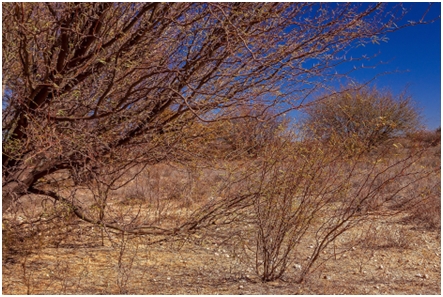
Figure 17. Prosopis glandulosa var. glandulosa (a) invades along drainage lines (b).
(a) 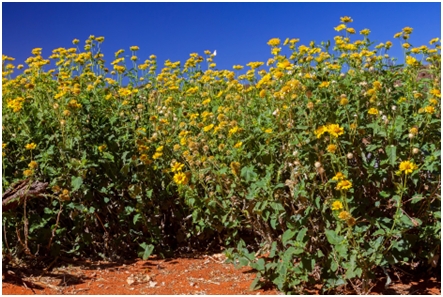 (b)
(b) 
Figure 18. Verbesina encelioides var. encelioides Golden Crownbeard (a) & (b) has an attractive sunflower-like inflorescence.

Figure 19. The conservation and invasive status of plant species collected at Kolomela mine.
[TOPS (nationally protected), SP in NC (specially protected in the Northern Cape), P in NC (protected provincially), SA Endemic (endemic to South Africa), NC Endemic (endemic to the Northern Cape), IAPS (declared invasive species)]
REFERENCES
ACOCKS, J.P.H. 1988. Veld types of South Africa. 3rd ed. Memoirs of the Botanical Survey of South Africa 57: (1–146). Department of Agriculture and Water Supply, Pretoria.
ANDERSON, T.A. 2004. Sishen South mine – Environmental Impact Assessment. Sishen South Project, Ecological Impact Assessment Report (S0048).
BEZUIDENHOUT, H. 2009. The classification, mapping and description of the vegetation of the Rooipoort Nature Reserve, Northern Cape, South Africa. Koedoe 51. On-line version ISSN 2071–0771.
CLARK, V.R., BARKER, N.P. & MUCINA, L. 2011. The Roggeveldberge – notes on a botanically hot area on a cold corner of the southern Great Escarpment, South Africa. South African Journal of Botany 77: 112–126.
COETZEE, B.J. & WERGER, M.J.A. 1975. A west-east vegetation transect through Africa south of the Tropic of Capricorn. Bothalia 11(4): 539–561.
COLE, D.T. 1988. Lithops, flowering stones. Acorn Books: Randburg.
COWLING, R.M. & HILTON TAYLOR, C. 1994. Patterns of plant diversity and endemism in southern Africa: an overview. In: Huntley, B.J. (Ed.). Botanical diversity in southern Africa. Strelitzia 1: 31–52. South African National Biodiversity Institute, Pretoria.
CROMHOUT, M. 2007. The ecology of the African buffalo in the eastern Kalahari region, South Africa. M.Sc. thesis, Centre for Wildlife Management, Department of Animal and Wildlife Sciences, Faculty of Natural and Agricultural Sciences, University of Pretoria, Pretoria.
DAFF (Department of Agriculture, Forestry and Fisheries). 2001. Conservation of Agricultural Resources Act, 1983 (Act no. 43 of 1983). Declared weeds and invaders. Staatskoerant no. 22166.
DAFF (Department of Agriculture, Forestry and Fisheries). 2015. Notice of list of protected tree species under the National Forest Act, 1998 (Act no. 84 of 1998). Staatskoerant no. 30253.
DEA (Department of Environmental Affairs). 2015. National Environmental Management: Biodiversity Act, 2004 (Act No. 10 of 2004). Threatened or protected species lists. Notice 255 of 2015. Staatskoerant no. 38600.
DEA (Department of Environmental Affairs). 2016. National Biodiversity Research and Evidence Strategy (2015 – 2025). Strategy document. Department of Environmental Affairs, Pretoria.
DRIVER, A., SINK, K.J., NEL, J.L., HOLNESS, S., VAN NIEKERK, L., DANIELS, F., JONAS, Z., MAJIEDT, P.A., HARRIS, L. & MAZE, K. 2012. National Biodiversity Assessment 2011: An assessment of South Africa’s biodiversity and ecosystems. Synthesis Report. South African National Biodiversity Institute and Department of Environmental Affairs, Pretoria.
FISH, L., MASHAU, A.C., MOEAHA, M.J. & NEMBUDANI, M.T. 2015. Identification guide to southern African grasses. An identification manual with keys, descriptions and distributions. Strelitzia 36. South African National Biodiversity Institute, Pretoria.
HERMAN, P.P.J. 1999. Synopsis of the genus Rennera Merxm. (Asteraceae, Anthemideae) with the description of a new species from South Africa. Botanical Journal of the Linnean Society 129(4): 367–377.
HOLMGREN, P.K., HOLMGREN, N.H. & BARNETT, L.C. 1990. Index Herbariorum. Part 1: The herbaria of the world. 8th ed. New York Botanical Garden, New York.
IMMELMAN, K.S. 1986. Triaspis – Malpighiaceae. Flora of Southern Africa 18(3): 63–69.
KLOPPER, R.R., HAMER, M., STEENKAMP, Y., SMITH, G. & CROUCH, N.R. 2010. South Africa’s biodiversity treasure trove. Quest 6(3): 20–23.
LOW, A.B. & REBELO, A.G. 1996. Vegetation of South Africa, Lesotho and Swaziland. 2nd ed. Department of Environmental Affairs and Tourism, Pretoria.
MUCINA, L. & RUTHERFORD, M.C. (Eds.). 2006. The vegetation of South Africa, Lesotho and Swaziland. Strelitzia 19. South African National Biodiversity Institute, Pretoria.
RUTHERFORD, M.C. & WESTFALL, R.H. 1986. Biomes of southern Africa – an objective categorization. Memoirs of the Botanical Survey of South Africa 54: 1–98.
SANBI. 2017a. Red List of South African Plants, version 2017.1. (Accessed: October 2017).
SANBI. 2017b. http://biodiversityadvisor.sanbi.org/online-biodiversity-data/brahms-report-templates-and-rdes/. (Accessed: January 2018).
SIEGFRIED, W.R. 1992. Conservation status of the South African endemic avifauna. South African Journal of Wildlife Research 22: 61–64.
SMIT, G.N., JANSE VAN RENSBURG, G., DEACON, F. & SMIT, Z.M. 2013. Vegetation monitoring on the property of the Sishen South (Kolomela) mine, Postmasburg – 2012/13 season. Kumba Iron Ore internal report.
SPEAR, D., MCGEOCH, M.A., FOXCROFT, L.C., BEZUIDENHOUT, H. 2011. Alien species in South Africa’s national parks. Koedoe 53(1): 4. http://dx.doi.org/10.4102/koedoe.v53i1. 1032(Art. #1032).
VAN MUNSTER, S., MAGEE, A. & ZIETSMAN, P.C. 2019. Deverra rapaletsa, a new limestone endemic species from the Ghaap Plateau, Northern Cape, South Africa. South African Journal of Botany 121: 431–434.
VAN ROOYEN, N. 1999. The vegetation types and veld condition of Tswalu Private Desert Reserve. Unpublished report to the management of Tswalu Kalahari Reserve.
VAN WYK, A.E. & SMITH, G.F. 2001. Regions of floristic endemism in southern Africa. A review with emphasis on succulents. Umdaus: Arcadia, Pretoria.
VAN WYK, B., VAN OUDTSHOORN, B. & GERICKE, N. 2009. Medicinal plants of South Africa. Briza: Pretoria.
VELDSMAN, S.G. 2008. Vegetation degradation gradients and ecological index of key grass species in the south-eastern Kalahari, South Africa. M.Sc. thesis, Department of Plant Sciences, Faculty of Natural and Agricultural Sciences, University of Pretoria, Pretoria.
VENTER, S. 1993. A revision of the genus Ledebouria Roth (Hyacinthaceae) in South Africa. Unpublished M.Sc. thesis, University of Natal, Pietermaritzburg.
ZIETSMAN, P.C. & BEZUIDENHOUT, H. 1999. Flowering plant biodiversity of Augrabies Falls National Park: a comparison between Augrabies Falls National Park, Kalahari Gemsbok National Park, Vaalbos National Park and Goegap Nature Reserve. Koedoe 42: 95–112.
ZIETSMAN, P.C. 2013. Kolomela mine biodiversity action plan – 2013. Kumba Iron Ore internal report.
ZIETSMAN, P.C. 2014. Vegetation diversity at Kolomela mine: An integrated report on botanical diversity and sensitive areas. Kumba Iron Ore internal report.
ZIETSMAN, P.C. 2016. Integrated Water Use License: Kolomela mine Groenwaterspruit aquiver recharge and pan wetlands: Monitoring the potential impacts on biodiversity. Kumba Iron Ore internal report.
Indago 35 Appendix – Download here



Comments are closed.