Submit an article to Indago - a peer reviewed journal
Author

Staff writer

Browsing

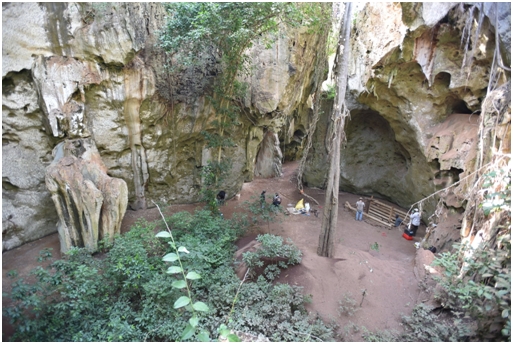
Overview of the cave of Panga ya Saidi. The boarded excavation on the right marks the locality where the burial was recovered. (photo by Mohammad Javad Shoaee).

While our continent is well-known for an early anatomical and cultural record associated with our species, human burials older than 30k years are scarce and often contentious among scientists. Little is known, therefore, about how our early ancestors responded to or interacted with the dead, making the origins and evolution of mortuary practises within our lineage ambiguous.

Khotso Pudumo of the National Museum, right, with interviewees: from the left, Michael Litsili, Angelinah Lande and Shirley Charlie

Speaking of Struggle and Freedom: Voices from Mangaung

The National Museum celebrated with a virtual exhibition profiling oral history interviews with struggle veterans and other individuals who have made a contribution to the liberation struggle in Mangaung.

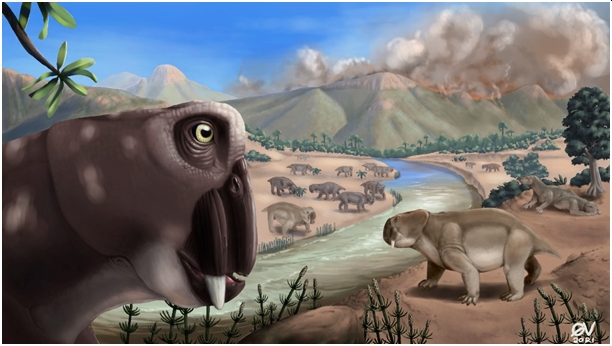
Illustration showing Lystrosaurus during the end-Permian mass extinction, by Gina Viglietti.

Our planet’s worst mass extinction event occurred 252 million years ago when massive volcanic eruptions caused catastrophic climate change. The vast majority of animal species went extinct, and when the dust settled, the planet entered the early days of the Age of Dinosaurs. Scientists are still learning about the patterns of how and why certain animals went extinct and others survived.