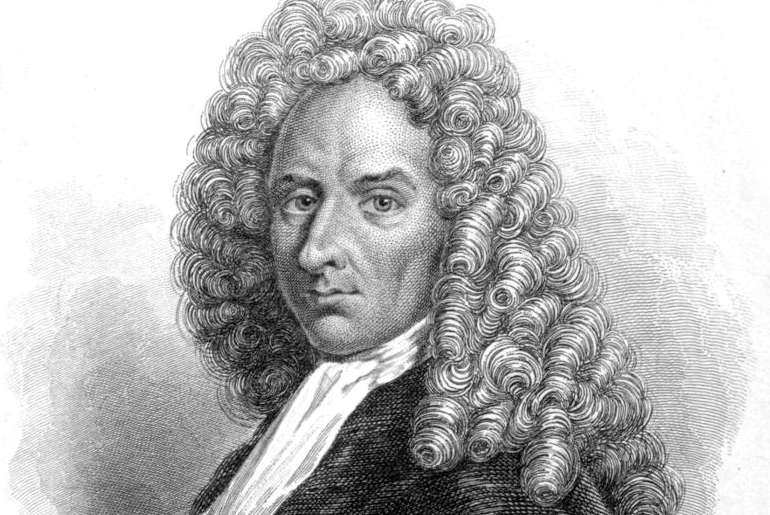
François Le Vaillant, born Vaillant (6 August 1753 – 22 November 1824) was a French author, explorer, naturalist, zoological collector, and noted ornithologist. He described many new species of birds based on birds he collected in Africa and several birds are named after him.
In 1870, during the Franco-Prussian War (1870-1871), Napoleon II ordered one million cans of beef to feed his troops. In order to solve the problem of transporting and storing such large quantities of beef, John Lawson Johnston, a Scotsman, created a product known as ‘Johnston’s Fluid Beef’, later called Bovril.
The first kind of rag doll to be produced commercially in South Africa was the Graaff-Reinet or Laubscher doll of which the National Museum has two in its Textile collection. The Laubscher family of Graaff-Reinet made these dolls during the First World War (1914-1918).
Florisbad Quaternary Research Station’s Dr Daryl Codron is one of the authors on a paper that presents a mathematical solution which predicts predator kill frequency. The research station is one of the satellites of the National Museum.
Carnivores, unlike herbivores, typically remove whole individuals from prey populations, and so can have enormous effects on prey populations and whole ecosystems. Mammalian carnivores can be divided into those that eat small prey items (invertebrates, reptiles, birds, and small mammals) and those that eat larger prey (large rodents, lagomorphs and antelope).
Arachnology is the scientific study of spiders and their kin, with particular emphasis on the identification of new species, the study of their biology and how they interact with their environment. Humans have had a fascination with these organisms since ancient times, with many early societies having myths with prominent spider figures.