‘Peace prizes’, noted University of Bradford academic Peter van den Dungen, ‘are awards given to individuals or to organizations for distinguished achievements or efforts in promoting peace’[1]. These awards aim to ‘honor, support and encourage a peacemaker’ or to encourage others to emulate the life and deeds of a great peacemaker. More importantly, they provide ‘legitimacy for their activity as well as a degree of protection for their person where these were lacking before’[2].
‘Norah, you are never going to be beautiful so you had better make yourself useful’. This, according to Gillian Trotter, was in Norah Wellings’ mind when she looked at herself in a mirror in 1919. With sheer determination, hard work and loads of talent Norah became one of the best soft toy makers in the world.
Coronavirus (COVID-19) has ravaged the globe killing more than a 100 000 people and infecting over two million. We do not leave our homes without wearing a face mask and surgical gloves. During the Victorian era gloves and a hat were common accessories for men and women when they went outside but to ward off disease and the plague they often wore a nosegay or tussie-mussie.
The Department of Archaeology and Anthropology at the National Museum, Bloemfontein, participates in several projects focused on reconstructing the behaviour and biology of early humans, from the inception of the archaeological record in the Early Pleistocene up to the ethnographic present of southern Africa.
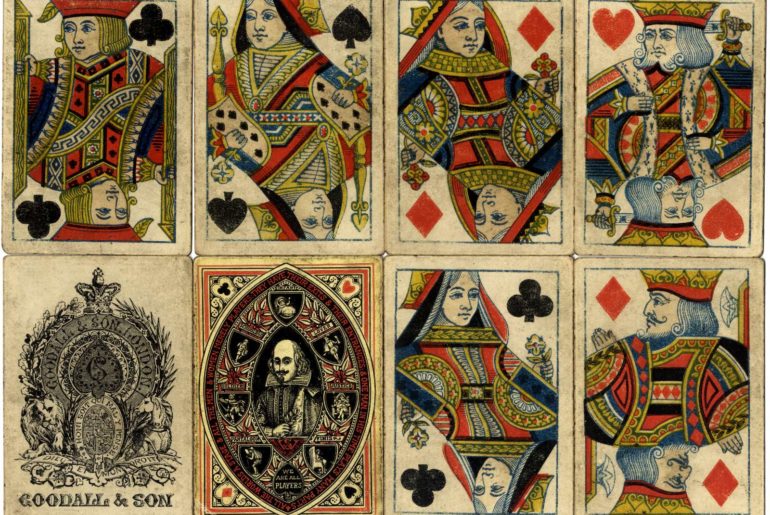
Klawerjas (or klaverjas/ klaberjass or ‘Klob’) is a Dutch card game played in South Africa, New Zealand, Australia and Canada, where it has become synonymous with minority (often expatriate) communities (Gibson, 1974). It was introduced during Dutch colonialism in the 17th century and became a popular colonial pastime amongst a wide cross-section of the population.