Submit an article to Indago - a peer reviewed journal
Category

Culna Articles

Category

A confluence of unfortunate historical forces was shaping the lives of South African women of colour for centuries. Since the founding of a white colonial society at the Cape of Good Hope by the Dutch East India Company (Verenigde Oostindische Compagnie, or VOC) in the 17th century, domestic labour was performed by the indigenous Khoikhoi.

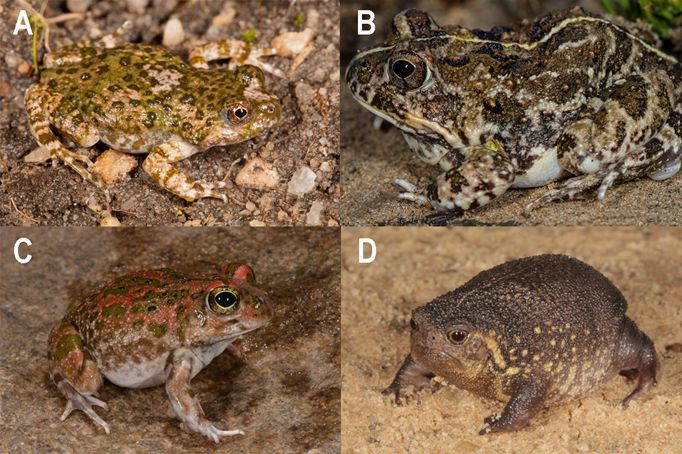
It is often assumed that taxonomy, the science of naming and classifying organisms into organised groups, is relatively static, and that we already know how many species are expected to occur in every area of the world. However, for many groups of animals and plants, scientists are still uncovering and describing new species, particularly ‘cryptic species’ which are only subtly different from similar, related species. Although there are currently 136 species of frogs (68 endemics) in South Africa, this number has fluctuated, with 12 additions in just the last ten years as shown in the table below.

In indigenous South African societies, totems (diboko) are deeply meaningful symbols that express cultural identity, spiritual beliefs and social belonging. They are adopted by families, clans or groups to signify shared descent and to mediate relationships between humans, nature and the spiritual universe. The majority of the totems are wild animals such as lions, elephants, crocodiles, kudus and monkeys to name a few (Lye & Murray 1980).

The dwarf burrowing skinks comprise a genus of about 22 species of small, attenuate, fossorial lizards found mainly in Southern Africa. As a group, this genus is particularly interesting because of the degree of limb reduction found amongst its members. Some species have fore- and hindlimbs, with three, four or five digits or toes on each foot, depending on the species. Then there are a few species with hindlimbs but no forelimbs, and among these some have tiny limbs with two or only one digit on each foot. Finally, a few species are completely limbless.